Choosing a Pet Door for Cats and Dogs
A pet door that works for both a cat and a dog sounds simple. That’s until you start measuring, comparing frame types, and wondering whether your glass, screen or timber door is suitable. Choosing the right pet door for cats and dogs is less about picking a flap off a shelf and more about getting the size, and installation method right from the start.
For most households, the goal is straightforward. You want your pets to move in and out without constant door duty. But you also want the installation to look neat, stay secure and last. This balance matters even more when the opening is going into a security screen, sliding glass door, window panel or double-glazed unit.
At Pet Doors Ontime we’ve got you covered. We can help guide you choose the right pet door for you and your pets.
What makes a pet door for cats and dogs different?
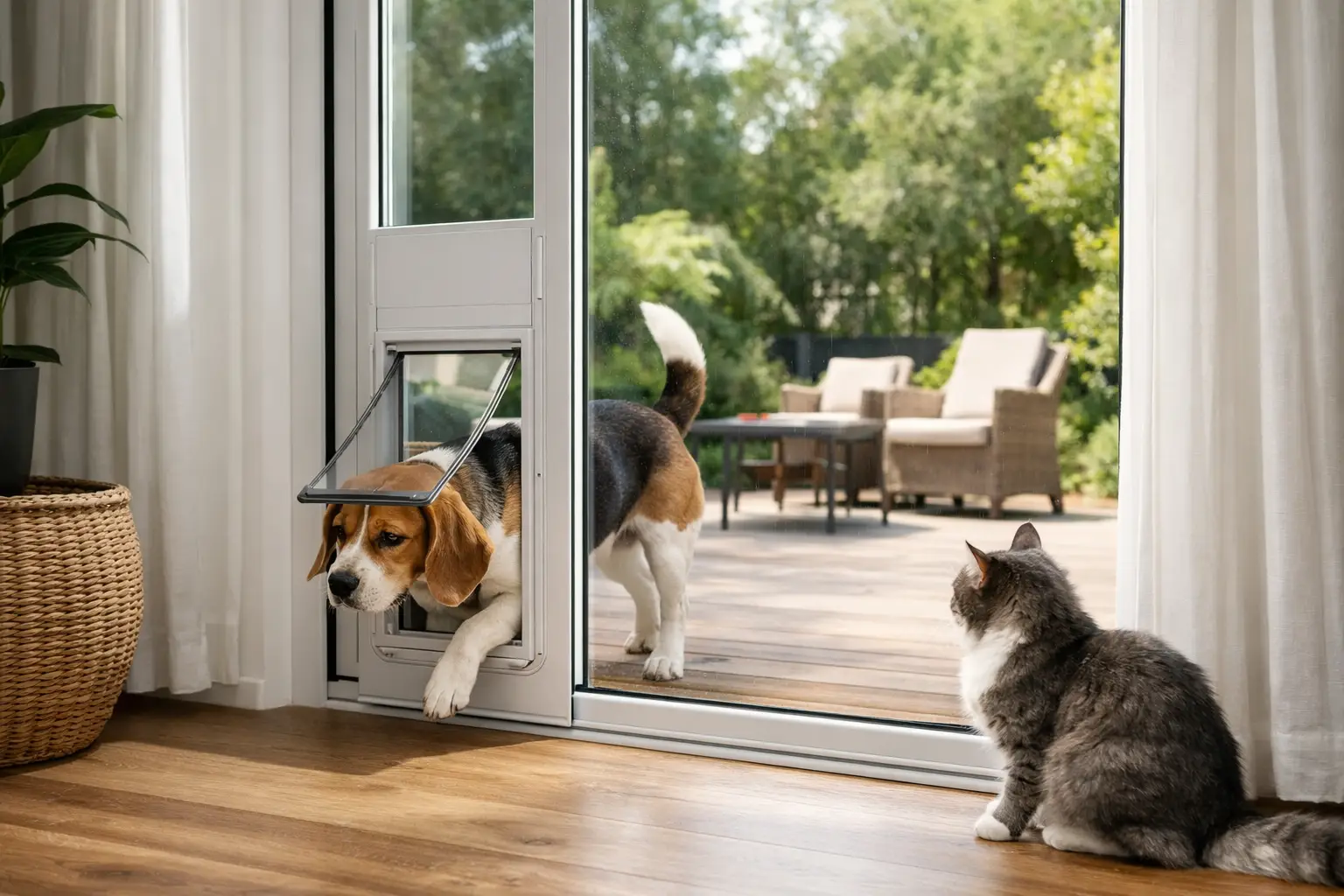
When one home has both cats and dogs, sizing is where most people hesitate. A flap that suits the cat may be too tight for the dog. A flap sized for the dog may feel oversized for a smaller or cautious cat. The right choice depends on the largest pet using it, but not in a way that ignores how the smaller pet approachs it.
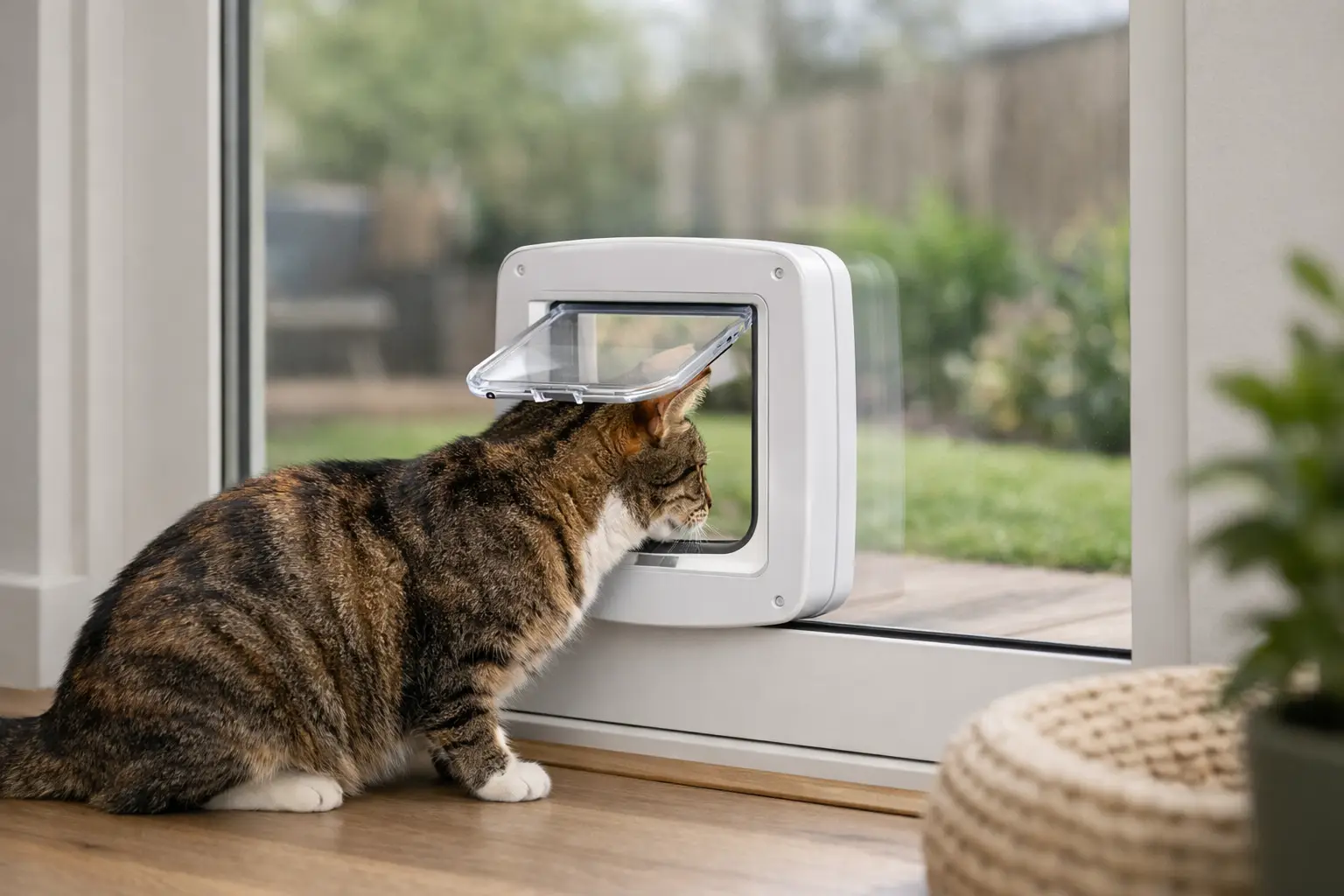
Height, chest width and confidence all play a part. Some pets will duck and push through almost anything. Others need a more comfortable opening and a lower step-over height to use it consistently. Older pets, short-legged breeds and timid cats often need more thought than owners expect.
This is why professional sizing advice helps. A pet door is not just about breed labels like small, medium or large. Two dogs in the same weight range can need different flap sizes depending on build, shoulder height and how they move. A clean fit starts with proper measurements, not guesswork.
Where can a pet door be installed?
One of the biggest misconceptions is that every pet door fits every surface. It does not. The material you are cutting into changes the product options, the tools required and the safety requirements.
Timber doors
Timber is often the most straightforward option. It usually allows for a clean cut-in installation and gives good flexibility on pet door size and placement. Even then, it still pays to position the opening carefully so the flap clears rails, panels and locks.
Security screens
Security screen installations need specialist handling. You are not just cutting mesh. The frame strength, screen type and overall finish matter. A poor install can weaken the panel or leave the door looking rough. Done properly, a pet door can be fitted neatly into many security screen doors without compromising function.
Glass doors and windows
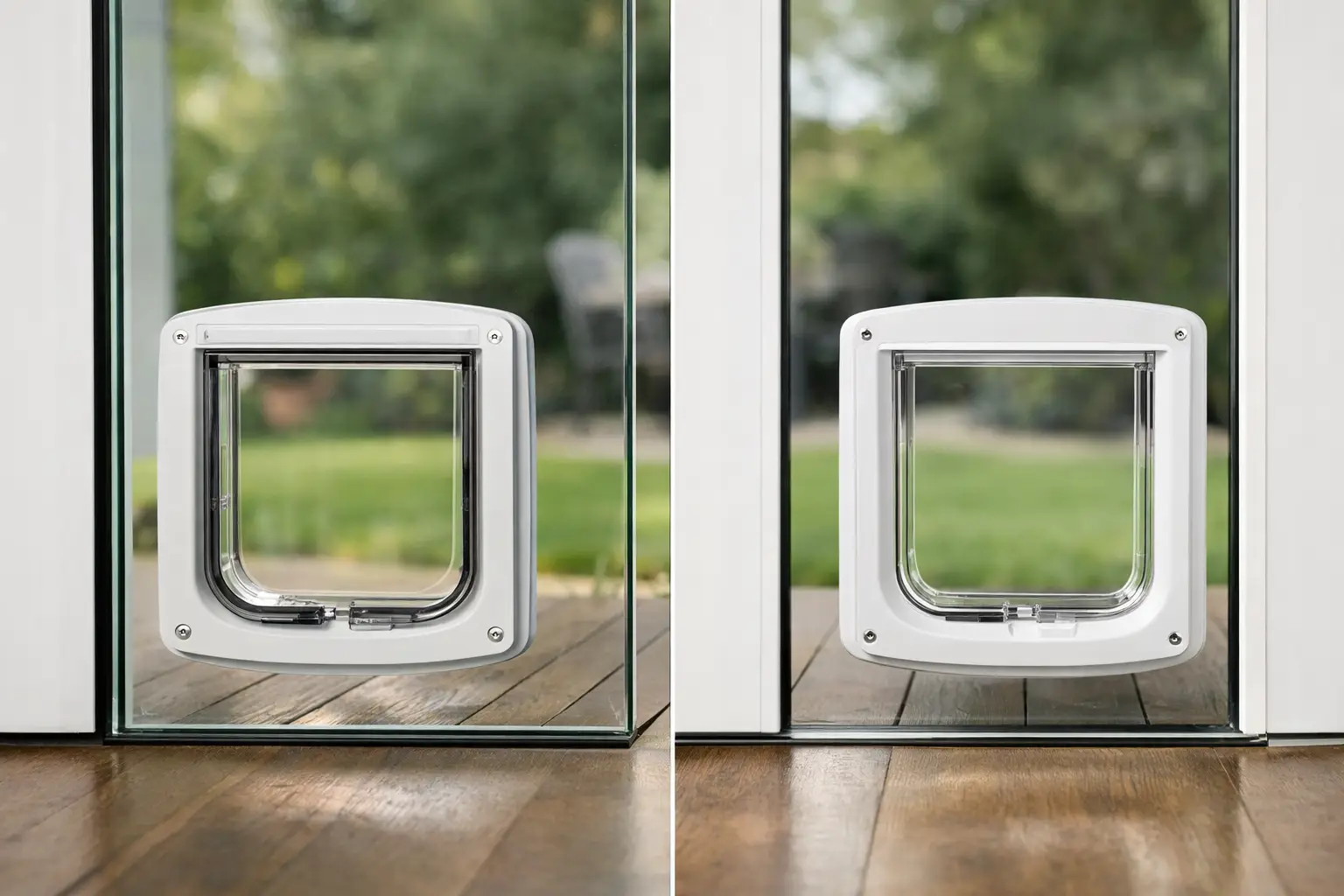
Glass is where many DIY attempts go wrong. Standard glass cannot simply be cut once installed. If you want a pet door in glass, the panel generally needs to be replaced with new glass manufactured to suit the opening. For safety, this is typically Grade A Toughened Safety Glass.
This matters for sliding doors, fixed glass panels and windows. It also affects timing, because glass replacement is a measured, made-to-order process rather than a same-day cut and fit.
Double-glazed panels
Double glazing is more specialised again. The sealed unit must be remade with the pet door provision built into it. This is technical work and not something to hand over to a general handyman. When installing a pet door into either single or double glazing you need a glazier who specialises in pet door installations.
How to choose the right size
The simplest rule is this: size the pet door to the largest pet that will use it. Then check that the smaller pet can use the same model comfortably. That sounds obvious, but there are a few details that make a real difference.
Start with your dog’s width at the widest point, usually across the chest. Then consider height from floor to shoulder and from floor to belly. The flap opening needs to be wide enough for easy entry and low enough to avoid awkward climbing. If your cat is much smaller, a large opening usually is not a problem as long as the flap is not too heavy to push.
Weight rating alone is not enough. Some lean dogs need more height than expected. Some solid dogs need more width than their weight suggests. Cats also vary. A slim, agile cat will use a bigger flap without fuss, while a cautious indoor cat may take time to adapt.
If you have a puppy or young dog still growing, plan for adult size rather than current size. Replacing an undersized pet door later usually costs more than getting it right once. Check out our guide on how to measure your pet correctly.
Safety, security and the finish matter
A pet door should add convenience, not create a problem at home. That’s why product quality and installation standards matter just as much as flap size.
A well-installed unit sits square, seals properly and suits the door material. It should not rattle, drag, leave sharp edges or look like an afterthought. In glass and double-glazed applications especially, compliance and correct materials are essential.
Security is another common concern. Many modern pet doors include locking covers or controlled access options depending on the model. What suits your home depends on where the door is located and whether you need to restrict overnight access, keep pets indoors at certain times or manage multiple animals.
For families, renters with permission, and homeowners investing in higher-value doors and glazing, the finish counts. A neat installation protects the look of the home and avoids the patched-together result people worry about when they think of aftermarket pet products.
Why installation method changes the result
A pet door bought online or from a hardware retailer may be perfectly suitable, but the installation is what determines whether it performs properly. This is particularly true in Australian homes where layouts, door materials and security screens vary widely.
A professional installer will look at clearances, structural limitations, pet size, door swing, traffic flow and the best height off the floor. In many homes, the ideal position is not the most obvious one. A few centimetres too high can make daily use uncomfortable. Too close to an edge or frame member can affect strength or appearance.
Glass installations are the clearest example. There is no safe shortcut. The existing panel is measured, the replacement glass is manufactured with the cut-out, and the new panel is installed once ready. It takes more planning, but it gives the correct outcome.
That is also why many homeowners choose a specialist service rather than trying to coordinate products, measurements and multiple trades themselves. It removes uncertainty and helps avoid expensive mistakes.
When a custom-fit approach is worth it
Not every home suits a standard off-the-shelf answer. If you have a narrow laundry door, a heavy sliding glass panel, an upstairs window access point, or a security screen you do not want damaged, custom advice matters.
A tailored approach is usually worth it when the door material is expensive, the opening is unusual, or the pets using it have very different sizes. It is also worth it when speed and finish are important. Busy households often want the job measured, supplied and installed without chasing separate parts or working out compatibility alone.
This is where a service-led installer earns their keep. Businesses such as Pet Doors Ontime are set up to guide customers through sizing, placement and installation type, including the more technical glass and double-glazed jobs that many others will not touch.
Common mistakes to avoid
The most common mistake is choosing too small. Owners often worry that a larger flap will look bulky, so they size down. The result is a pet that squeezes through, hesitates, or refuses to use it.
The second mistake is assuming all glass can be cut on site. It cannot. If your plan involves existing glass, proper replacement is the safe path.
The third is treating security screens like a simple DIY job. A rough cut can affect strength, appearance and operation. If the screen is there for a reason, it is worth protecting.
Finally, avoid choosing on product price alone. A cheaper unit installed poorly can end up costing more than a better option fitted correctly the first time.
A better way to decide
If you are weighing up a pet door for cats and dogs, start with the pets, then the door material, then the installation method. Measure the largest animal carefully. Think about daily use, not just whether they can technically fit through. Then match the product to the surface it is going into.
For straightforward timber doors, your options are wider. For screens, glass and double glazing, specialist installation is usually the difference between a tidy, safe result and a costly redo.
The right pet door should make life easier every day without giving you a second thought after it is fitted. That’s usually a sign the job was planned properly from the start.
For a professionally installed pet door check out Pet Doors Ontime.