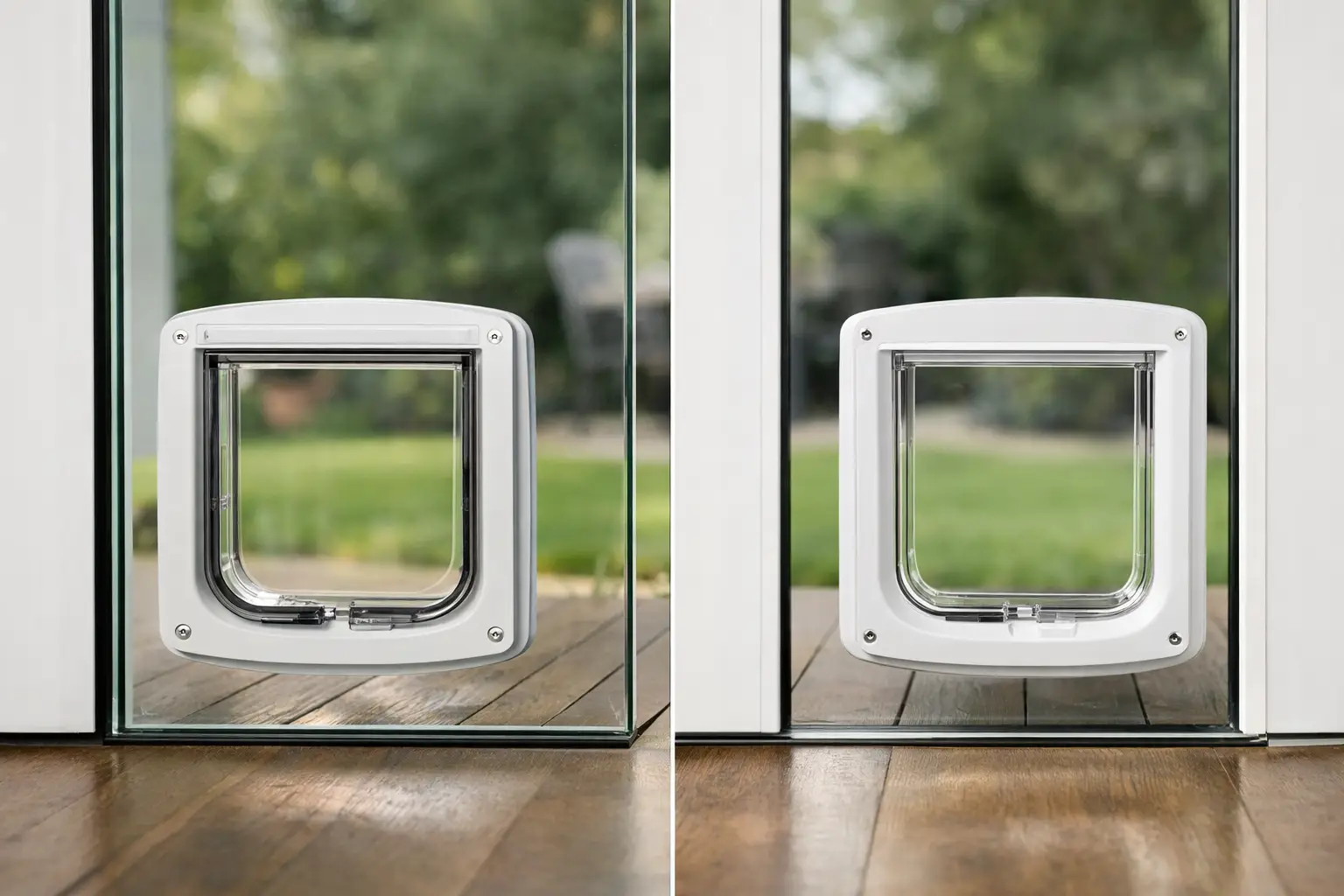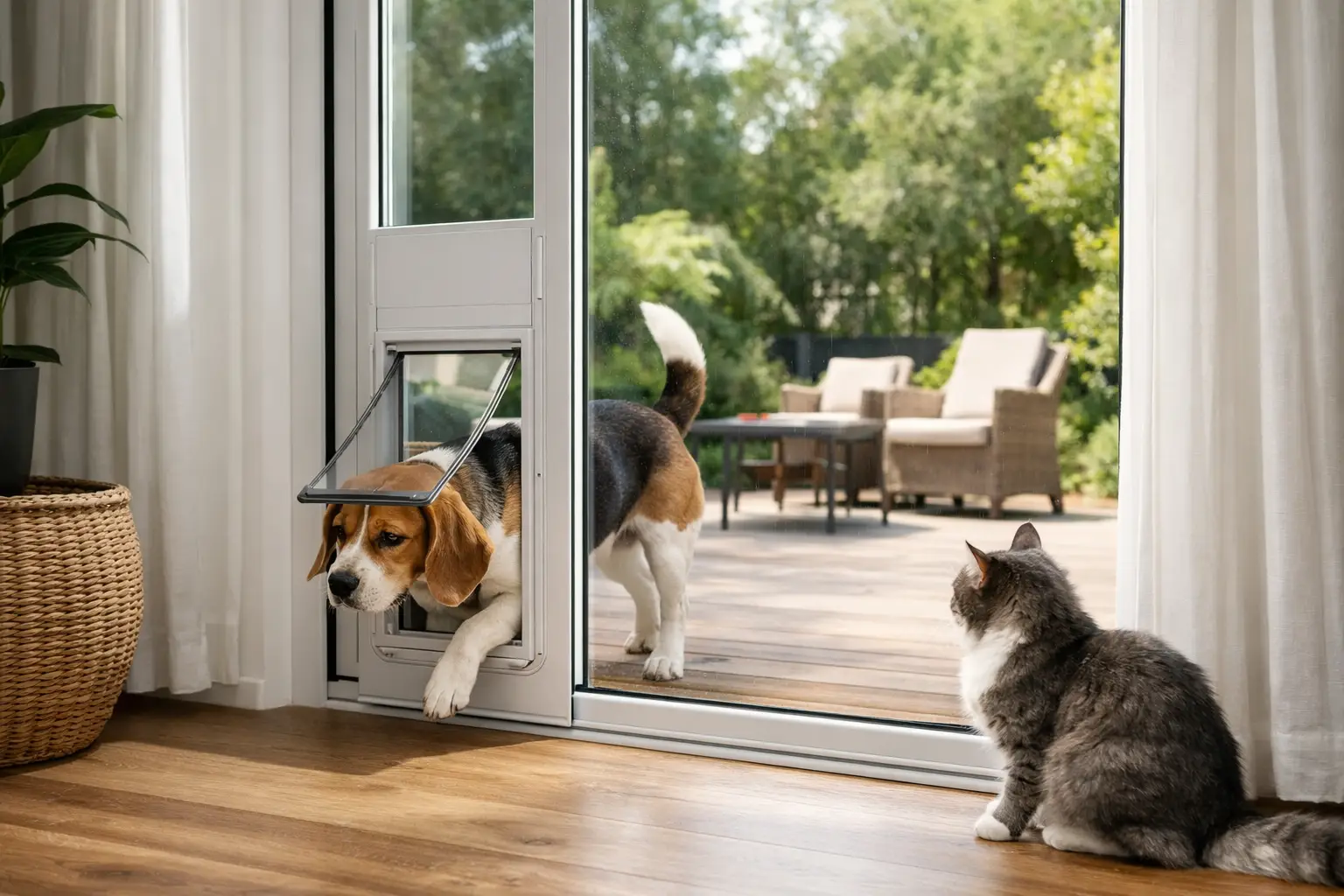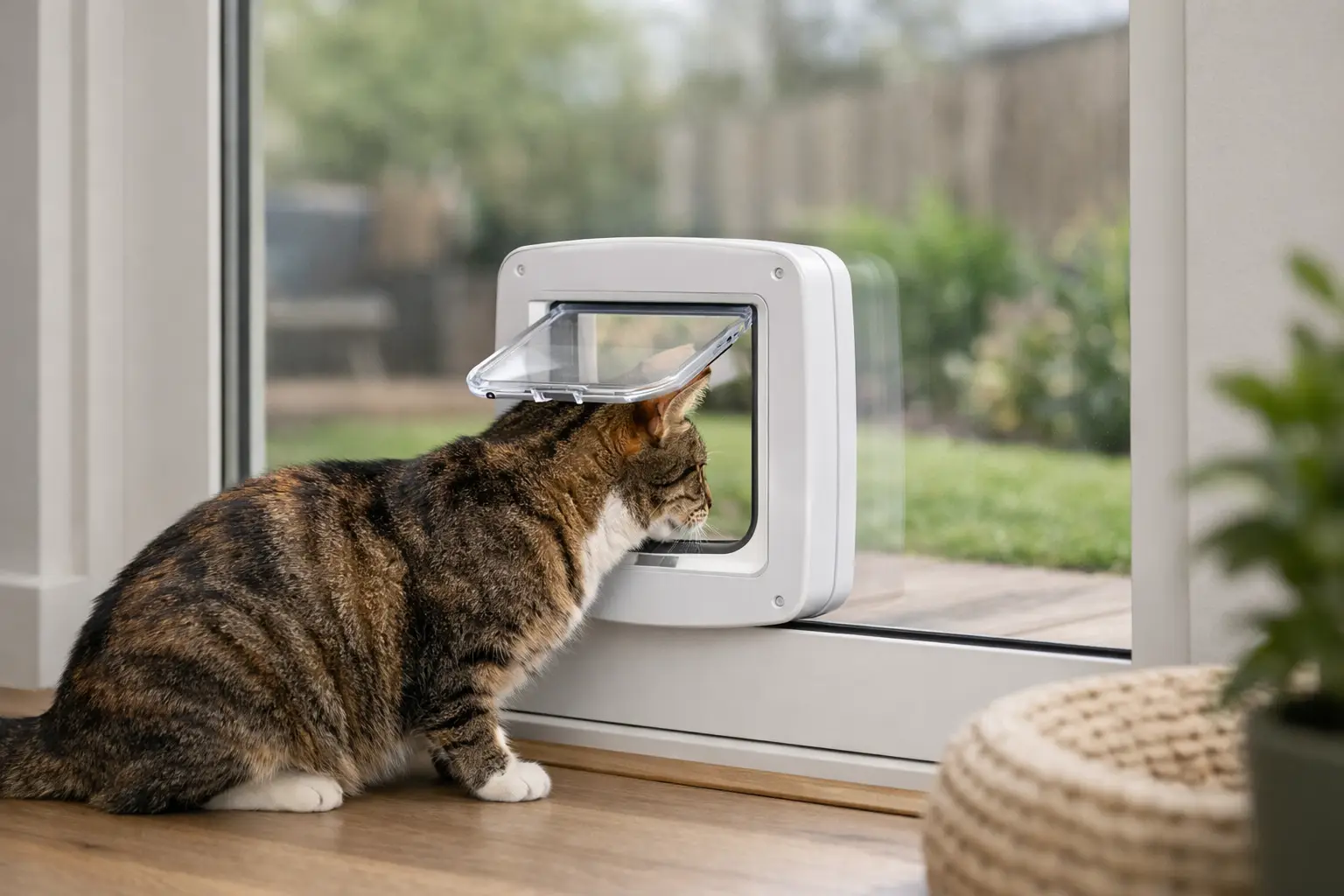
If your cat is already watching the dog come and go with obvious interest, the question usually follows – can a cat use a dog door? In many homes, yes, a cat can use a dog door. The better question is whether your dog door is the right size and style for your cat, your dog and your home.
This distinction matters. A pet door that works well for your Labrador may be awkward for a smaller cat. A flap installed in a timber laundry door may suit both pets, while a large opening in a security screen or glass panel may need more careful planning. The goal is not simply to get your cat through the opening. It is to choose a safe, durable setup that your pets will actually use every day.
Can a cat use a dog door in most homes?
In practical terms, cats are often very capable of using dog doors. They are agile, curious and quick to learn a routine once they understand where the flap leads. If the opening is low enough, light enough to push, and not excessively oversized, many cats adapt without much trouble.
Where it becomes less straightforward is in multi-pet households. A shared pet door needs to suit the largest pet using it, but that can create a flap that feels heavy or exposed for the smallest one. Some cats will use a larger dog door without hesitation. Others are more cautious and may avoid it if it swings too hard, makes noise, or leaves them feeling too visible when passing through.
So yes, a cat can often use a dog door, but not every dog door is automatically cat-friendly.
The main thing is size, not pet type
When homeowners ask whether a cat can use a dog door, they are usually thinking in terms of pet type. From an installation point of view, size is the bigger factor.
A pet door should be selected around the shoulder height and body width of the largest pet expected to use it, while still remaining manageable for the smaller one. For cats, a flap that is too high off the ground can be frustrating. A flap that is too wide or too tall can also feel less secure, especially for timid pets.
That’s why proper measuring is worth doing before any cutting or glass ordering begins. Guesswork is where expensive mistakes happen, particularly with glass and double-glazed panels. A neat install starts with matching the product to the pet, not simply choosing something labelled for dogs and hoping the cat will cope.
What makes a dog door easier for a cat to use
Some features help cats adjust more easily. A lighter flap is usually better. Clear flaps can also help because cats can see through them and understand what is on the other side. The height from the floor to the base of the opening should be low enough that your cat does not need to leap awkwardly through it.
Placement matters as well. If the pet door opens into a noisy side passage, a windy alfresco area or a busy part of the yard, your cat may be less willing to use it than the dog. Cats tend to prefer predictable, sheltered access points.
Can a cat use a dog door without training?
Sometimes yes, but not always. Dogs often barge through a flap once they realise it leads outside. Cats are usually more selective. Even a confident cat may need a bit of encouragement if the flap feels unfamiliar.
Most training is simple and short-term. Hold the flap open, use treats, and let your cat move through at its own pace. Repetition helps. Forcing the issue rarely does. If a flap is too heavy or noisy, training may stall because the problem is the hardware, not the pet. We often recommend taping the flap up for timid cats until they get used to going in and out through the opening. For more training tips check out our article – How to train your pet to use a pet door.
This is one reason proper product selection matters so much. A well-sized, well-positioned pet door can save a lot of frustration later.
Safety matters
Convenience is usually the reason people start looking at pet doors, but safety also needs to be considered. This is especially true if the pet door is going into a front-adjacent entry, a security screen, or any type of glass.
A very large dog door may give a cat easy access, but it may also create unnecessary security concerns. Oversizing the opening just to suit one pet can be a poor trade-off if a smaller shared option would do the job better. Locking covers, stronger frames and the right location can all improve household security.
For homes with glass doors or windows, safety is not optional. Standard glass cannot simply be cut on site once installed. If a pet door is going into glass, the panel usually needs to be replaced. A new toughened safety glass panel is manufactured with a cut out for the pet door. The same principle applies to double-glazed units, which require specialist ordering and fitting.
That’s why this kind of job is not a handyman shortcut. Done properly, it is a measured, custom installation.
The best places to install a shared cat and dog door
The right location depends on your layout, your pets and the door material. Timber doors are often a straightforward option and suit many homes well. Security screens can also work, provided the product and fitting method are compatible with the screen type and the integrity of the frame is maintained.
Glass sliding doors are popular because they give pets direct yard access, but they need specialist handling. Double-glazed panels need even more planning because the replacement unit must be manufactured to suit both the glazing specifications and the pet door opening.
For some households, a laundry door or side entry is the most practical spot because it keeps pet traffic away from the main entertaining area. For others, a low window insert can be the cleaner solution. There is no single best answer. The right choice is the one that suits the home without compromising safety or appearance.
Can a cat use a dog door in a security screen?
Yes, in many cases, but product compatibility matters. Security screens are not all built the same. The frame profile, mesh type and locking arrangement all affect what can be installed and how neat the final result will be.
If you want the cat and dog sharing one access point in a security screen, it is worth making sure the pet door suits the screen system rather than forcing a generic option into place. A proper fit will look better, last longer and maintain the function of the screen.
When a separate cat flap is the better option
Even if a cat can use a dog door, that does not always mean it should. Some households are better off with separate access points.
This comes up when there is a very large size gap between pets, when the cat is older or hesitant, or when the dog door needs to be positioned higher than ideal. It can also be useful where the cat has a different routine, such as using an enclosed side area or a screened section of the home.
A dedicated cat flap may provide better control and make the cat more comfortable. It can also reduce the need to oversize the main pet door. In some homes, two smaller, well-placed solutions work better than one compromise opening.
What to think about before you choose
Before booking any installation, it helps to consider a few practical points. Think about the size and confidence level of each pet, the material the door will go into, whether security is a concern at that location, and how permanent the solution needs to be.
If you are renting, body corporate rules or owner approval may affect what can be installed. If you own the property and want a long-term result, a custom-fit installation usually gives the cleanest finish and the least hassle. This is especially true when installing a pet door into glass. This is a two step process requiring accurate measuring by a specialist glazier, followed by installation once the new toughened glass has been processed.
For Australian households dealing with multiple pets this is really a home improvement decision as much as a pet decision. Done properly, it saves time and money and avoids damage to doors, frames and glass.
At Pet Doors Ontime, we see this question often from customers wanting one practical access point for cats and dogs. In many cases, the answer is yes – but it comes down to choosing the right door, the right size and the right installation method for the home.
If your cat is likely to use the same opening as the dog, plan for comfort as well as clearance. A pet door should feel easy for your pets and look like it belongs in the home. This is where the best long-term result starts.
To find out more contact the pet door installation specialists at Pet Doors Ontime