Pet Doors in Toughened, Laminated & Standard Glass: What’s the Difference?
Pet doors in toughened versus laminated or standard glass is one of the most common questions homeowners ask before installing an in-glass pet door. Whether your door or window contains standard (annealed) glass, laminated safety glass or toughened glass, we generally recommend replacing it with a purpose-made Grade A Toughened Safety Glass panel that our manufacturer produces specifically for your chosen pet door.
For many Australian homes, installing a pet door into glass is the neatest and most practical solution. It allows your pet independent access without altering timber doors or adding bulky temporary inserts. However, unlike timber, glass cannot simply be cut to suit. The existing glazing determines the safest and most appropriate installation method.
So, if you’re considering an in-glass pet door, understanding the differences between these three common glass types is the first step.
Quick Answer
Most modern homes have already Grade A Toughened Safety Glass in their doors. But, because toughened glass cannot be cut after manufacture, installing a pet door means replacing the existing panel with a new one manufactured specifically with the pet door opening already in place.
However, if your home has laminated safety glass, it may technically be possible for your installer to cut an opening in some circumstances. However, we generally do not recommend it because cutting through laminated glass creates a weak point that can lead to cracking over time.
And if your home has double glazing, we replace the complete insulated glass unit must be replaced with a new unit manufactured specifically for the pet door.
Pet Doors in Toughened versus Laminated or Standard Glass Compared
| Feature | Standard (Annealed) Glass | Laminated Safety Glass | Toughened Safety Glass |
|---|---|---|---|
| Safety Glass | ✘ No | ✔ Yes | ✔ Yes |
| Can it be cut after manufacture? | ✔ Yes | ✔ Sometimes* | ✘ No |
| Strength | Standard | Good | Excellent (approximately 4–5× stronger than standard glass) |
| Breaks into | Large sharp shards | Glass remains bonded to a plastic interlayer | Small blunt fragments |
| Commonly used in doors | Rarely | ✔ Yes | ✔ Yes |
| Suitable for In-Glass Pet Doors? | ✘ No | △ Rarely | ✔ Yes (Recommended) |
*Important note about laminated safety glass: Although laminated safety glass can sometimes be cut by a specialist glazier, we generally do not recommend installing pet doors into existing laminated glass. Cutting a hole through the panel creates a weak point in the glass. In our experience, these panels are far more likely to develop cracks over time due to the repeated stresses of everyday door use, vibration and movement. For this reason, we usually recommend replacing the panel with a purpose-made Grade A Toughened Safety Glass panel manufactured specifically for the pet door. This provides a stronger, longer-lasting and more reliable installation.
What Is Standard (Annealed) Glass?
Standard glass, also known as annealed glass, has not been heat treated.
Because it is not a safety glass is it not suitable for pet door installations. Unfortuntely, if standard glass breaks, it fractures into large, sharp pieces that can cause serious injury.
As a result, Australian Standards require safety glass in many locations where people are likely to come into contact with the glass.
What Is Laminated Safety Glass?
Laminated safety glass consists of two sheets of glass permanently bonded together with a strong laminated interlayer.
Consequently if the glass breaks, the fragments remain attached to the interlayer instead of falling apart, making it a recognised safety glass commonly used in entry doors, sidelights and areas where additional security or sound reduction is desirable.
While laminated glass can sometimes be modified by specialist glaziers, Pet Doors Ontime generally does not recommend cutting pet door openings into existing laminated panels.
As a result, every time a pet uses the door, the glass is subjected to movement and vibration. Once a hole has been cut into laminated glass, it creates a stress point around the opening. Therefore we have found over time, this significantly increases the likelihood of cracking.
Therefore replacing the glass with a purpose-made toughened safety glass panel is usually the stronger and more durable long-term solution.
What Is Toughened Safety Glass?
Toughened safety glass is heated and rapidly cooled during manufacture.
This process makes the glass significantly stronger than standard glass while also changing the way it breaks.
Instead of dangerous shards, toughened glass crumbles into many small pieces designed to reduce the risk of serious injury.
It is commonly used in:
- Sliding doors
- Hinged glass doors
- French doors
- Full-height windows
- Low-level glazing
- Sidelight panels
For this reason, the glass cannot be drilled or cut after manufacture.
Therefore, any pet door opening must be cut before the glass is toughened.
Check out our video that explains the different type of safety glass.
How Can You Tell What Type of Glass You Have?
Many toughened glass panels include a small etched safety stamp in one of the lower corners.
The stamp may identify:
- Grade A Safety Glass
- Toughened Glass
- Australian Standard reference
- Manufacturer details
However, not every panel is easy to identify.
For example most older homes, imported glazing, laminated glass and some framed doors may not have an obvious visible stamp.
Importantly the location of the glass also provides useful clues. Builders commonly install safety glass in doors, full-height windows or areas close to floor level is usually required to be safety glass.
If you’re unsure, arranging a professional check measure is the safest approach before ordering a pet door.
Can Standard Glass Be Cut for a Pet Door?
Possible – YES.
Recommended – No.
If the existing panel is standard glass and suitable for its location, cutting an opening for a pet door may be possible but standard glass just isn’t strong enough to withstand the rigours of a pet door. And it’s way too dangerous – so we won’t do it.
Instead at Pet Doors Ontime we always prefer to replace the panel with Grade A Toughened Safety Glass because it offers:
- Improved safety
- Greater strength
- A cleaner factory-finished opening
- Better long-term durability
- Confidence that the installation complies with current standards
A pet door creates an opening in a high-use area where children, pets and furniture regularly pass. Replacing older glass with toughened safety glass provides the safest and most durable outcome.
Why We Recommend Toughened Safety Glass for Most Pet Door Installations
While replacing the glass costs more than modifying standard glass, it offers several important long-term advantages. The biggest advantage being that it’s SAFE!
Improved Safety
If accidental breakage occurs, toughened glass breaks into small blunt fragments rather than dangerous shards.
Greater Strength
Glass doors are opened and closed thousands of times during their life.
A professionally manufactured toughened panel is designed to withstand these everyday demands.
Better Appearance
Because the pet door opening is manufactured in the factory, the finished installation is neat, accurate and professionally finished.
Long-Term Reliability
New glass eliminates concerns about older panels that may already contain scratches, chips or hidden weaknesses.
What About Double Glazing?
Double glazing requires a similar installation process.
A double-glazed unit consists of two panes of glass separated by a sealed air or gas-filled space.
Neither pane can be cut once the insulated glass unit has been manufactured.
Instead, we replace the existing insulated glass unit with a new double-glazed unit manufactured specifically with the pet door opening already incorporated.
Importantly, we always replace like for like.
So, if your home has single glazing, we replace it with single glazing.
And if your home has double glazing, we replace it with double glazing.
Generally your existing frames are designed to accommodate one glass configuration or the other, so changing from single to double glazing (or vice versa) is generally not practical without replacing the entire door or window system.
Related reading:
Choosing the Right Pet Door Before the Glass Is Manufactured
We custom manufacture replacement glass for every installation, so selecting the correct pet door comes first.
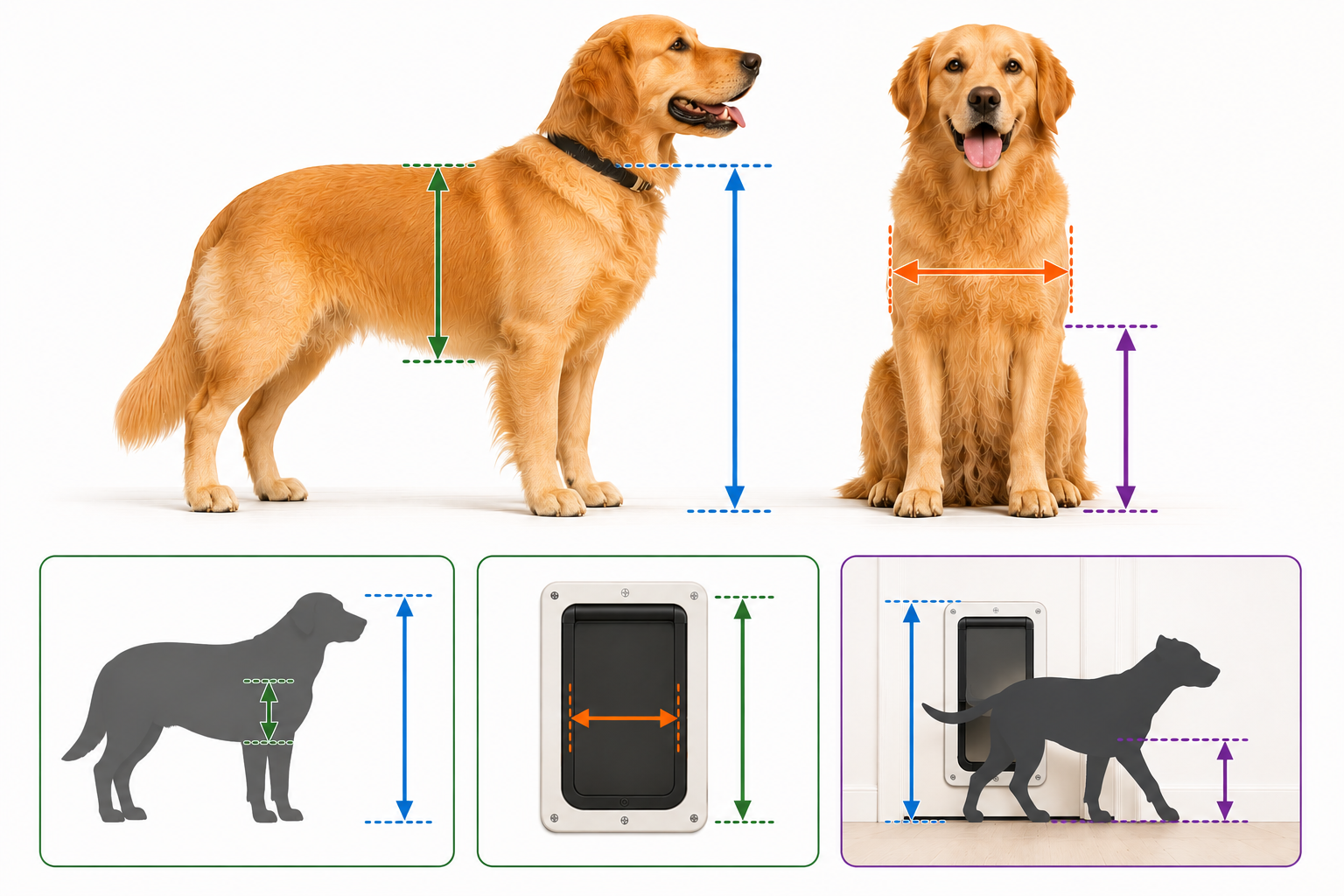
Therefore measuring your pet carefully is important. You can do this by checking:
- Shoulder height
- Chest width
- Body shape
- Age and future growth
- Mobility requirements
For example, a broad Labrador often requires a larger opening than shoulder height alone suggests.
Choosing the correct pet door before the replacement glass is manufactured avoids unnecessary delays and additional costs.
For help measuring your pet, read our guide: How to Measure Your Dog for a Pet Door.
What Does a Professional Installation Involve?
A professional in-glass pet door installation typically includes:
- On-site check measure.
- Identifying the existing glass type.
- Measuring the replacement panel.
- Selecting the correct pet door.
- Manufacturing the replacement glass.
- Removing the existing panel.
- Installing the new glass.
- Fitting and testing the pet door.
For toughened and double-glazed glass, the manufacturer prepares the pet door opening before toughening or assembling the new insulated glazing unit.
This ensures the finished installation operates smoothly while maintaining the strength, appearance and functionality of the original door.
Related Articles
You may also find these guides helpful:
- Pet Door Safety Glass Replacement Explained
- Glass Pet Door Installation Costs in Australia
- Choosing the Best Pet Door for Sliding Doors
- How to Measure Your Dog for a Pet Door
Why Choose Pet Doors Ontime?
At Pet Doors Ontime, we specialise in professionally installed pet doors into glass throughout Australia.
Our experienced installers assess your existing glass, recommend the most suitable pet door and arrange replacement glass where required. When comparing pet doors in toughened versus laminated or standard glass, the safest long-term solution is usually a purpose-made Grade A Toughened Safety Glass replacement panel.
We’ll guide you through the correct installation process from check measure to final installation. To find out more go to petdoorsontime.com or call 1300 940 801.
Key Takeaways
- Standard (annealed) glass should never be modified for a pet door. It’s not safe.
- Although laminated safety glass can sometimes be cut, but we generally don’t recommend it because cutting the hole creates a weak point that can lead to cracking over time.
- Toughened safety glass cannot be cut after manufacture.
- And toughened glass is the best glass for a pet door installation.
- When it comes to double-glazed units we always manufacture a new insulated glazing unit with the pet door opening.
- We always replace like for like—single glazing with single glazing and double glazing with double glazing.
- Choosing the correct pet door before ordering replacement glass is essential.
In some situations it is technically possible. However, we generally do not recommend cutting existing laminated safety glass because the opening creates a weak point that can increase the risk of cracking over time. We usually recommend replacing the panel with a purpose-made Grade A Toughened Safety Glass panel.
No. Once toughened safety glass has been manufactured it cannot be drilled or cut. Installing a pet door requires a new glass panel manufactured with the opening already in place.
Many toughened glass panels have a small etched safety stamp in one of the corners. If you’re unsure, we can identify the glass type during a professional check measure.
Not recommened. Standard glass isn’t safe or suitable for pet doors. In most cases, replacing the panel with Grade A Toughened Safety Glass provides a safer and more durable long-term solution.
Yes. We replace the complete insulated glass unit with a new unit manufactured specifically for the pet door. We always replace like for like to suit your existing frames.
Generally, no. Existing frames are designed to suit either single or double glazing. We replace single glazing with single glazing and double glazing with double glazing to maintain the integrity of the existing door or window system.