How to Choose Pet Door Size
Choosing the right pet door size starts with measuring your pet correctly.
Many pet owners choose a pet door based on breed, weight or what looks right on the shelf. Unfortunately, that often leads to a pet door that is too small, too large or simply unsuitable for the installation surface.
A pet door that is too small can make your pet crouch, squeeze through sideways or avoid using it altogether. A pet door that is too large can create unnecessary drafts, reduce weather sealing and make the installation look oversized.
If you are wondering how to choose pet door size, focus on three measurements:
- Your pet’s width
- Your pet’s shoulder height
- The step-over height
Once you have these measurements, you can match your pet to the right pet door and the right installation type.
Measure Your Pet’s Width
Start by measuring the widest part of your pet’s body. This is usually across the chest or hips.
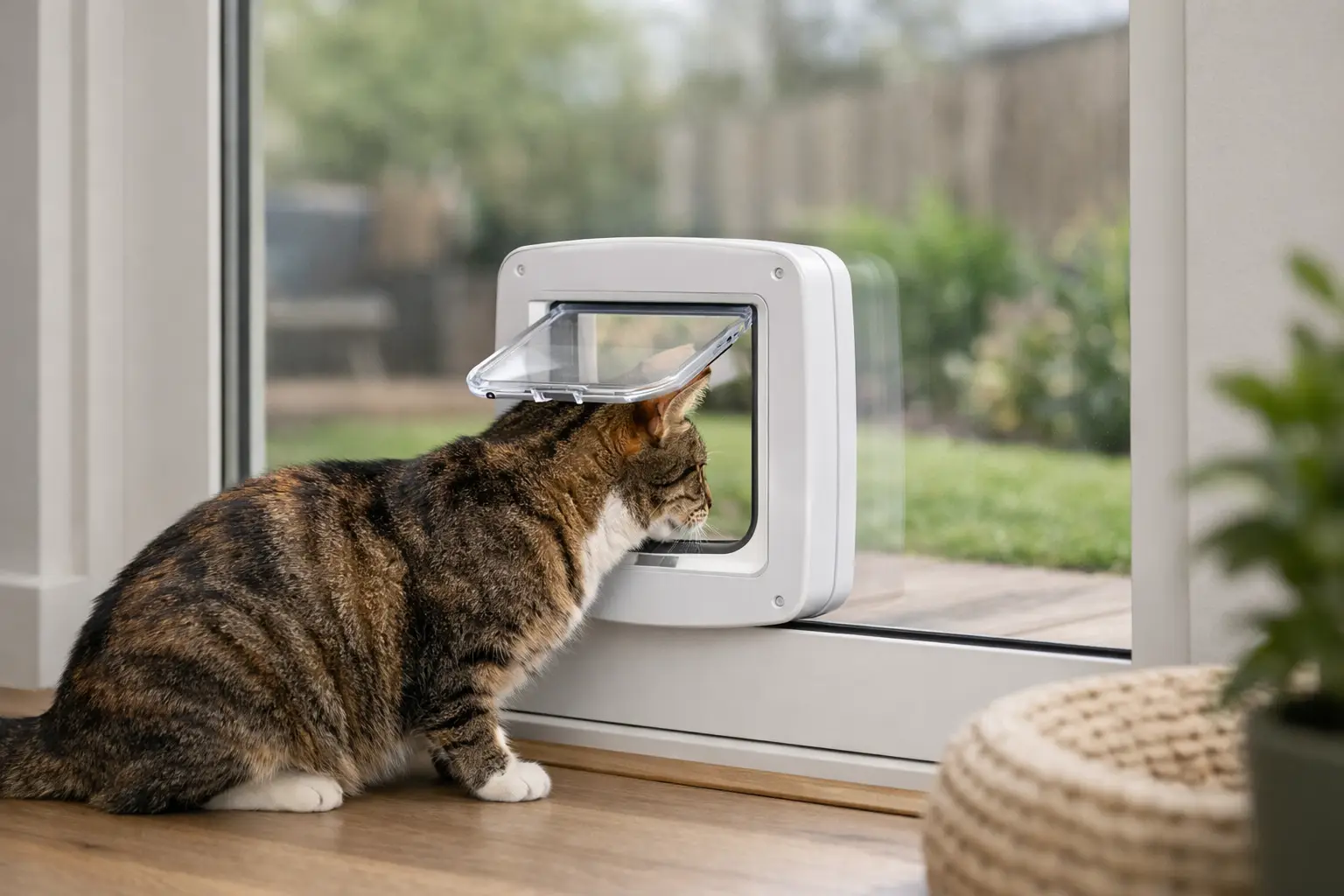
Your pet should be able to walk through the opening comfortably without turning sideways or squeezing through the flap.
As a general guide:
- Cats and small dogs usually suit smaller flap sizes
- Medium dogs need more shoulder and chest clearance
- Broad-chested dogs often need a larger opening than their weight suggests
- Long-haired pets may need extra clearance around the sides
Weight can help as a guide, but body shape matters more.
A lean 20kg dog and a stocky 20kg dog may need completely different pet door sizes.
Measure Your Pet’s Shoulder Height
Next, measure from the floor to the top of your pet’s shoulders.
Many people mistakenly measure to the top of the head. This often results in an oversized pet door because pets naturally lower their head when moving through a flap.
The pet door opening should sit comfortably above your pet’s shoulder height so they can walk through naturally.
This measurement is especially important for:
- Older pets
- Large breed dogs
- Short-legged breeds
- Nervous pets
- Pets with mobility issues
If your pet has to duck significantly each time they use the flap, the opening is probably too small.
Check the Step-Over Height
Step-over height refers to the distance from the floor to the bottom of the flap opening.
This is one of the most overlooked measurements when choosing a pet door.
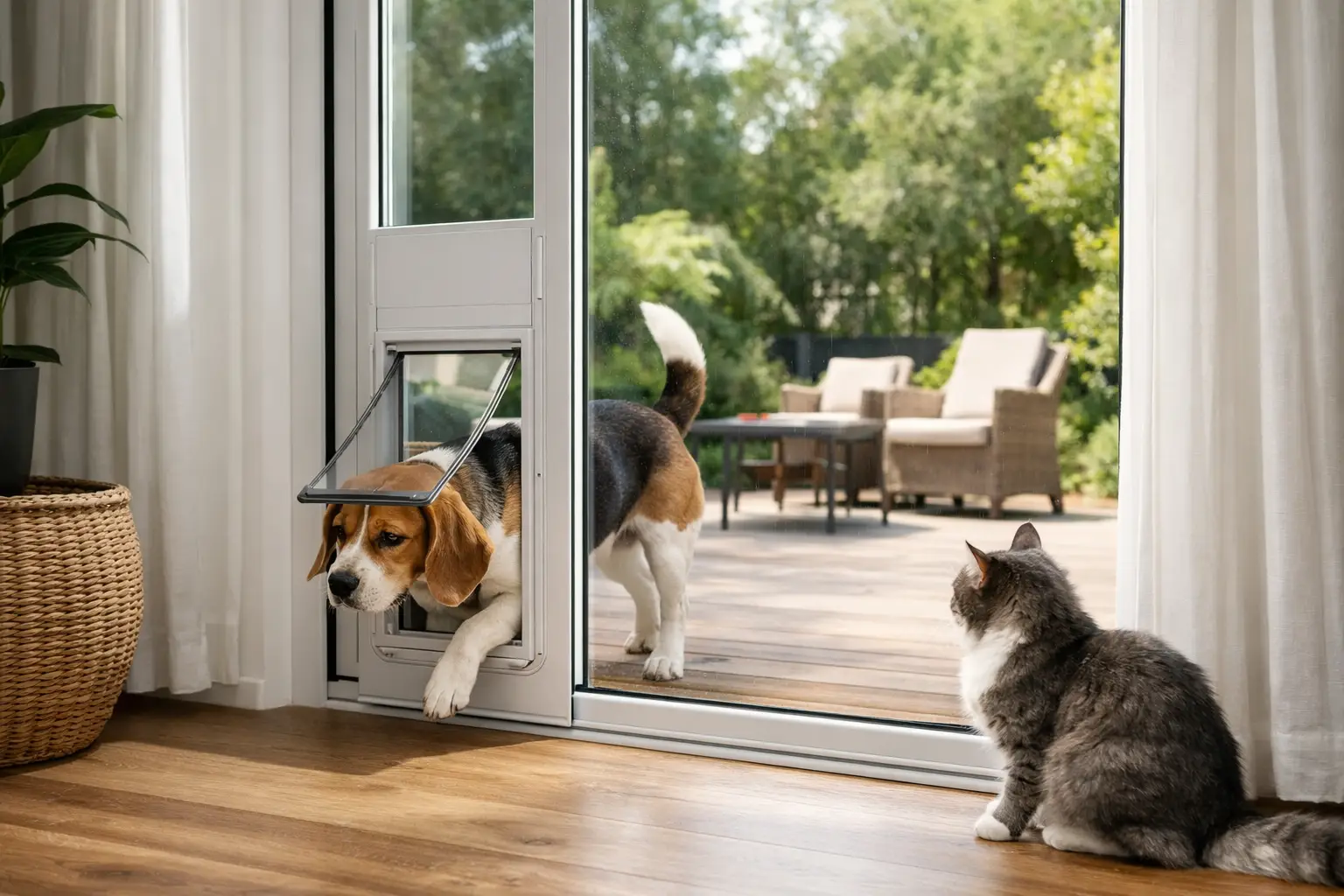
If the step-over height is too high, small dogs, senior pets and short-legged breeds can struggle to use the pet door comfortably.
A larger flap does not automatically solve this problem. The position of the pet door within the door, screen or glass panel also matters.
A lower step-over height often makes training easier and improves accessibility for older pets.
Use a Cardboard Template Before You Buy
One of the easiest ways to choose the right pet door size is to create a cardboard template.
Cut a hole in a piece of cardboard that matches the flap opening size of the pet door you are considering.
Place the cardboard at floor level and encourage your pet to walk through it.
This simple test quickly shows whether your pet has enough clearance.
Watch for signs that the opening is too small:
- Your pet turns sideways
- Their back brushes the top
- Their shoulders touch the sides
- They hesitate before walking through
- They crouch excessively
- They appear uncomfortable
This five-minute exercise can save you from buying the wrong pet door.
Why Breed Guides Are Only a Starting Point
Breed guides help narrow your options, but they should never replace measuring your pet.
Labradors vary significantly in size. Cavoodles vary. Even cats can differ more than most people expect.
If you have multiple pets, choose the pet door based on the largest regular user.
Smaller pets usually adapt to a slightly larger opening far better than larger pets adapt to a cramped one.
We spoke with Andy from Pet Doors Australia about which Premium pet door works best for which breed.
Pet Door Size Chart
Use this pet door size chart as a starting point. Always measure your pet before making a final decision.
| Product | Size | Example Breeds | Best Installation Type |
|---|---|---|---|
| Hakuna Super Tough Small | Small | Cats, Maltese, Chihuahua, Toy Poodle, Pomeranian | Timber, Screens, Glass |
| Hakuna Super Tough Medium | Medium | Cavoodle, Spoodle, Beagle, Cocker Spaniel | Timber, Screens, Glass |
| Hakuna Super Tough Large | Large | Labrador, Boxer, Border Collie, German Shepherd | Timber, Screens, Glass |
| Hakuna Deluxe Aluminium Small | Small | Cats, Chihuahua, Pomeranian | Timber, Security Screens |
| Hakuna Deluxe Aluminium Medium | Medium | Cavoodle, Beagle, Spoodle | Timber, Security Screens |
| Hakuna Deluxe Aluminium Large | Large | Staffy, Kelpie, Labrador | Timber, Security Screens |
| Hakuna Deluxe Aluminium Extra Large | Extra Large | Great Dane, St Bernard, Rottweiler | Timber, Security Screens |
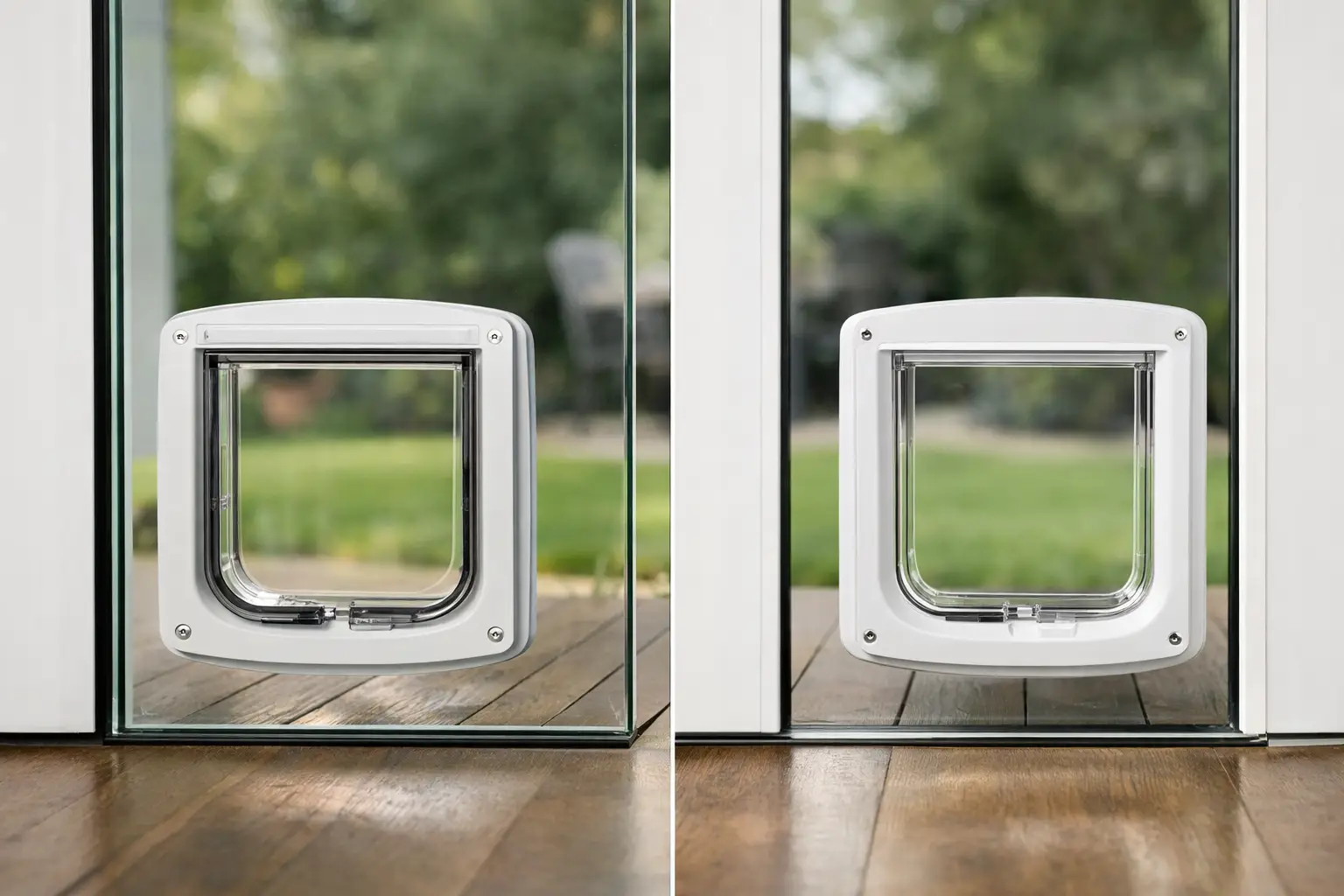
| Premium Underbelly Small | Small | Cats, Maltese, Chihuahua | Glass, Double Glazing, Timber |
| Premium Underbelly Medium | Medium | Cavoodle, Beagle, Spoodle | Glass, Double Glazing, Timber |
| Premium Underbelly Intermediate | Intermediate | Staffy, Kelpie, Cocker Spaniel | Glass, Double Glazing, Timber |
| Premium Underbelly Large | Large | Labrador, Boxer, German Shepherd | Glass, Double Glazing, Timber |
| Premium Underbelly Extra Large | Extra Large | Rottweiler, Bernese Mountain Dog, Mastiff | Glass, Double Glazing, Timber |
| Premium Underbelly Whippet | Specialised | Whippet | Glass, Double Glazing, Timber |
| Premium Underbelly Greyhound | Specialised | Greyhound | Glass, Double Glazing, Timber |
| Premium Underbelly Hungarian Vizsla | Specialised | Hungarian Vizsla | Glass, Double Glazing, Timber |
Matching Pet Door Size to Your Installation Type
Choosing the right pet door size is only part of the equation. The pet door must also suit the installation surface.
Timber Doors
Installing a pet door into timber doors usually offer the most flexibility.
A solid timber door can accommodate a wide range of pet door sizes, provided the installer positions the opening correctly.
For most timber door installations, the Hakuna Super Tough is an excellent choice thanks to its weather sealing, slimline design and lockability.
The Hakuna Deluxe Aluminium can also work well, especially for pets that prefer a softer flexi flap. However, our installers generally do not recommend this model as a DIY installation because it can be more challenging to fit correctly.
Learn more about our pet doors in timber doors.
Security Screens
Installing a pet door into security screens usually requires more planning.
The size of the pet door must work with both the pet and the available screen area.
For many security screen applications, the Hakuna Super Tough performs well because of its slim profile. The Hakuna Deluxe Aluminium can also work well where a lockable security slide is important.
You may also find these guides helpful:
- Can You Put a Pet Door in a Screen Door?
- Cat Door in Security Screen: What You Need to Know
Glass Doors and Windows
In glass pet door installations require accurate sizing from the beginning.
Once a new glass panel has been manufactured, changing the pet door size is expensive and often impossible.
For glass installations, the Premium Underbelly range from Pet Doors Australia remains one of the most popular options. Its slim profile, clean appearance and broad range of sizes make it particularly suitable for glass.
Learn more about:
- Pet Doors in Glass
- In Glass Pet Door Installation Explained
Double Glazing
Double glazing requires even more planning.
The replacement double-glazed unit needs to be manufactured with the correct pet door opening already included.
That makes choosing the correct pet door size especially important.
The Premium Underbelly range offers multiple size options, including specialised sizes for Whippets, Greyhounds and Hungarian Vizslas.
Bigger Is Not Always Better
Many pet owners assume that choosing the largest pet door possible is the safest option.
That is not always true.
A larger pet door can:
- Reduce weather sealing
- Create larger openings than necessary
- Affect security
- Change the appearance of the installation
- Limit suitable installation locations
The goal is not to buy the biggest pet door available.
The goal is to choose the smallest pet door that allows your pet to move through comfortably.
Common Pet Door Sizing Mistakes
Avoid these common mistakes when choosing pet door size:
- Measuring to the top of the head instead of the shoulders
- Choosing by weight alone
- Ignoring step-over height
- Buying before checking the installation surface
- Choosing a pet door that is too small
- Choosing a pet door that is unnecessarily large
- Forgetting to account for growing puppies
When Professional Advice Makes Sense
Professional advice becomes particularly valuable when installing into:
- Glass
- Double glazing
- Security screens
- Sliding doors
- Decorative timber doors
- Homes with multiple pets
- Homes with senior pets
An experienced installer can assess your pet’s measurements, your available installation space and the best mounting height at the same time.
This helps avoid ordering a pet door that suits your pet but not your home.
Final Tip: Measure First, Match Second
The best way to choose pet door size is simple.
Measure your pet first. Match those measurements to the correct pet door. Then make sure the chosen product suits the installation surface.
Do not rely on breed alone. Do not rely on weight alone. And do not buy the pet door before checking whether it will work in your timber door, security screen, glass panel or double-glazed unit.
A well-sized pet door should feel natural for your pet and look like it belongs in your home.
For more help, read our guide on choosing a pet door for cats and dogs or contact Pet Doors Ontime for personalised sizing advice.