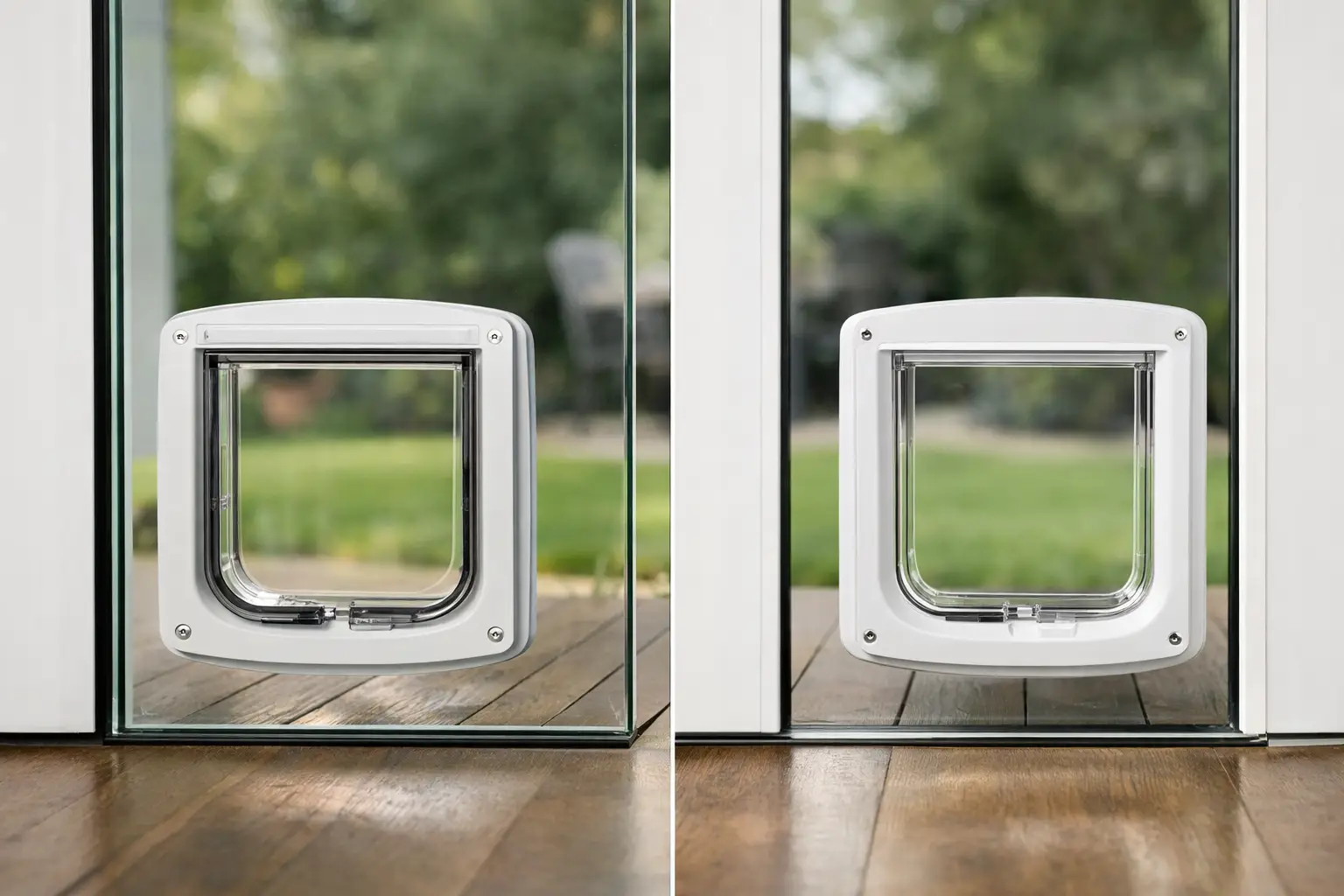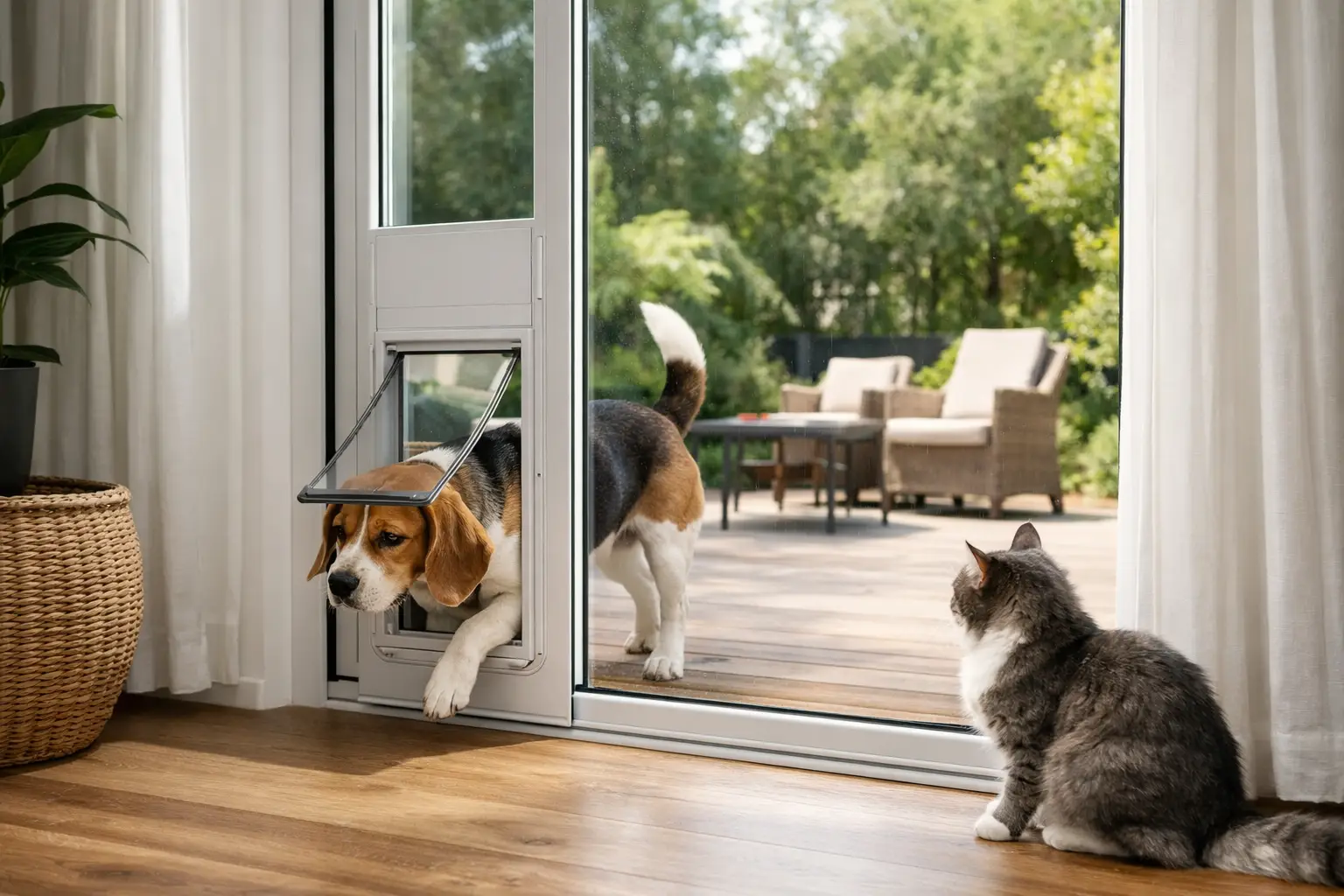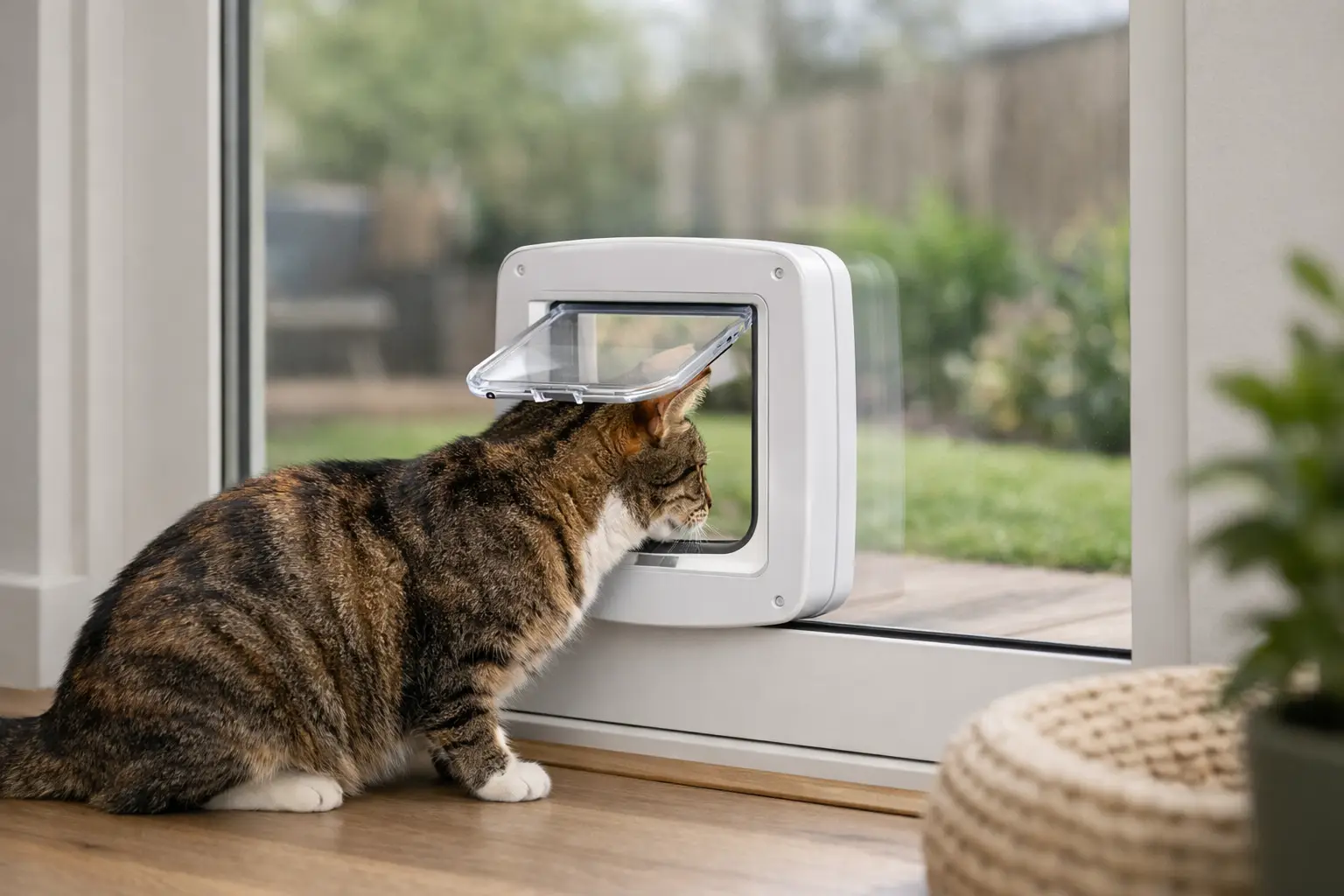
Pet Door Safety Glass Replacement Explained
Many homeowners are surprised when they discover that installing a pet door into glass is not as simple as cutting a hole in the existing panel.
One of the most common questions we hear at Pet Doors Ontime is:
“Can’t you just cut the glass that’s already there?”
In most cases, the answer is no.
Modern glass doors and windows typically use Grade A Toughened Safety Glass, and once that glass has been manufactured, it cannot be cut, drilled, or modified. Attempting to do so will cause the entire pane to shatter.
That’s why most glass pet door installations require safety glass replacement. Instead of modifying the existing panel, glaziers manufacture a new glass panel with the pet door opening already built into the design.
Understanding this process helps homeowners make informed decisions and avoid costly mistakes. If you’re still deciding whether glass is the right location, our guide to What You Need to Know About Installing Your Pet Door Into Glass explains the benefits, costs, and considerations of glass pet door installations.
Why Safety Glass Replacement Is Usually Required
Australian building standards require safety glass in many locations throughout the home, including:
- Sliding glass doors
- Hinged glass doors
- Glass sidelights
- Low-level windows
- Large glass panels near floor level
Most of these areas use toughened safety glass because it is significantly stronger than ordinary glass and provides better protection if breakage occurs.
If toughened glass breaks, it shatters into thousands of small pieces rather than dangerous sharp shards. This helps reduce the risk of injury.
However, this added strength comes with one important limitation.
Once toughened glass has been manufactured, nobody can alter it.
You cannot:
- Cut it
- Drill it
- Resize it
- Add a hole for a pet door
Attempting any of these modifications will cause the entire pane to shatter.
This is why professional pet door installations involve replacing the glass panel with a new piece of toughened safety glass that has been custom manufactured with the pet door opening already incorporated.
If you’d like to learn more about why safety glass is required, read our article In Glass Pet Door Installation Explained.
Safety glass is specially designed to reduce the risk of injury if breakage occurs.
The two most common types found in Australian homes are:
Toughened Safety Glass
Toughened glass undergoes a heat treatment process that makes it significantly stronger than ordinary glass.
This is the most common glass used for pet door installations.
Laminated Safety Glass
Laminated glass consists of two sheets of glass bonded together by a plastic interlayer.
When broken, the glass remains attached to the interlayer rather than falling apart.
While laminated glass appears in some homes, toughened safety glass remains the most common glazing type used in sliding doors and patio doors.
When replacing glass for a pet door, installers must ensure the replacement panel complies with the same safety requirements as the original glazing.
How Pet Door Safety Glass Replacement Works
A professional installation follows a carefully planned process.
Step 1: Site Measure
Every glass panel is measured individually.
The installer confirms:
- Glass dimensions
- Glass thickness
- Door or window type
- Pet door size
- Pet door location
Positioning is extremely important.
The opening cannot sit too close to the edge of the glass and must allow your pet to enter and exit comfortably.
Correct sizing is equally important when selecting a pet door. Before ordering glass, we recommend reading our guide on How to Choose the Right Pet Door Size.
Step 2: Custom Glass Manufacturing
Once measurements are confirmed, a new glass panel is manufactured.
Manufacturers cut the pet door opening into the glass before they toughen the panel.
After manufacturing, the glass undergoes toughening treatment and quality inspections.
Because every panel is custom-made, there is usually a lead time before installation.
Step 3: Glass Replacement
On installation day, the original panel is carefully removed.
The installer replaces the original panel with the new toughened safety glass and then fits the pet door into the pre-cut opening.
When completed correctly, the pet door looks like it was designed as part of the original door.
Installing Pet Doors Into Sliding Glass Doors
Not surprisingly, sliding glass doors are one of the most popular locations for pet doors.
They provide convenient access to outdoor areas and often offer the easiest route for pets entering and leaving the home.
However, installing your pet door into sliding doors require precise glass replacement.
It’s important that the new glass panel must match the original specifications, including:
- Thickness
- Height
- Width
- Safety rating
Poorly matched glass can affect door operation, weather sealing, and security.
Not every pet door works well in a sliding door. Slim-profile pet doors often provide the best results because they allow the sliding panel to pass cleanly behind the fixed panel.
Can You Install a Pet Door in a Window?
Absolutely.
Many homeowners choose window installations when door access is limited.
Popular locations include:
- Laundry windows
- Side access windows
- Utility room windows
- Ground-floor windows
Window installations often work particularly well for cats because they provide convenient access without affecting primary doorways.
The key is choosing the right height and ensuring safe access on both sides of the opening.
Double-Glazed Pet Doors Require Specialised Glass Replacement
However, double glazing requires a slightly different approach.
A double-glazed unit consists of two panes of glass separated by an insulated air gap.
Because the unit is sealed during manufacturing, installers cannot simply cut a hole into an existing double-glazed panel.
Instead, your glazier needs to remake the entire insulated glass unit with the pet door opening incorporated into the design.
As a result the replacement unit must maintain:
- Insulation performance
- Structural integrity
- Weather resistance
- Seal integrity
Therefore it’s important to engage a specialist that understands both pet doors and glazing. This process requires specialist manufacturing and installation expertise.
At Pet Doors Ontime, we regularly install pet doors into double-glazed units and understand the additional requirements needed to achieve a professional finish.
For a deeper explanation, read our article Installing Pet Doors Into Double Glazing.
Choosing the Right Pet Door for Glass
Not every pet door works well in glass.
Some pet doors have bulky frames that suit timber doors and just don’t have the right fixings to be installed into glass.
For glass installations, homeowners often prefer products specifically designed for glazing applications.
Pet Size Matters
Always measure your pet’s:
- Shoulder height
- Body width
- Weight
Choosing the correct size helps your pet use the door comfortably and confidently.
Many homeowners rely on breed recommendations alone, but I think you’ll find accurate measurements deliver far better results. Our guide to Choosing the Right Size Pet Door for Your Dog or Cat explains the process.
Weather Protection
If your pet door faces prevailing weather, choose a model with quality weather seals.
This helps reduce drafts and improves energy efficiency. And prevents unwanted water coming in through the pet door and onto your carpets.
Security
Many homeowners also choose lockable pet doors or secure lock covers for additional peace of mind.
If security is a concern, read Why the Secure Lock Cover Is the Best Solution for Pet Door Security.
Sliding Door Compatibility
If your pet door sits within a sliding glass door, slim-profile models often work best.
Bulky frames can interfere with door operation and reduce clearance between panels. That’s why it’s always best to check the clearance between the sliding door and the fixed panel when your glazier performs a check measure.
Common Mistakes Homeowners Make
Assuming Existing Glass Can Be Cut
This is by far the most common misconception.
Toughened safety glass cannot be modified by anyone after manufacturing. It’s just not possible.
Choosing the Wrong Pet Door Size
Many people rely solely on breed recommendations.
We highly recommend measuring your individual pet to deliver much better results.
Hiring Non-Specialist Installers
Glass replacement requires glazing knowledge, accurate measuring, and an understanding of Australian safety standards.
An incorrectly manufactured panel can lead to expensive delays and replacement costs.
Focusing Only on Price
The cheapest quote is not always the best value.
Quality glass, accurate manufacturing, and professional installation help ensure your pet door performs well for years.
Why Professional Installation Matters
Glass pet door installations involve far more than fitting a pet door.
The process requires:
- Accurate measuring
- Safety glass compliance
- Custom glass manufacturing
- Professional glazing installation
- Correct pet door fitting
Professional installers understand how these elements work together to achieve a safe and attractive result.
Pet Doors Ontime specialises in installing pet doors into glass, double glazing, timber doors, and security screens. You can learn more about our Pet Door Installation Services and how we help homeowners throughout Australia.
Final Thoughts
Pet door safety glass replacement may sound complicated, but it exists for a very good reason.
Australian safety glass standards help protect families, and professional pet door installations must maintain those standards.
While replacing the glass panel adds an extra step compared with timber or screen door installations, it also delivers a cleaner, safer, and more professional result.
When completed correctly, a glass pet door provides years of convenience for both you and your pet while maintaining the appearance, safety, and functionality of your home.
If you’re still weighing up your options, you may also find these articles useful:
- Best Pet Doors in Australia
- 5 Ways to Make the Most of Your Pet Door
- Can You Install a Pet Door in a Hollow Core Door?
Frequently Asked Questions
Can you cut a pet door into existing glass?
No. Because the glass is toughened safety glass, it cannot be cut after manufacturing. The entire panel must be replaced with a new pane that includes the pet door opening.
Why do glass pet door installations take longer than timber door installations?
Glass installations require custom manufacturing of a new safety glass panel. Therefore the process includes measuring, manufacturing, toughening, and installation.
Can you install a pet door in double-glazed glass?
Yes. However, the double-glazed unit must be remade with the pet door opening incorporated during manufacture.
Is toughened glass required for pet door installations?
Toughened glass is the best glass for pet door installations. In most door and low-level window applications, Australian Standards require safety glazing anyway. Therefore the replacement glass must meet the same safety requirements as the current building standards.
Are glass pet doors safe?
Yes. When installed correctly into compliant safety glass, glass pet doors are extremely safe and durable.
What is the best pet door for glass?
The best pet door depends on your pet’s size, the type of glass panel, and the installation location. Premium glass-specific pet doors often provide the cleanest finish and best weather protection. The Underbelly pet door from Pet Doors Australia is one of our all time faves for dogs and cats or all shapes and sizes.
How much does a glass pet door installation cost?
Pricing varies depending on glass size, glass type, pet door model, and whether the panel is single-glazed or double-glazed.
Can pet doors be installed into windows?
Yes. Many cats and small dogs successfully use pet doors that homeowners install in laundry windows.