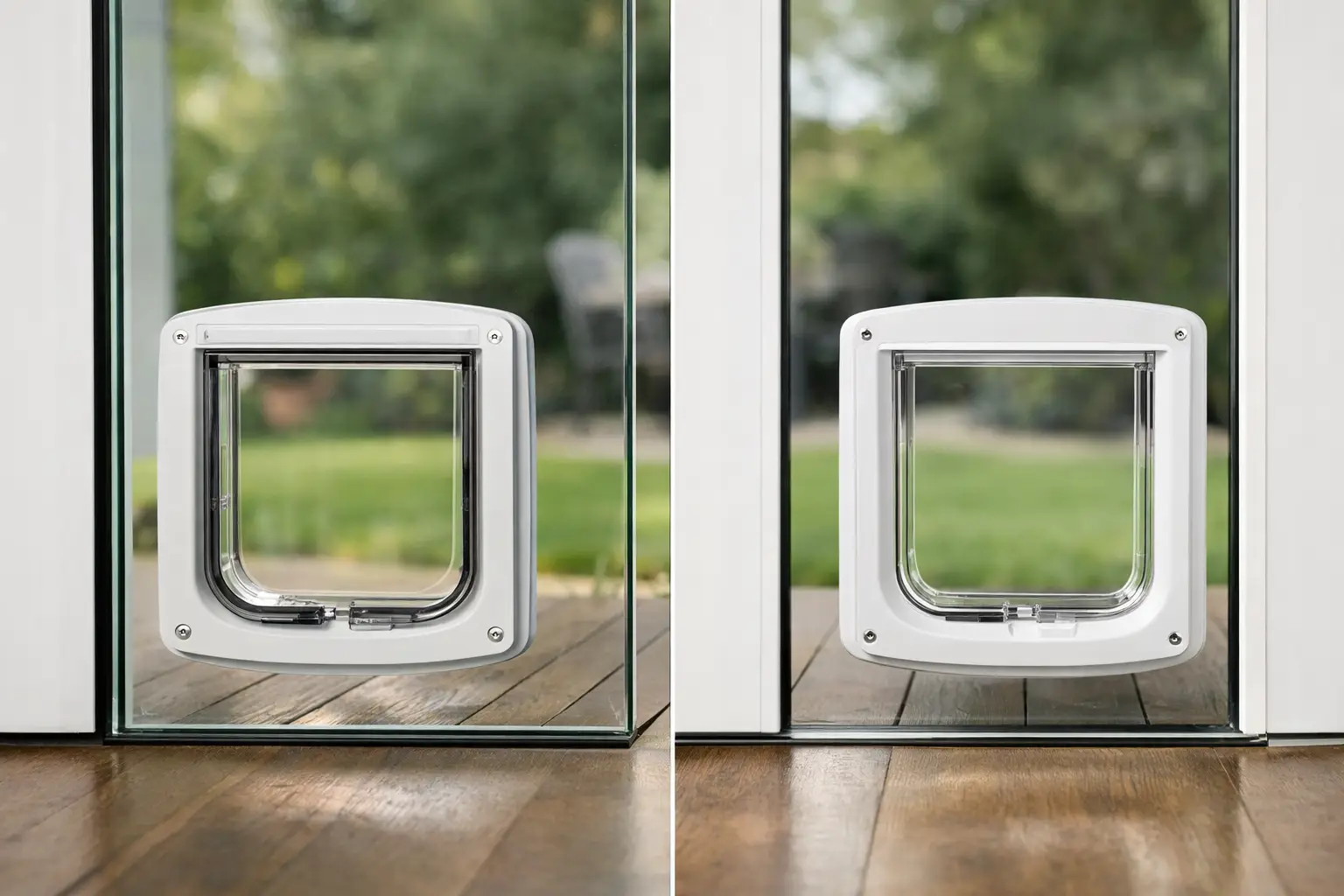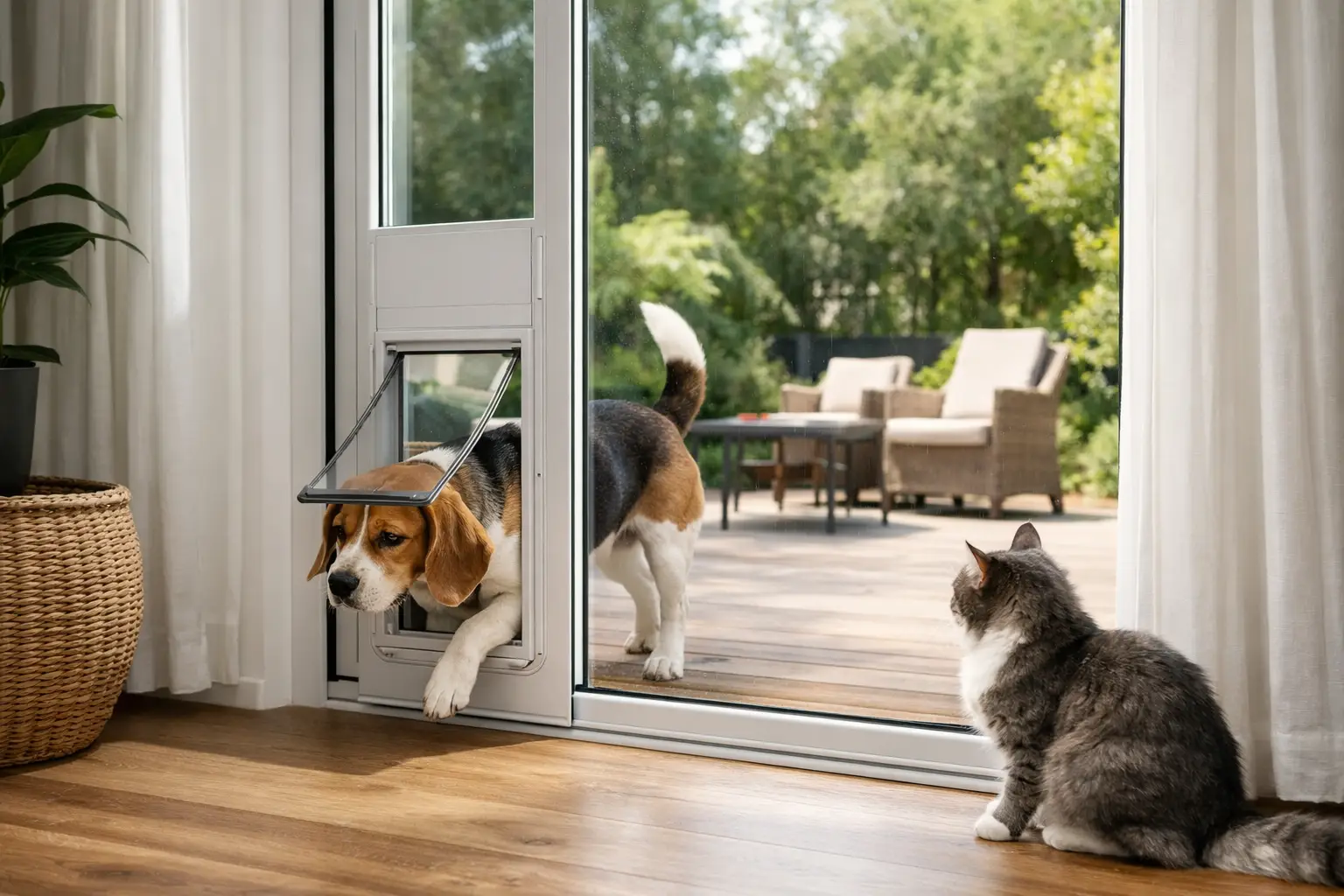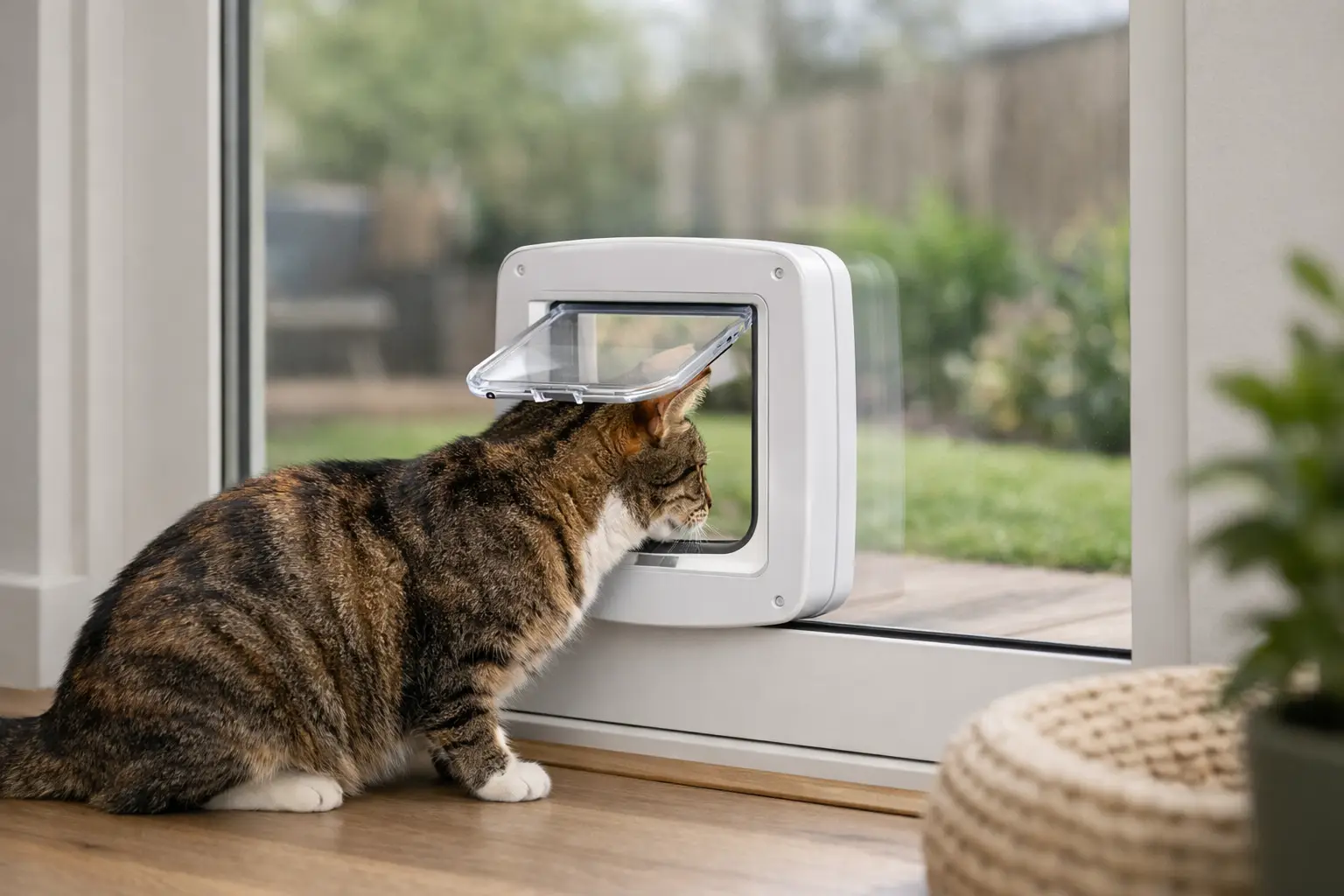
Yes, in many cases you can install pet doors in hollow core doors. However, it needs to be done carefully because hollow core doors are not built the same way as solid timber doors.
A hollow core door has a thin outer skin with a lightweight internal structure. This means there is less solid material for the pet door frame to grip onto once the opening is cut. If you use the wrong pet door, or if the cut-out is not supported properly, the result can feel flimsy, rattle over time, or leave the door more vulnerable to damage.
That doesn’t mean hollow core doors are unsuitable. It simply means the pet door and installation method need to match the door.
What is a hollow core door?
Builders commonly use hollow core door inside homes. It’s lighter and usually more affordable than a solid timber door. Instead of being made from solid wood all the way through, it also has a thin outer face with a lightweight internal core.
This makes the door easier to open and close, but it also means it doesn’t have the same strength as a solid external door. So when a pet door is installed, the installer needs to cut through the outer faces of the door and make sure the pet door frame is secure.
Hollow core doors are most often found in internal areas such as laundries, hallways, bedrooms, bathrooms, and some internal garage access doors. They’re less common as main external doors, where stronger solid-core or security-rated doors are usually preferred.
Is a hollow core door strong enough for a pet door?
A hollow core door can be strong enough for a pet door, especially if you have cats and small to medium dogs. The key is choosing the right size and style of pet door.
A small cat door or small dog door will usually place less stress on the door than a large dog door. The larger the opening, the more material needs to be removed. In a hollow core door, this can affect the door’s strength and how neatly the pet door sits.
For larger dogs, a hollow core door may not always be the best option. A large flap needs a bigger cut-out, and the dog may place more force on the door when passing through. If the door is lightweight or already damaged, a large pet door may not be practical.
Choosing the right pet door for a hollow core door
For a hollow core door, choose a pet door with a secure frame that clamps neatly around the cut-out. The frame should be suitable for the door thickness and provide enough coverage on both sides of the door.
Pet door size is very important. The opening should be large enough for your pet to move through comfortably, but not so large that it removes more of the door than necessary. Base the right size on your pet’s shoulder height and body width, not just breed.
A common mistake is choosing a pet door that is too large “just in case.” In a hollow core door, oversized pet doors can create avoidable problems. A better approach is to choose the smallest comfortable size for the pet that will actually be using it.
Can you install a pet door in an internal hollow core door?
Yes, internal hollow core doors are often good candidates for pet doors. This can be useful if you want to give your pet access to a laundry, garage, bedroom, enclosed cat area, or another part of the home.
For example, a pet door in a laundry door can allow a cat to reach a litter tray without leaving the door open. A small dog door may allow access between living areas without needing to constantly open and close doors.
Because internal doors are not usually exposed to weather, sealing and insulation may be less of a concern. However, the installation still needs to be neat, secure, and correctly sized.
Can you install a pet door in an external hollow core door?
This depends on the door. Some external doors may look like basic timber doors but have different construction, weather exposure, or security considerations.
If the door leads outside, you need to think about more than just whether the pet door will fit. You also need to consider weather sealing, wind, rain, home security, and how often the pet will use the door.
A lightweight hollow core door may not be ideal for an external pet door if it is exposed to the weather or used heavily by a larger dog. In these situations, a solid door, security screen, or glass panel may be a better long-term option. A good installer would recommend a pet door with a solid frame to help stabilise the opening.
Why installation method matters
Installing a pet door in a hollow core door is not just about cutting a hole and attaching the frame. Once the opening is cut, the hollow section inside the door may be exposed. If your pet door installer doesn’t handle this properly, the pet door may not sit firmly.
A good pet door installer should:
- keep the pet door level and correctly positioned
- avoid cutting too close to the bottom rail or door edges
- suit the thickness of the door
- secure the frame properly on both sides
- leave a neat finish around the opening
- make sure the flap opens and closes freely
A poor fit can make the pet door move, rattle, loosen, or damage the door skin over time.
Where should the pet door be positioned?
Position the pet door to suit your pet, not just the door. The flap needs to sit low enough for your pet to step through comfortably, but not so low that it interferes with the bottom rail of the door.
For dogs, the top of the flap should generally allow enough clearance for the shoulders. And for cats, the opening should be comfortable without requiring them to crouch awkwardly or jump through.
Placement also matters if the door has decorative panels, moulding, or a raised profile. Hollow core doors tend to be flat and simple to work with, while others have panel designs that can affect where the pet door can be installed.
DIY or professional installation?
Some pet doors can be installed in hollow core doors as a DIY project, especially if the door is flat, internal, and being fitted with a small pet door. However, mistakes can be costly.
Cutting the opening in the wrong spot, choosing the wrong size, or using a pet door that does not suit the door thickness can leave the door looking rough or reduce its strength. Once the hole is cut, it cannot easily be undone.
We recommend choosing professional installation when:
- the door is external
- you have a large pet door
- the door has panels or decorative moulding
- you are unsure whether the door is hollow or solid
- a clean, long-lasting finish is important to you
- the door is part of a rental property or strata home
A professional installer can also confirm whether the door is the best location or whether another option, such as a glass panel or security screen, would work better.
Are hollow core doors suitable for large dog doors?
Sometimes, but not always. Large dog doors need a bigger opening, and that can be an issue with lightweight hollow core doors. A larger dog may also place more pressure on the door when moving through the flap.
If the door feels flimsy, flexes easily, or is already damaged, it may not be suitable for a large pet door. A solid timber door, sliding glass door, or security screen may provide a better result.
For larger dogs, the goal is not just to make the pet door fit. It needs to be comfortable for the dog and strong enough for everyday use.
What are the alternatives?
If a hollow core door is not suitable, there are other options. A pet door may be installed into:
- solid timber doors
- glass sliding doors or fixed glass panel
- security screen doors
- screen doors (not fly screens)
- a wall, depending on the property
- another internal door with better construction
The best option depends on your pet, the layout of your home, and whether the door leads inside or outside.
Final thoughts
You can install a pet door in a hollow core door, but you need to match the door, pet size, flap size and installation method carefully.
For cats and small dogs, hollow core doors can often work well, especially for internal access. For medium or larger dogs, or external doors exposed to weather and regular use, the door needs to be assessed more carefully.
Best results come from choosing a correctly sized pet door that suits the door thickness. And it’s important you make sure the installation supports the cut-out properly. Good pet door should make life easier for your pet without leaving the door weak, messy, or difficult to use.
At Pet Doors Ontime, we help you choose the right pet door for the right location, whether that is a hollow core door, timber door, glass panel, or security screen.