How to Measure Your Dog for a Pet Door
Choosing the right pet door size is not just about breed. A Cavoodle can be tall and lean or short and compact. A Staffy may be lower to the ground but broad through the chest. Even dogs from the same breed can need different pet door sizes depending on their body shape, leg length and confidence using a flap.
The most accurate way to choose a pet door is to measure your dog properly, then compare those measurements with the actual clear opening of the pet door. You should also think about where the pet door will be installed, because placement is just as important as size.
Choosing the correct size is important, but the installation location and pet door type are equally important. If you’re still deciding whether to install a pet door yourself or use a professional service, read our guide on Dog Door Installation Service Done Right.
The 3 Measurements That Matter Most
Ask your dog to stand naturally on a flat floor. Do not measure while they are sitting, stretching or leaning forward. You want their normal standing position because this shows how they will step through the pet door every day.
1. Body Height
Measure from the top of the elbow to the top of the collar area or the highest part of your dog’s body that needs to pass through the opening.
This is one of the most important measurements because it represents the size of your dog’s body rather than their overall standing height. Dogs naturally lower their head when passing through a flap, so measuring to the top of the head can result in choosing a pet door that is unnecessarily large.
2. Width Across the Chest
Measure across the widest part of your dog’s chest.
For many breeds, chest width is actually the limiting factor when choosing a pet door. A broad-chested Staffy, Bulldog or French Bulldog may require a wider opening than a taller dog of similar weight.
Always allow a couple of centimetres of extra room so your dog can move through comfortably without brushing the frame.
3. Height Including Legs
Measure from the floor to the top of your dog’s back while they are standing naturally.
This measurement helps determine the correct placement of the pet door. Ideally, the top of the flap should sit just above your dog’s back height so they can walk through naturally without needing to duck.
Dog Pet Door Measurement Table
| Measurement | How to Measure | Why It Matters |
|---|---|---|
| Body Height | Top of elbow to top of collar/body area | Determines minimum flap height |
| Chest Width | Across the widest part of the chest | Determines flap width |
| Standing Height | Floor to top of back | Helps position the top of the flap |
| Leg Height | Floor to chest/belly area | Helps determine step-over height |
| Breed Type | Compare to common breed sizes | Guide only – always measure your own dog |
Why Leg Height Matters More Than Most People Think
One of the biggest mistakes people make when measuring for a pet door is focusing only on the opening size and forgetting about placement.
Leg height is critical because it determines how high the bottom of the pet door can sit above the ground. If the opening is too high, your dog will need to jump or lift themselves awkwardly every time they use it.
This is especially important for:
- Dachshunds
- Corgis
- French Bulldogs
- Basset Hounds
- Older dogs
- Puppies
- Dogs with mobility issues
The ideal pet door allows your dog to step through naturally without having to jump over a high lip.
How Much Clearance Should You Allow?
As a general rule, allow a couple of centimetres of clearance around your dog’s measurements.
This extra space provides comfortable movement without creating an unnecessarily large opening.
| Fit Type | Result |
|---|---|
| Too Small | Dog squeezes through, bumps the frame or hesitates |
| Ideal Fit | Comfortable movement with slight clearance |
| Too Large | More draughts, larger opening than necessary and reduced aesthetics |
Bigger is not always better. The best pet door is one that comfortably fits your dog while still suiting the installation location.
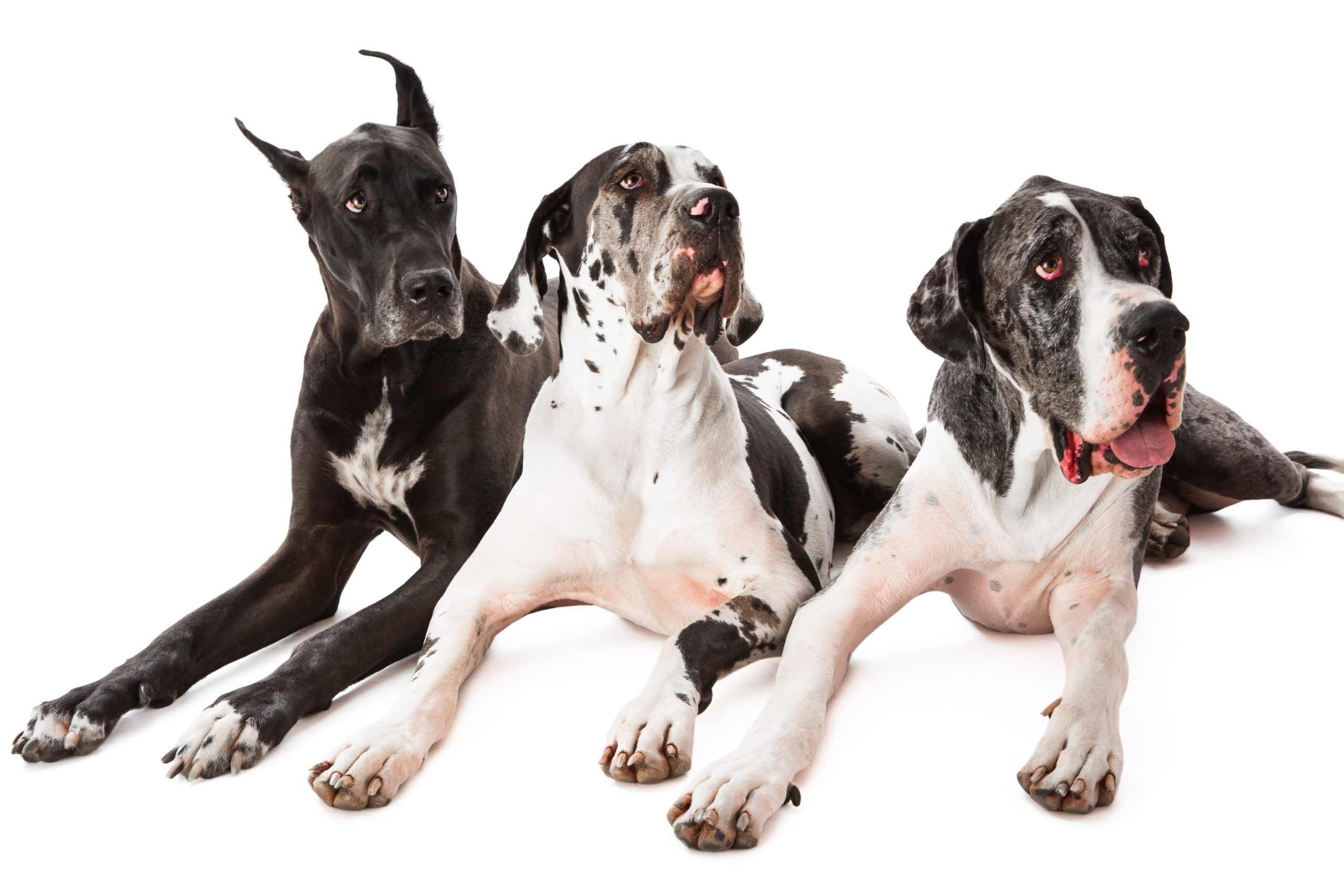
Breed Is Only a Guide
Breed charts can be helpful, but they should never be used as the sole method of choosing a pet door.
Even within the same breed there can be significant variations in:
- Height
- Weight
- Chest width
- Coat thickness
- Body shape
For example:
| Breed | Key Measurement to Watch |
|---|---|
| Cavoodles & Spoodles | Height varies significantly |
| Staffies | Chest width is often the limiting factor |
| French Bulldogs | Width and leg height |
| Labradors | Overall body height |
| Dachshunds | Leg height and placement |
Always measure the dog in front of you rather than relying entirely on breed recommendations.
Don’t Measure the Outside Frame
A common sizing mistake is comparing your dog’s measurements to the outside dimensions of a pet door.
What matters is the clear opening or flap opening size.
Two pet doors can have very similar overall dimensions while offering very different usable openings.
Always compare your dog’s measurements with the manufacturer’s stated opening dimensions.
Best Pet Doors for Short-Legged Dogs
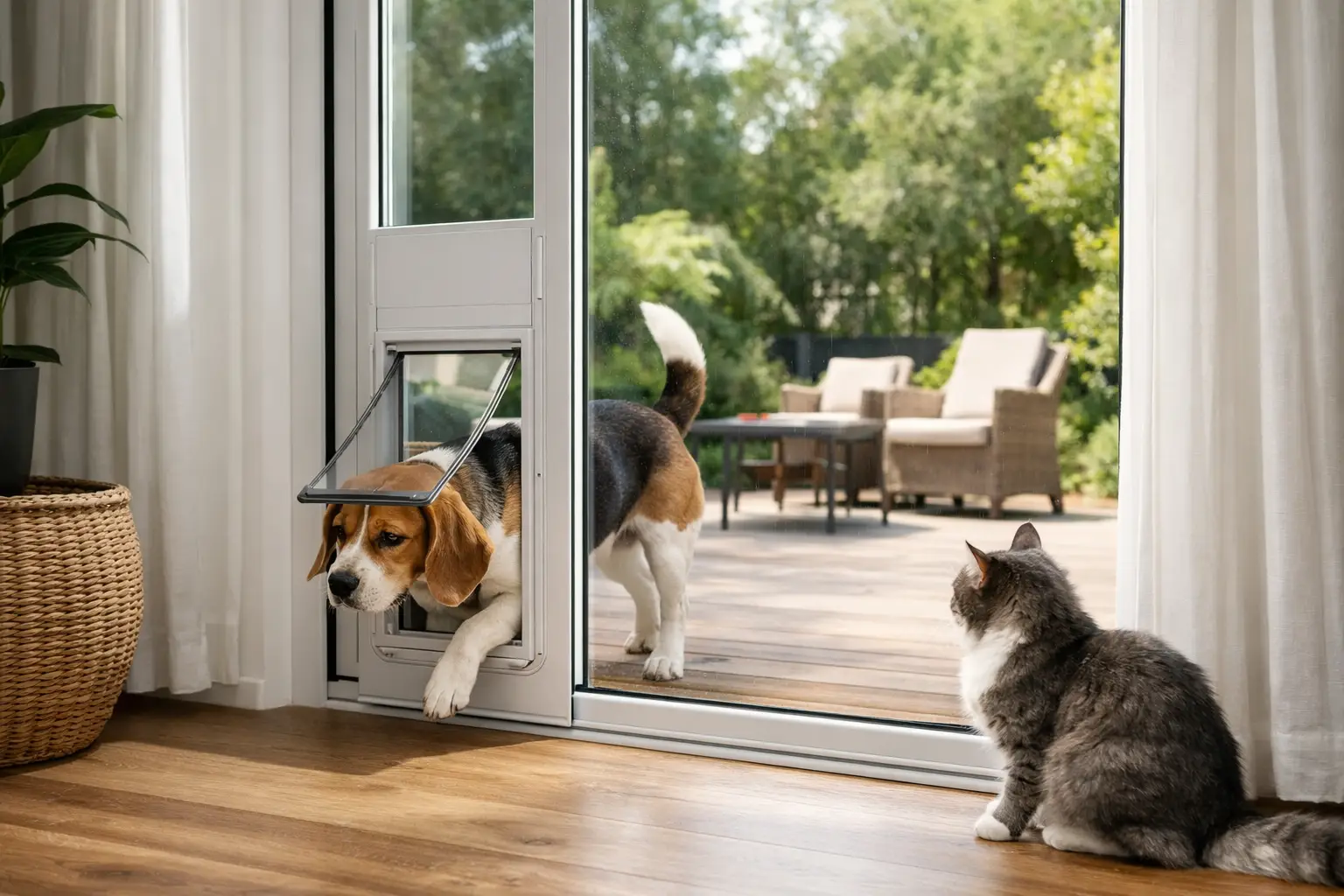
Short-legged dogs often benefit from pet doors that can be installed lower to the ground.
For glass installations, the Premium Underbelly Pet Door from Pet Doors Australia is an excellent option because it is specifically designed to sit lower and provide easier access for short-legged pets.
For timber and security screen doors, a rectangular pet door such as the Hakuna Super Tough is often ideal because it can usually be positioned right at the base of the frame. This helps minimise the step-over height and makes access easier for shorter dogs.
If you’re comparing different pet door brands and models, our guide to the Best Pet Doors in Australia provides a detailed breakdown of the most popular options for glass, timber and security screen doors.
Measuring for More Than One Dog
If multiple dogs will use the pet door, measure each dog individually.
Use:
- The widest dog for width
- The tallest dog for flap height
- The shortest-legged dog for step-over height
The ideal pet door should work comfortably for all pets in the household.
Pet Door Placement Matters
Getting the correct pet door size is only half the equation.
The location of the installation can affect how comfortable the pet door is for your dog and what products can be fitted.
Timber Doors
Timber doors are usually the most flexible option. However, panels, rails and lock locations can still affect placement.
Installing the pet door as low as practical often provides the best result, particularly for smaller dogs.
Security Screen Doors
Security screen doors require specialised pet doors designed to maintain the strength and integrity of the frame.
Placement should still ensure a low and comfortable step-over height.
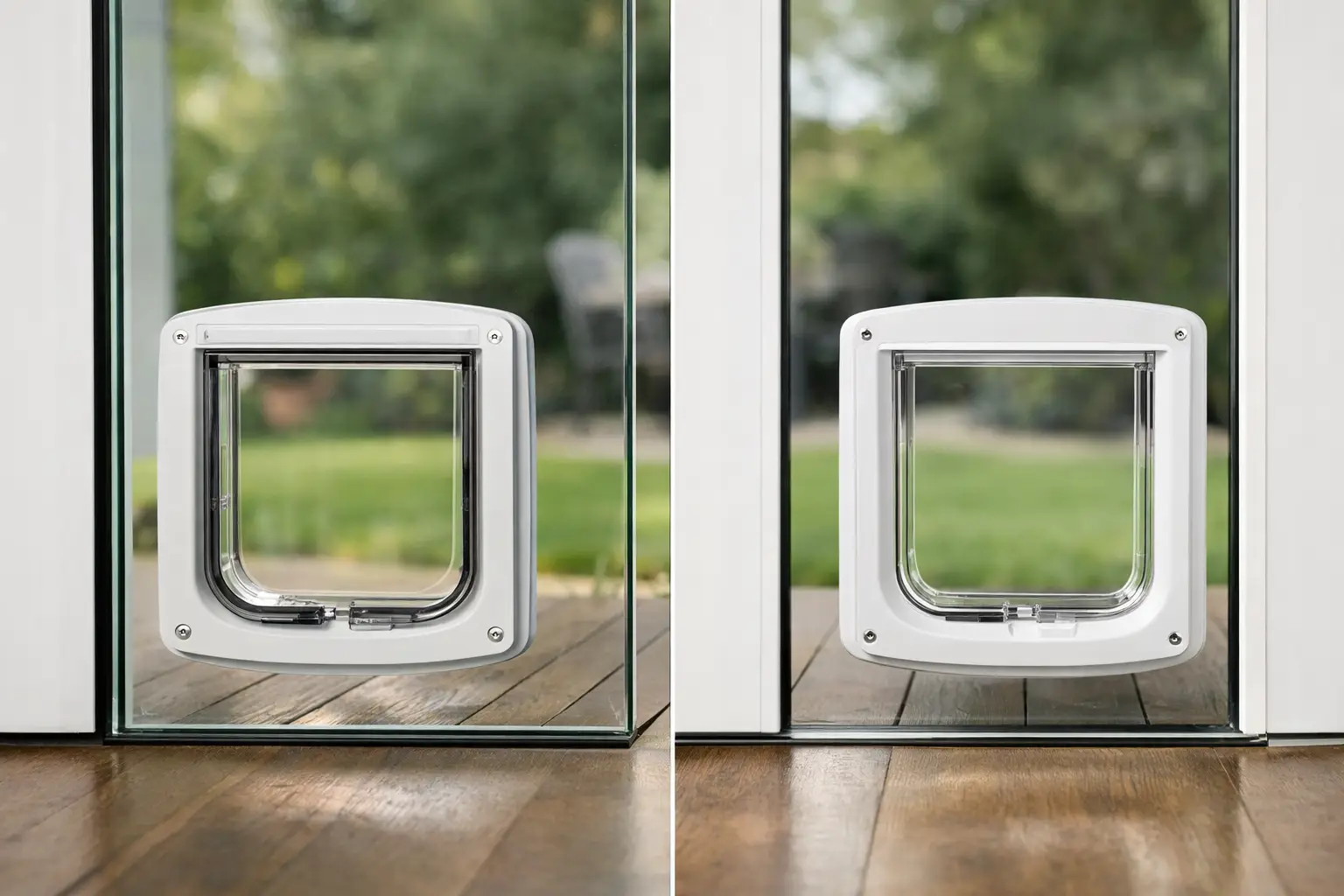
Glass Doors and Windows
Glass installations require careful planning because existing toughened safety glass cannot simply be cut on site.
In most cases, a new Grade A Toughened Safety Glass panel must be manufactured with the pet door opening already included.
This means getting the measurements right before ordering is extremely important.
To learn more about the process, read our guide to In-Glass Pet Door Installation Explained.
A Simple Cardboard Test
Before ordering your pet door, create a cardboard template matching the proposed opening size.
Hold it at the intended installation height and encourage your dog to walk through.
This simple test can help identify:
- Whether the opening feels too narrow
- If the flap placement is too high
- Whether your dog needs more clearance
- Which size option feels most comfortable
It is particularly useful if your dog falls between two size recommendations.
Getting Your Dog Comfortable Using Their New Pet Door
Even a perfectly sized pet door may take a little time for some pets to get used to.
Positive reinforcement, patience and selecting the right flap style can all help improve confidence and encourage regular use.
For practical tips on training your pet and getting the most value from your installation, read 5 Ways to Make the Most Out of Your Pet Door.
Final Checklist
Before purchasing a pet door, make sure you have:
| Checklist | Complete |
|---|---|
| Measured body height (elbow to collar area) | ☐ |
| Measured chest width | ☐ |
| Measured full standing height | ☐ |
| Considered leg height and step-over height | ☐ |
| Allowed a few centimetres of clearance | ☐ |
| Checked the actual clear opening size | ☐ |
| Used breed as a guide only | ☐ |
| Considered installation location | ☐ |
| Selected a suitable pet door style | ☐ |
Need Help Choosing the Right Pet Door?
A properly sized pet door should feel natural from day one. Your dog should be able to walk through comfortably without squeezing, ducking or jumping awkwardly.
If your pet door is being installed into glass, a security screen, sliding door, fixed panel or double-glazed unit, professional advice can help ensure the best result.
Pet Doors Ontime specialises in pet door installations across timber, glass and security screens, helping pet owners choose the right size, the right product and the right installation method for their home.
If you’d like to learn more about the benefits of professional installation, read Dog Door Installation Service Done Right.