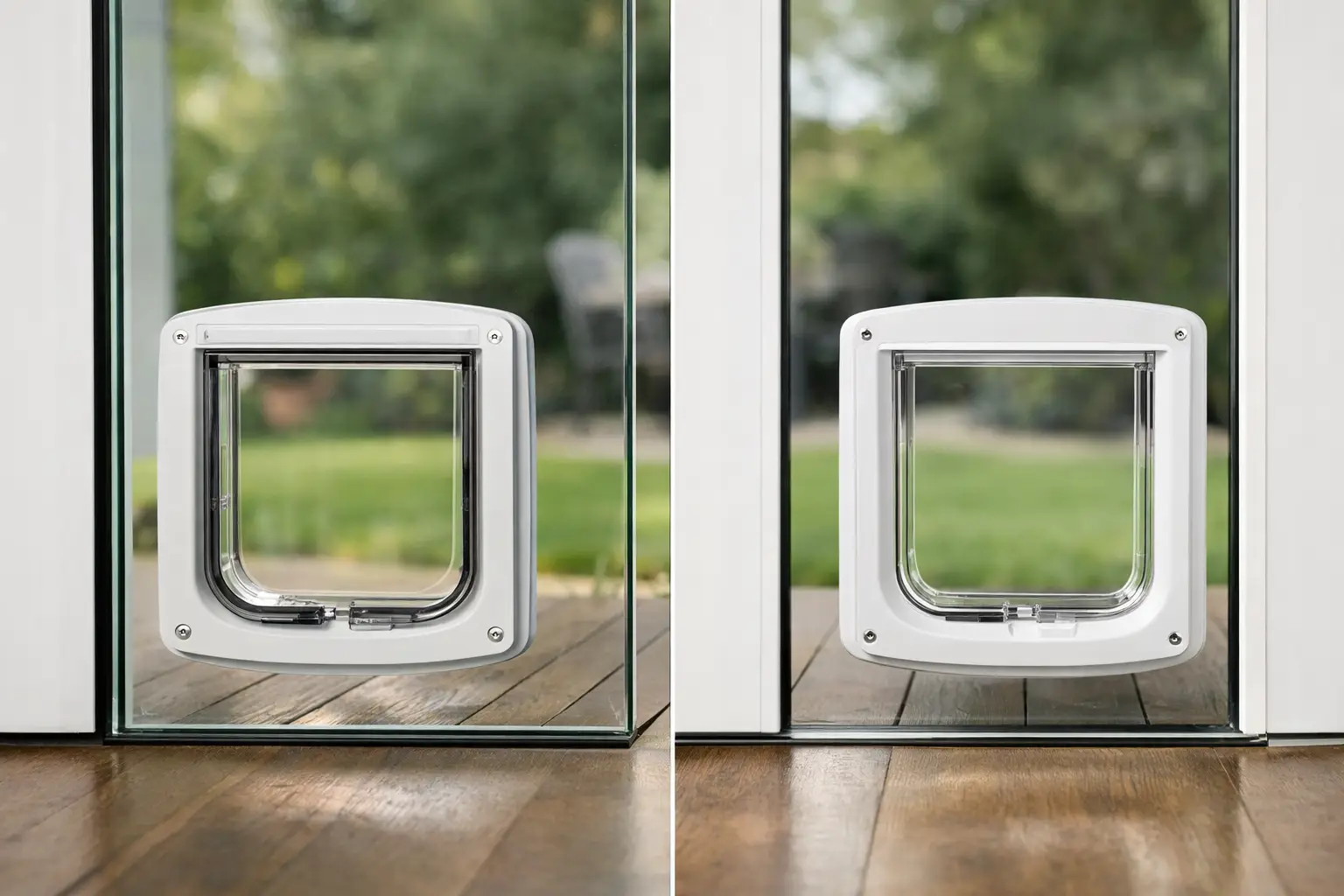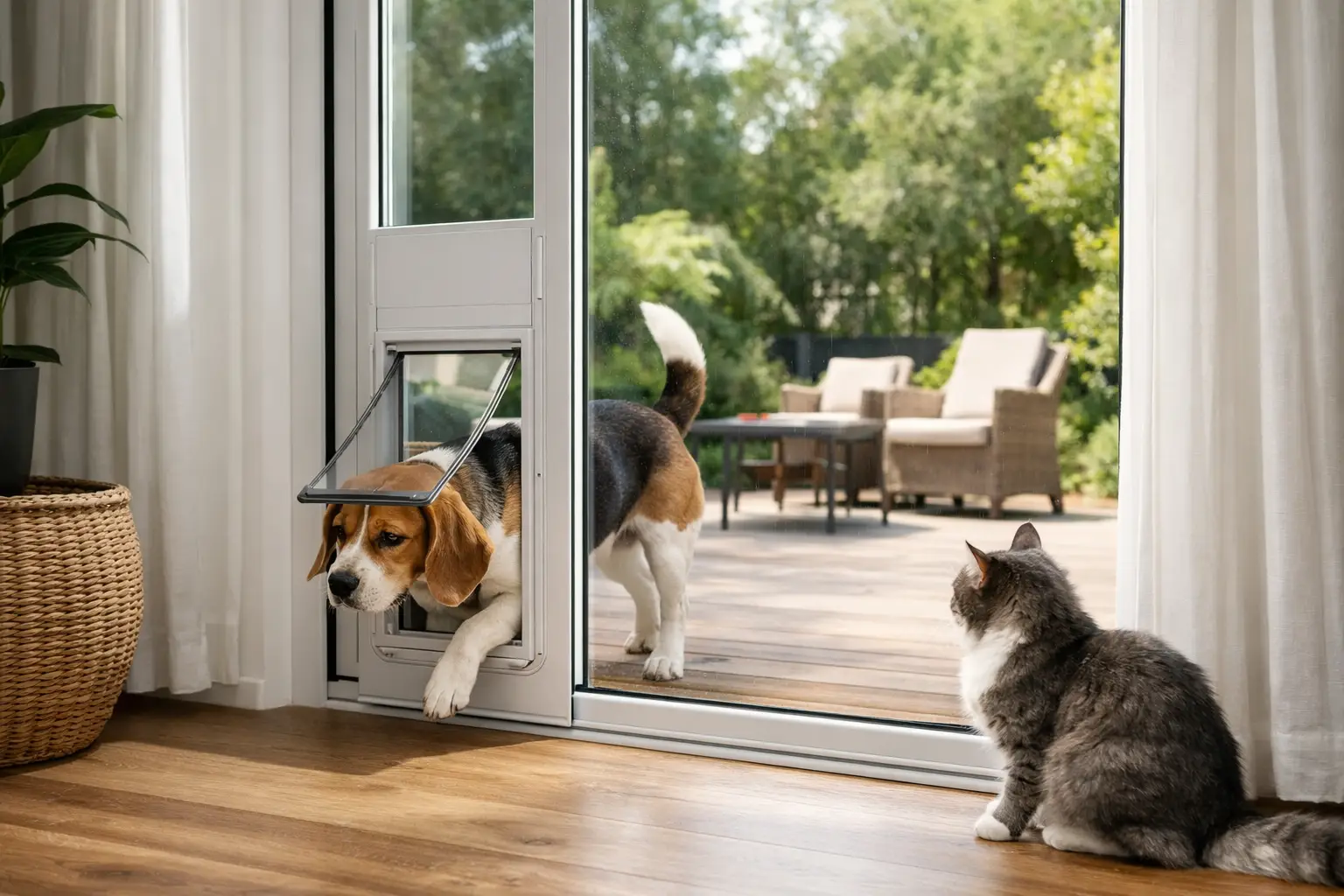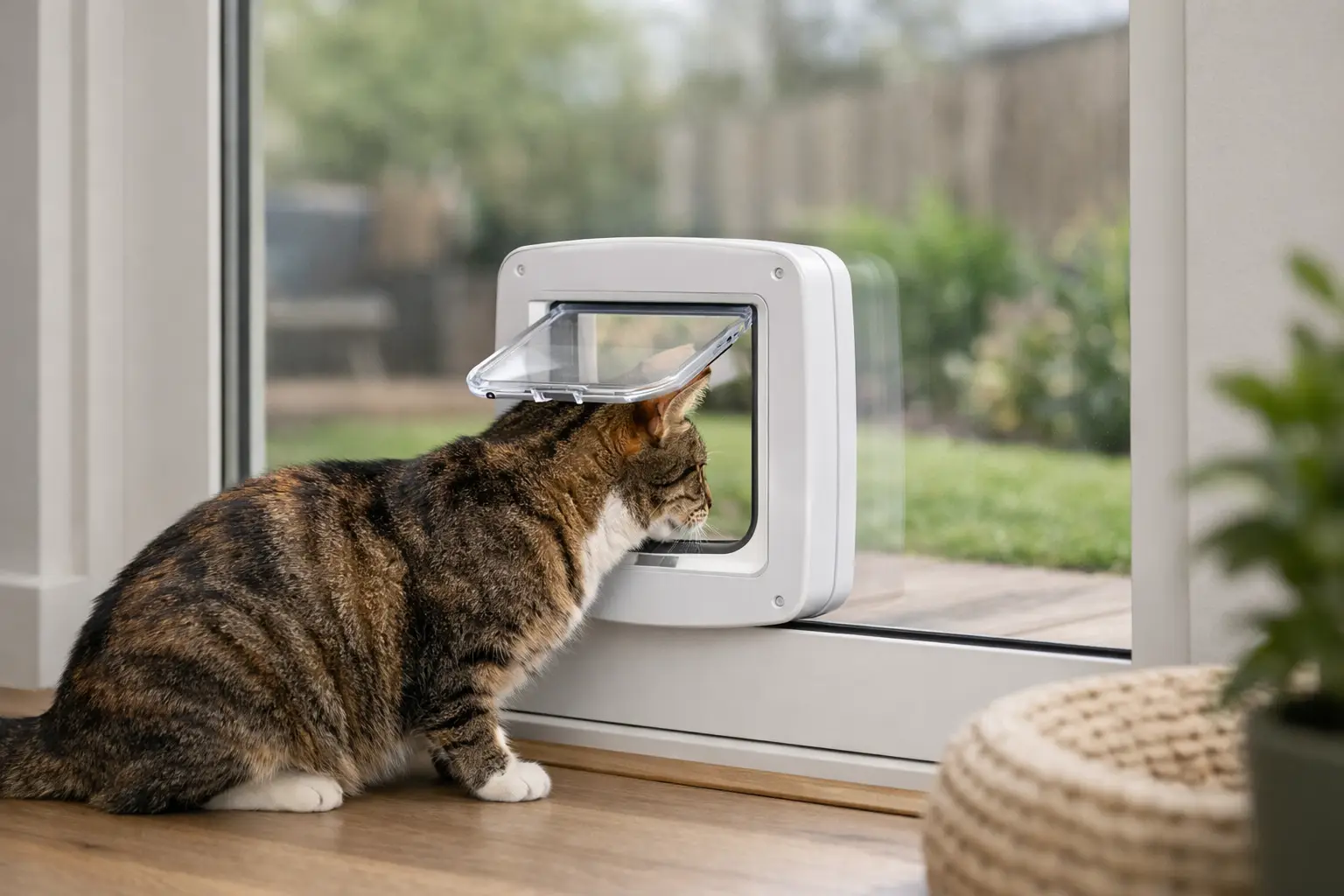
A security screen only does its job if it stays strong, closes properly and still looks like it belongs on your home. That’s why adding your cat door into a security screen is not a quick DIY job for most households. Done well, it gives your cat freedom without compromising the screen. Done badly, it can weaken the frame, affect the mesh and leave you with a rattly, awkward finish.
For many cat owners, the appeal is obvious. You stop playing doorman at 6 am. Your cat gets a consistent way in and out. The house stays calmer, especially in busy family homes where people are constantly coming and going. But security screens are different from timber doors, and they need a different approach.
Can you put a cat door in a security screen?
In many cases, yes. We can fit cat doors into many security screens, but we first need to check the screen type, mesh, frame condition and flap size. Not every screen is a good candidate, and not every pet door suits security mesh.
This is where a lot of homeowners get caught out. They assume a pet door is a universal product you can install anywhere. In reality, security doors are built to resist force, hold their shape and meet practical safety expectations around the home. That’s why you’ve got to be careful when selecting your pet door before you install it.
Installing it properly takes into account how the pet door will be fixed, whether reinforcement is required and how to preserve the screen’s operation. The goal is not just to create an opening. It’s to create an opening that works every day without damaging the door or reducing its performance.
Why security screens need a specialist approach
Timber is forgiving. Security screens are not so much. They are made from framed metal sections and fitted with specific mesh systems, and each part contributes to strength and function.
When someone installs a cat flap poorly, you can end up with loose mesh, sharp edges, poor alignment or a latch that no longer sits correctly. In some cases, the flap itself becomes the weak point because someone attached it to unsuitable material or used the wrong hardware. That is not just untidy. It can shorten the life of the door.
Professional fitting reduces those risks. It starts with checking whether the screen is suitable at all. From there, a good installer matches the right cat door to your door construction and your cat’s size. You’d be surprised how this matters more than you would think. A flap that’s too small causes hesitation and training issues. Too large, and it can look bulky, interfere with the screen layout or simply be unnecessary.
🐾 Pet Doors Ontime Pro Tip:
A professional installation isn’t just about making the hole. Correct positioning, structural support, weather sealing and neat finishing all contribute to a pet door that performs well for years.
Choosing the right cat door in a security screen
The right product is a balance of pet size, screen compatibility and daily use. Most cat owners do not need the biggest model available. They need one that allows comfortable access without making the opening larger than necessary.
A few practical factors should guide the choice. The first is your cat’s shoulder width and body height rather than just weight. The second is the flap style. Some cats prefer a lighter flap, while nervous or older cats may need a design that is easier to push through. The third is locking options. If you want to keep your cat indoors overnight or limit access during certain times, a lockable model is worth considering.
Placement also matters. If an installer fits the flap too low, it can affect the bottom rail area of the screen. If they place it too high, your cat may find it unnatural to use. There is usually a best-fit zone that supports both the pet’s movement and the screen’s structure.
🐾 Pet Doors Ontime Pro Tip:
Not all security screen doors are built the same. Before choosing a pet door, check whether your screen uses diamond grille, perforated aluminium, stainless steel mesh or another security system. Each requires a different installation method to maintain strength and appearance.
What can go wrong with DIY fitting
There is a reason many people call for help after trying it themselves. On the surface, it looks straightforward. Mark the opening, cut the mesh, screw in the flap and you are done. But security screens rarely forgive rough measuring or a rushed cut.
The most common problems are poor fit, visible damage and weakened mesh around the opening. If the cat door is not secured properly, it may flex or move every time the flap swings. That constant movement puts stress on the surrounding material. Over time, the screen can loosen, buzz in the wind or develop a visibly uneven finish.
There is also the issue of choosing the wrong flap for the application. Some off-the-shelf products are fine in timber but not appropriate for security screen installation. Others may technically fit but leave a result that looks temporary rather than part of the door.
For homeowners with a good quality front or rear security door, that is a frustrating outcome. The screen is there for durability and presentation as much as convenience. A clean installation should respect both.
Safety, security and finish all matter
When customers ask whether fitting a cat door into a security screen affects security, the honest answer is that it depends on the screen, the flap and how it is installed. A professional should assess any modification properly. That is the trade-off.
You want the convenience of pet access, but you also want the door to remain functional, secure and neat. An experienced installer can choose and fit the right flap to keep those priorities balanced. The work should leave the door opening and closing correctly, the flap sitting square and the result looking intentional rather than improvised.
This is especially important in homes with premium screen doors, newer renovations or visible entry points where appearance matters. A messy installation stands out straight away. A professional one generally blends in and performs as expected from day one.
Is a security screen the best location for a cat door?
Sometimes yes, sometimes no. A security screen is often the most practical option when you want fresh air, regular access and a solution that avoids altering a main timber or glass door. For many Australian homes, especially when you use the screen door daily, it is the simplest path.
But it is not always the best choice. If the screen is old, damaged or built with a mesh type that does not suit the job, another location may be smarter. A timber door can be more flexible in some homes. Glass can also be an excellent long-term option, but it requires specialist handling. In standard glass and double-glazed panels, a pet door is not cut into the existing pane on site. A glazier replaces the panel with a new toughened safety glass unit manufactured to suit the opening. was built to do.
That is why a proper quote process matters. It tells you what is possible before any work begins, and it helps avoid spending money on the wrong solution.
What to expect from professional installation
A professional service should do more than fit the flap. It should remove uncertainty.
That starts with advice on sizing and product selection. It continues with checking the screen construction and recommending whether the installation is suitable. Then comes the fitting itself, with attention to clean lines, safe fixing and reliable operation.
For households in Melbourne, Sydney, Brisbane, Perth or Adelaide, using an installer who handles these jobs regularly can save a lot of time and second-guessing. Security screens, glass, timber and even double glazing all involve different methods. Experience matters because each material has its own limits.
A good installer will also tell you when not to proceed. That is often the clearest sign you are dealing with a specialist rather than someone just trying to make a flap fit at any cost.
A few questions worth asking before you book
Before you book, ask whether your specific screen suits a cat door, what size the installer recommends, and how the installation will affect the door’s finish and function. It is also worth asking about lead times, fixed pricing and whether the installer is insured.
Those questions are practical, not fussy. They help you compare genuine expertise with a guess-and-go approach. If the answers are vague, that usually tells you enough.
For many households, a cat door in security screen panels is one of those small upgrades that makes daily life easier straight away. The key is choosing an installer who fits it properly the first time, so your cat gets independence and your door keeps doing the job it was built to do.
If you are weighing up the idea, start with suitability rather than product hype. The right advice will save you money, protect your screen and give you a result that feels like part of the home, not an afterthought. Check out our guide on cat flap installation services done properly.
Need help choosing?
Not every cat flap suits every screen door.
If you are unsure about which cat flap is right for you send Pet Doors Ontime a pic of you pet and your security screen. We can help you work out:
- Which cat flaps are suitable
- Where’s the best position
- Whether DIY or professional installation would be best