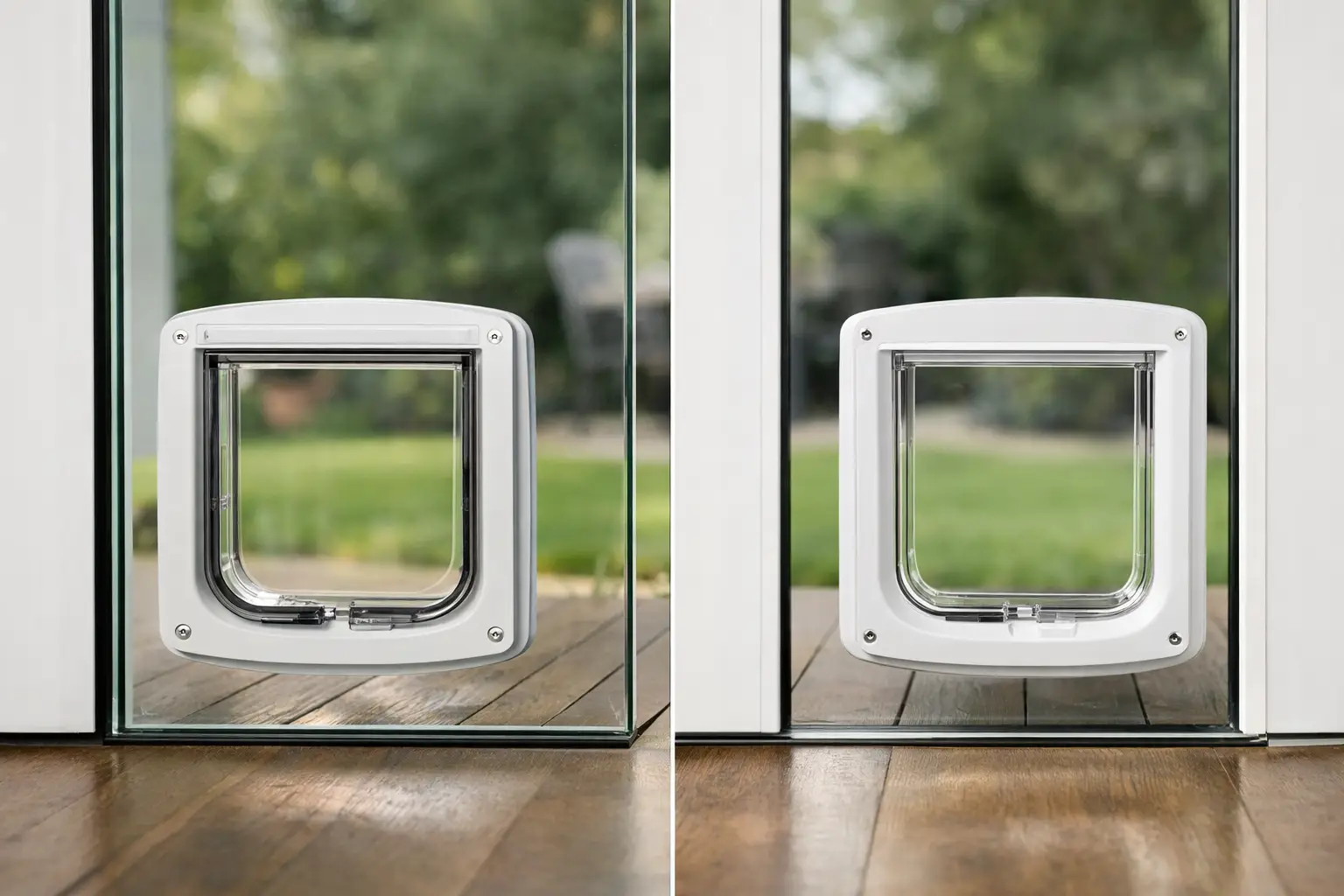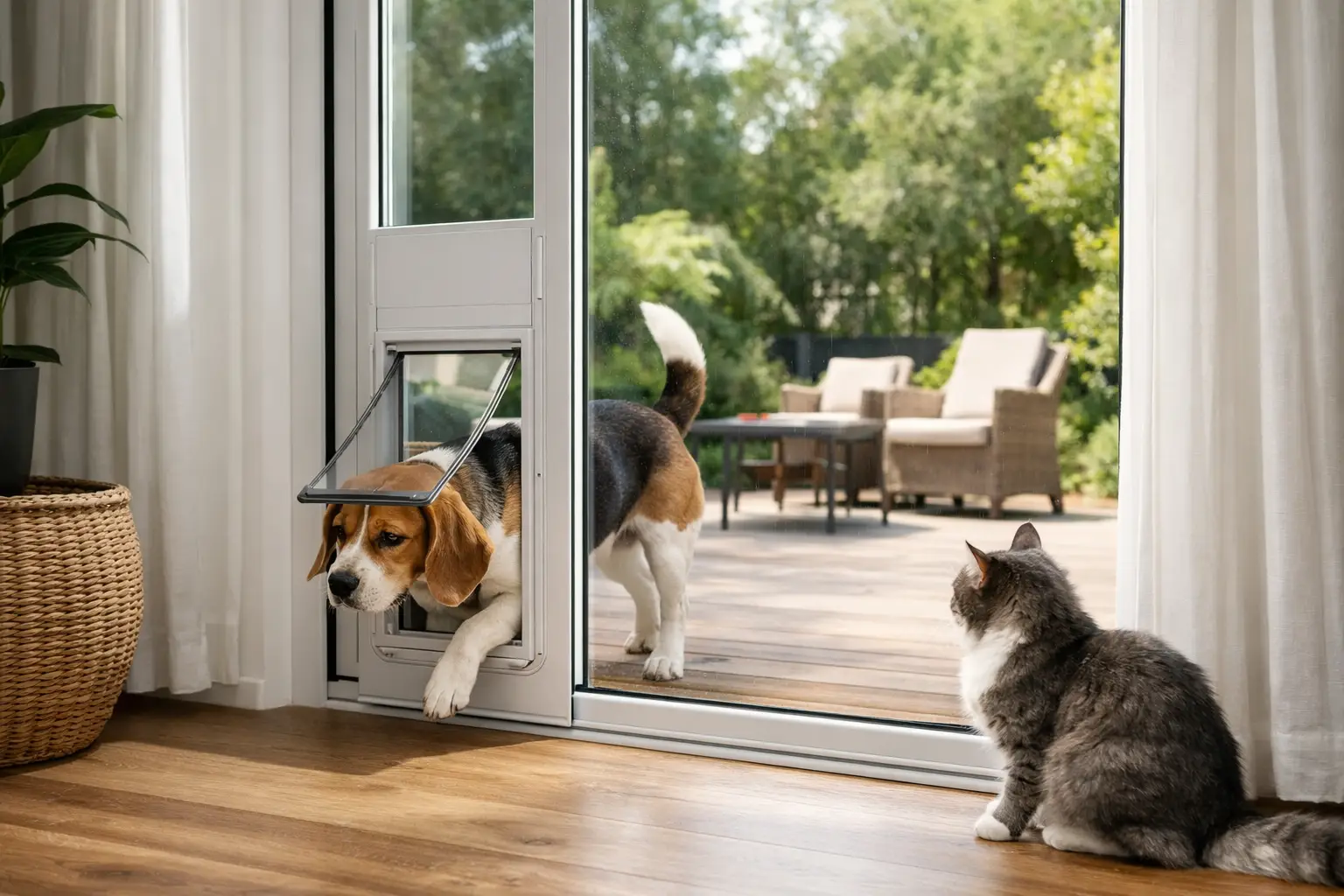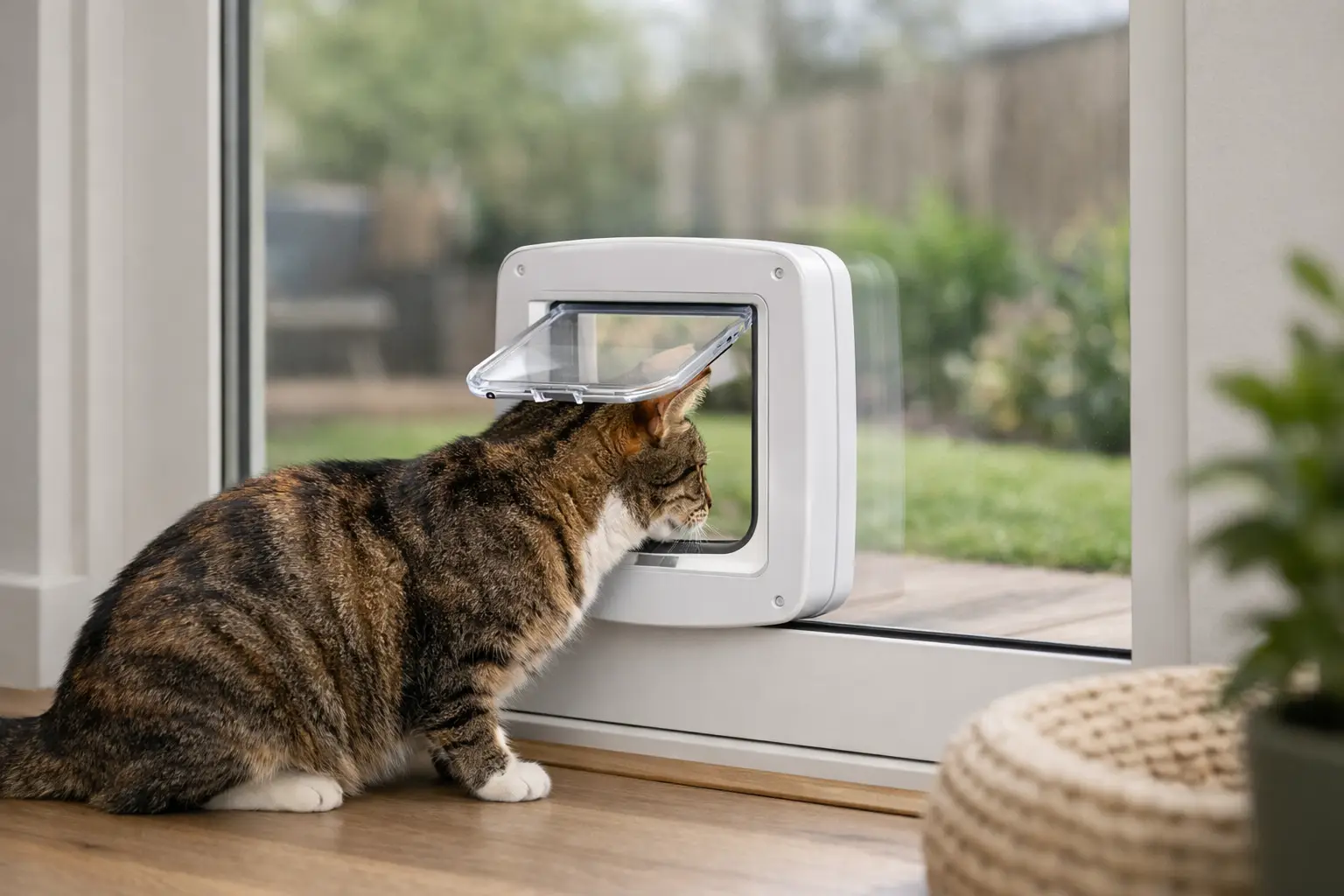
That soft corner of a flyscreen door might look like a convenient place for a pet door, but it is usually one of the weakest parts of the whole entry. While pet doors for fly screens do exist, they are not something we generally recommend at Pet Doors Ontime.
The main issue is strength. A standard flyscreen is designed to keep insects out and allow airflow through the home. It is not designed to carry the weight, movement and daily impact of a pet door. Once a section of mesh is cut and a flap is fitted, the screen can become flimsy, stretched or damaged over time.
Every time a dog or cat pushes through the flap, force is transferred into the mesh and surrounding frame. In a lightweight flyscreen, that repeated pressure can cause tearing, sagging, rattling and distortion. What may look fine on day one can quickly become a repair job or a full screen replacement.
The only time a flyscreen pet door may be suitable is when the flyscreen is part of a stronger screen system, such as a diamond grill screen. In that case, the diamond grill provides the support that the mesh alone cannot offer.
Are pet doors for fly screens a good idea?
In most cases, no.
Although there are pet doors available that are marketed for flyscreens, we do not usually recommend installing them into standard flyscreen mesh. The screen itself is too light and flexible to provide reliable long-term support. Once the pet door is fitted, the mesh and frame are placed under strain every time your pet uses it.
This is especially true for dogs. Even small dogs can put repeated pressure on the flap as they push through, and larger dogs can quickly damage a weak screen. Over time, the mesh may pull away, the frame may twist, or the pet door may become loose.
For cats and very small pets, a flyscreen pet door may appear to work for a while, but the same issue still applies. The flyscreen is not a solid surface. It does not have the strength of timber, glass, aluminium paneling or a proper security screen.
The only exception is when the flyscreen is supported by a diamond grill or another rigid structure. In those cases, the grill can help carry the load and reduce movement around the cut-out. Even then, the screen still needs to be assessed properly before installation.
What makes a flyscreen suitable?
A standard flyscreen on its own is generally not suitable.
For a pet door to work properly, the area around the opening needs to be stable. The pet door needs something firm to clamp or fasten to, and the screen needs to remain square and secure after the cut-out is made. Lightweight mesh does not provide that support.
The frame also matters. Many flyscreen doors are made with slim, lightweight aluminium sections. These are fine for holding mesh, but they are not always strong enough to handle a pet door being used multiple times a day. If the screen door is already loose, bowed, worn or out of square, cutting into it can make those problems worse.
A flyscreen may only be considered suitable if it has additional support built into it. The most common example is a diamond grill screen, where the grill sits behind or within the screen and provides a stronger backing. In this setup, the pet door is not relying on the mesh alone.
In some cases, extra structural support may need to be added. This can mean reinforcing the screen, adding framing around the opening, or rebuilding part of the screen so the pet door has something solid to attach to. Without that support, the installation is unlikely to last.
Choosing the right size pet door
Size is another reason flyscreen installations can become a problem.
The larger the pet door, the larger the cut-out required. In a standard flyscreen, a bigger opening removes more of the screen’s already limited strength. This can make the whole panel weaker and more likely to sag, twist or tear.
A flap that is too small can be uncomfortable for your pet and may cause them to push harder through the opening. A flap that is too large can put too much pressure on the screen. Either way, the flyscreen often ends up carrying more force than it was designed to handle.
This is why choosing a pet door is not just about measuring your pet. It is also about checking whether the door or screen can support that size of opening. With flyscreens, that is often where the problem starts.
For medium and large dogs, we generally recommend looking at stronger installation options instead. Timber doors, glass panels, security screens or other solid surfaces are usually better suited, depending on the home and the pet.
DIY can work – but flyscreens are less forgiving than they look
DIY installation into a flyscreen might look simple, but it is easy to damage the screen.
Flyscreens are flexible, light and unforgiving once they have been cut. If the opening is not perfectly positioned, if the pet door is overtightened, or if the mesh is not supported properly, the result can look untidy and fail quickly. The screen may start to ripple, pull away from the frame or tear around the pet door.
The bigger issue is long-term use. A pet door is not a static fitting. Your pet may use it many times a day, pushing, scratching or bumping the flap each time. A standard flyscreen is not strong enough to take that repeated movement without support.
In some cases, what starts as a simple DIY job ends with the whole screen needing to be remade. That is why we recommend getting advice before cutting into any flyscreen, especially if the door is custom made, older, lightweight or used by a dog.
Pet doors for fly screens versus other installation options
A flyscreen is usually not the best place for a pet door.
Other installation options are often stronger, cleaner and more durable. Timber doors are generally much better suited because they provide a solid surface for the pet door to be fixed into. Glass installations can also be a good option when handled professionally with the correct safety glass. Some security screens may also be suitable, depending on their construction.
A diamond grill screen may sometimes be an option because the grill provides the support that the flyscreen mesh cannot. Without that support, the pet door is relying on a flimsy material that was never designed for that kind of use.
It is also worth considering how your pet uses the home. The most convenient-looking location is not always the most practical or durable one. A flyscreen may be closest to the outdoor area, but if it cannot support the pet door properly, another location may be the better long-term choice.
At Pet Doors Ontime, we look at the door, the pet, the size of the flap and the structure around the opening before recommending an installation option.
Safety, durability and a clean finish
A pet door should make life easier, not create a weak point in your home.
With flyscreens, the risk is that the installation does not stay secure. The mesh can stretch, the pet door can loosen, and the frame can become distorted. This can affect how the screen slides, closes or latches. It can also leave gaps where insects can get in.
Durability is the biggest concern. Even if the pet door looks neat when first installed, the screen still needs to handle everyday use. Dogs often push through with force, especially when excited. Cats may scratch or pull around the opening. Over time, that movement can break down a standard flyscreen.
A clean finish also depends on having the right support. Without reinforcement, the pet door may not sit firmly, and the surrounding mesh can look uneven. In some cases, additional framing or a screen rebuild may be needed to create a stronger and safer result.
When a professional install makes the most sense
A professional assessment is strongly recommended before installing a pet door into any flyscreen.
This is because the answer is often not just about whether a pet door can physically be fitted. It is about whether it should be fitted, whether it will last, and whether the screen can handle daily use.
A professional installer can check whether the screen has enough support, whether a diamond grille is present, whether reinforcement is needed, and whether another location would be better. In many cases, the most honest advice is not to install into the flyscreen at all.
At Pet Doors Ontime, we do not recommend standard flyscreen pet door installations because they are often too flimsy and prone to damage over time. If the screen has a diamond grille or can be properly reinforced, it may be possible, but it needs to be assessed first.
Customers are not just buying a flap. They are getting practical advice on what will work, what will last, and what may cause problems later.
Common questions about flyscreen pet doors
One common question is whether a pet door can be installed into any flyscreen. The answer is no. Most standard flyscreens are too light and flexible to support a pet door properly.
Another question is whether flyscreen pet doors are available. Yes, they are available, but that does not mean we recommend them. The product may fit into the mesh, but the screen itself may not be strong enough to support it long term.
People also ask whether a flyscreen pet door will work for dogs. For most dogs, especially medium or large dogs, a standard flyscreen is not suitable. The repeated force from daily use can cause the mesh or frame to fail.
The only situation where a flyscreen pet door may be considered is when the screen has extra structural support, such as a diamond grille. In some cases, additional reinforcement or a rebuild of the screen may still be required.
If you are considering a pet door for a flyscreen, the safest approach is to have the screen checked first. A quick assessment can help avoid torn mesh, broken frames and unnecessary replacement costs later. In many homes, a stronger installation option will provide a cleaner, safer and longer-lasting result.
For more information check out petdoorsontime.com