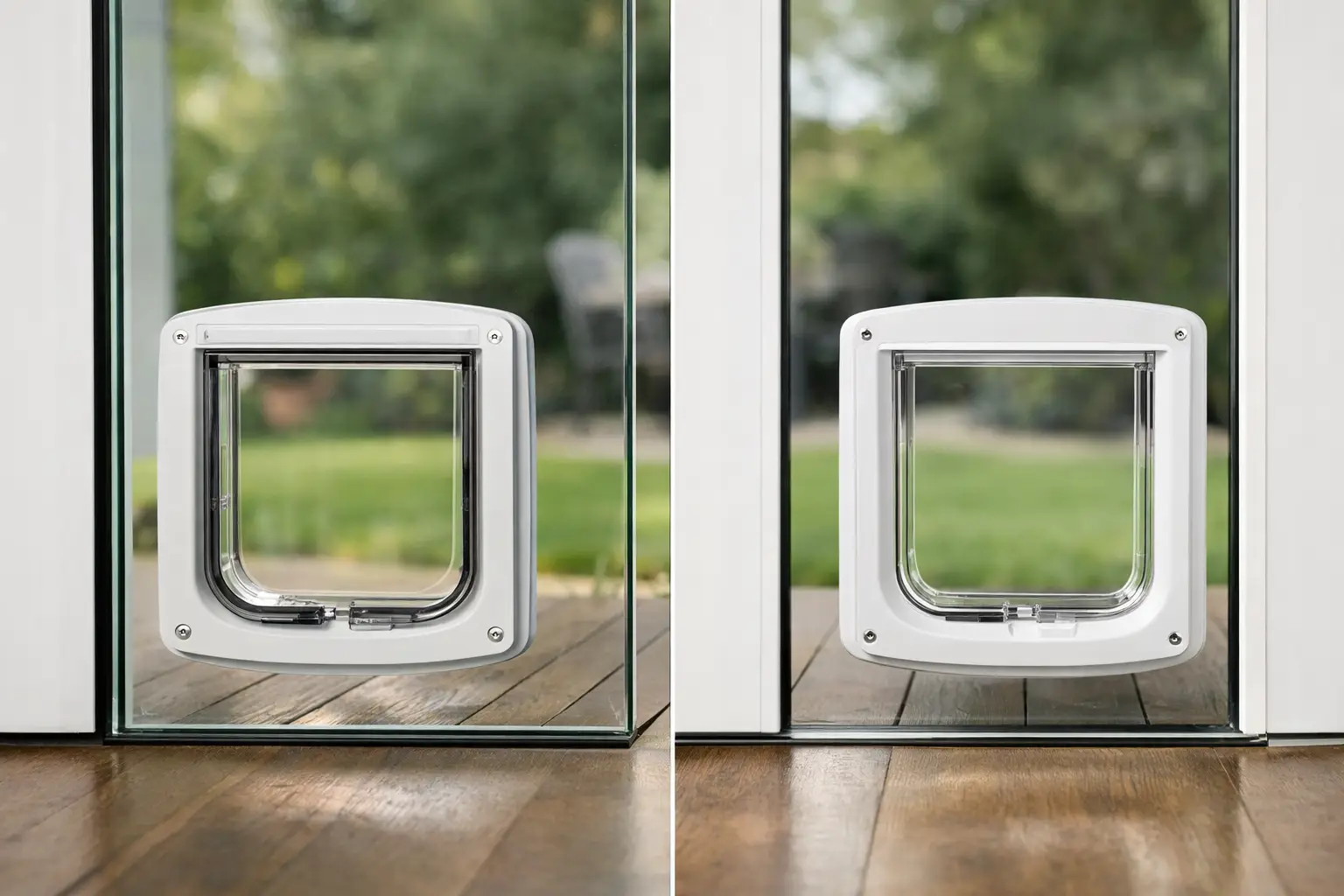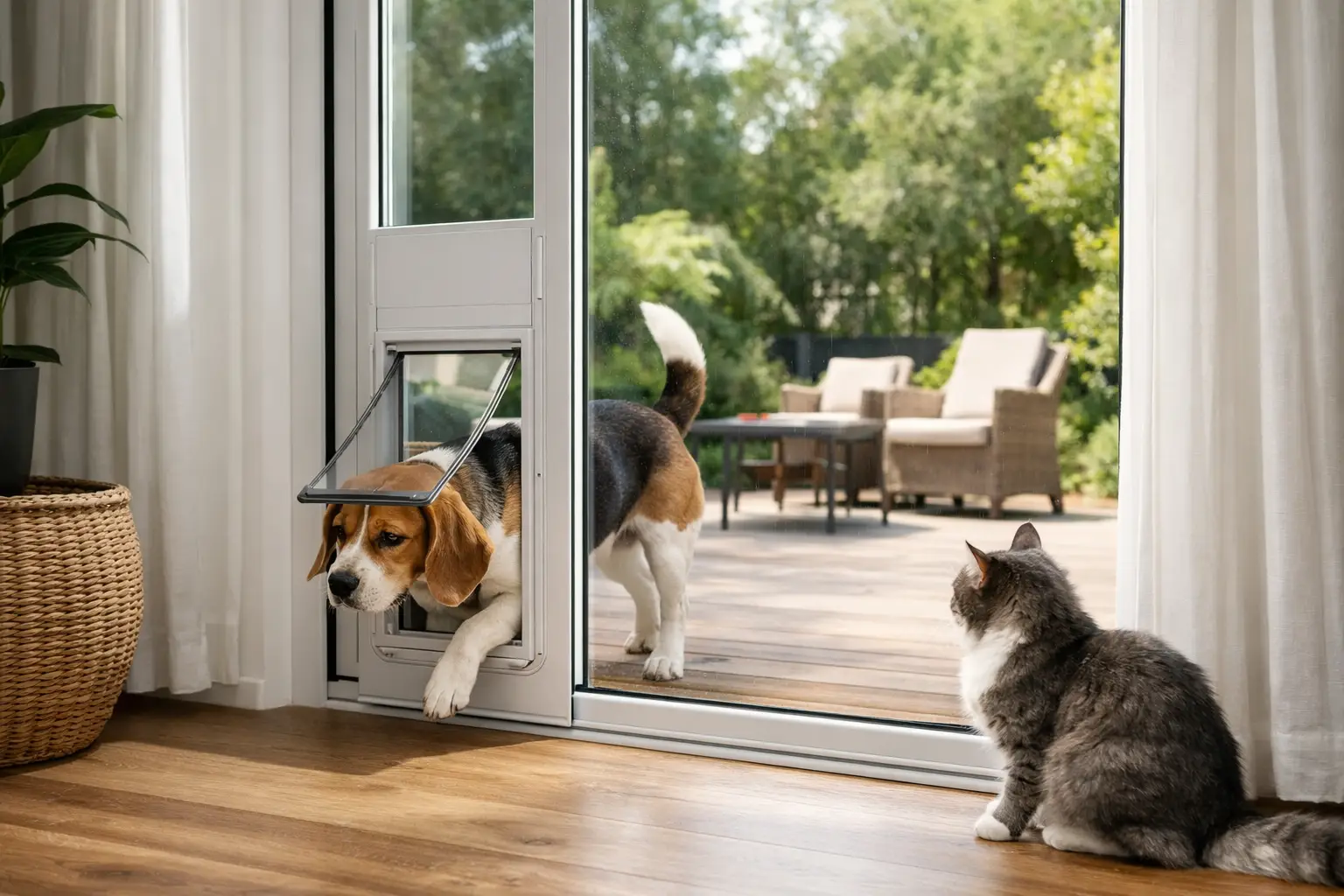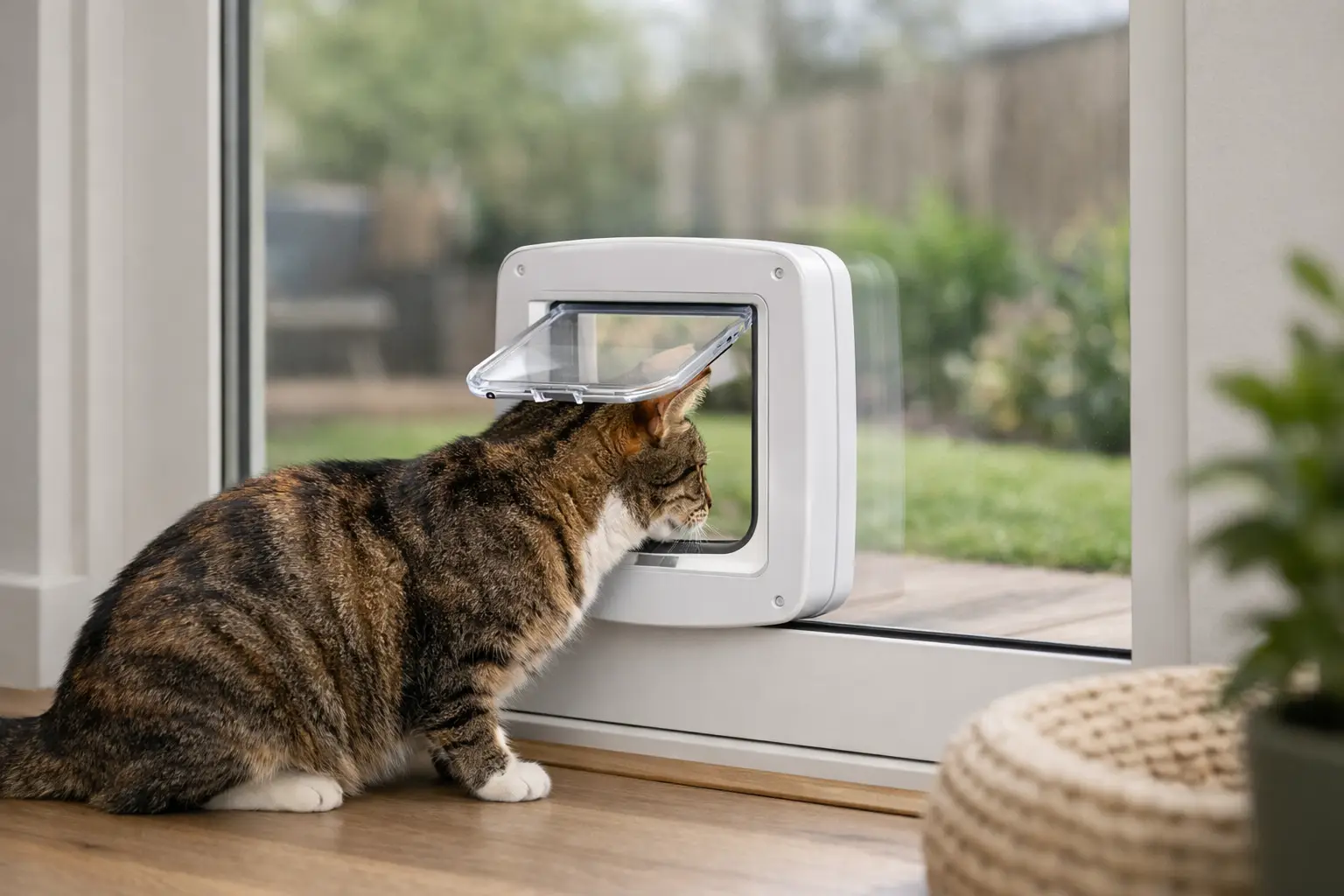
If your cat or dog is scratching at the mesh every morning, it’s fair to ask: can you put a pet door in a screen door? In many cases, yes. But the better answer is that it depends on the type of screen door and the strength of the frame. And whether you want a neat, durable result that will last.
A screen door can be one of the most practical places for a pet door, especially in Australian homes where airflow matters. The catch is that not every screen door is built the same, and not every pet door suits every screen.
Can you put a pet door in a screen door without causing damage?
Yes, you can put a pet door in a screen door, but it needs the right product and the right installation method. A lightweight fly screen is very different from a heavy-duty security screen. Some can take a pet door flap well. Others can warp, weaken or stop closing properly if the wrong unit is fitted. We find flimsy fly screens to be unsuitable for pet door installations.
This is where many DIY jobs go wrong. People assume that it doesn’t matter which mesh is used in the screen. The reality is flimsy fly screens aren’t strong enough to support a pet door cut out or withstand the rigours of pets going in and out. We find that fly screens tend to tear and warp easily.
For standard hinged flyscreen doors, a small pet door may be possible if the frame has enough strength around the opening. But we do not recommend it. Installation into security screen doors, is a much better option. It needs a compatible pet door and careful fitting so the screen remains secure and functional.
What matters before installing a pet door in a screen door
The first thing to assess is the type of door you have. Mesh fly screen doors are common in Australia but they are not durable enough for pet door use.
Security screen doors are a different category. They come in different styles including diamond grill and crimsafe type solid mesh screens. Security Screens are built for strength, and that strength needs to be respected. A pet door installed into a security screen should not interfere with the structural integrity of the frame or the locking system. If it does, you can end up with a weaker door and a messy finish.
Pet size also matters but not as much as you might think. A flap that suits a cat or small dog places far less strain on the screen than one used daily by a large dog. Bigger pets need larger openings, and larger openings remove more material from the door. This can affect durability, particularly on narrower screen panels.
Then there is placement. A pet door should sit low enough for easy access, but not so low that it interferes with bottom rails, tracks or threshold clearance. It also needs to open freely without catching on the frame or mesh.
Which screen doors are most suitable?
The best screen doors are those with a solid aluminium frame, in good condition, and enough flat panel area to accept a pet door. If the screen is already bent, loose, corroded or out of square, adding a pet door can make those issues worse.
Security screen doors with a diamond grill can also be suitable. This is especially true when fitted by a specialist who understands both pet door sizing and screen construction. .
Sliding screen doors can also take a pet door as well, but space is tighter and clearances matter more. If the pet door is too bulky, it may affect sliding movement or clash with the main glass door behind it.
Timber-framed screen doors are less common, but the same rule applies: the frame must be strong enough to support the opening and regular use.
So although DIY can be an option if you don’t have the tools or skills, it’s a good idea to leave it to the specialists who can problem solve these issues before installation.
Can you put a pet door in a security screen door?
This is usually the question behind the question. Many homeowners are not just asking can you put a pet door in a screen door – they are asking whether it can be done in a proper security screen without compromising safety.
In many cases, yes. But this is not a one-size-fits-all job.
Security screens are designed with specific framing systems, mesh types and fastening methods. Installing a pet door into one requires more than cutting a hole and clipping in a flap. The fit has to be clean, the frame has to stay true, and the door still needs to close, latch and perform as intended.
That is why professional installation is often the safer option. A specialist can assess whether your existing screen is suitable, recommend the correct pet door size, and install it in a way that looks tidy and holds up under daily use.
Common mistakes with DIY screen door pet doors
The biggest mistake is choosing the pet door by pet breed rather than actual measurements. Breed guides are rough at best. A slim kelpie and a stocky Frenchie use space differently, even if they weigh about the same. The safer approach is to measure your pet’s width and height in a natural walking position.
Another common issue is underestimating frame strength. Some DIY pet doors are marketed as universal, but a universal fit rarely means a universal outcome. If the screen frame is too thin or the opening is too large, the result can feel flimsy from day one.
Poor placement is another problem. Install too close to the edge, the corners or the locking area, and the door may weaken or twist. Install too low, and the flap can catch on tracks or thresholds. Or install too high, and your pet may not use it comfortably.
Then there is finish quality. Rough cuts, loose rivets, torn mesh and crooked flaps are not just cosmetic issues. They can reduce durability and make the door harder to use.
Choosing the right pet door for a screen door
The best pet door for a screen door is usually one designed specifically for screen or security screen applications. These pet doors are made to clamp securely, sit flush and handle repeated use without pulling against the mesh.
A good fit starts with size. Your pet should be able to pass through without ducking awkwardly or squeezing through sideways. At the same time, larger is not always better. An oversized flap can let in more weather, create more movement in the panel and take up unnecessary frame space.
Locking options are worth considering too. Many pet owners want the freedom of open access during the day and control at night or when away from home. A closable flap can help with that.
If you have multiple pets, size for the largest regular user, but think about behaviour as well. Some cats dislike heavy flaps, while some dogs push through anything without hesitation. The flap should suit both the opening and the confidence level of the pet using it.
When another installation option is better
Sometimes a screen door is possible, but not ideal. If your screen door is old, narrow, heavily used or structurally limited, a timber door, glass panel or fixed window may provide a better long-term result.
This comes up often with large dogs, premium security doors and double-door entries. In those cases, forcing a pet door into the screen may save time upfront but lead to frustration later. A better location can improve durability, appearance and ease of use.
Glass installations, for example, need a very different process. You cannot simply cut into existing toughened glass. A new panel must be manufactured with the opening pre-cut, using Grade A Toughened Safety Glass. That takes more planning, but it gives a clean and compliant result.
Why professional installation makes a difference
A properly fitted pet door should look like it belongs there. It should open freely, sit square, and allow your pet to use it without hesitation. It should also preserve the function of the original door as much as possible.
That is where experience matters. A specialist installer can identify whether your screen door is suitable, recommend the correct product, and avoid the common faults that show up after a rushed DIY fit.
For many households, the real value is peace of mind. You do not have to guess whether the frame will hold, whether the flap is the right size, or whether the screen will still slide or latch properly when the job is done.
Pet Doors On Time handles these kinds of installations every day, including more complex security screen and glass applications, so homeowners can get the convenience of a pet door without the trial and error.
The practical answer
So, can you put a pet door in a screen door? Yes, often you can. The key is making sure the door is suitable, the pet door is the right size and type, and the installation is done in a way that protects both function and finish.
If your screen door is strong, well positioned and matched with the right product, it can be an excellent location for a pet door. And if it is not the best option, it is better to know that before anyone reaches for the drill. A quick expert assessment can save you from damaging a perfectly good door and help you choose a solution that works for your home and your pet for years to come.
To find out whether a pet door can fit neatly into your security screen call the experts at Pet Doors Ontime on 1300 940 801.