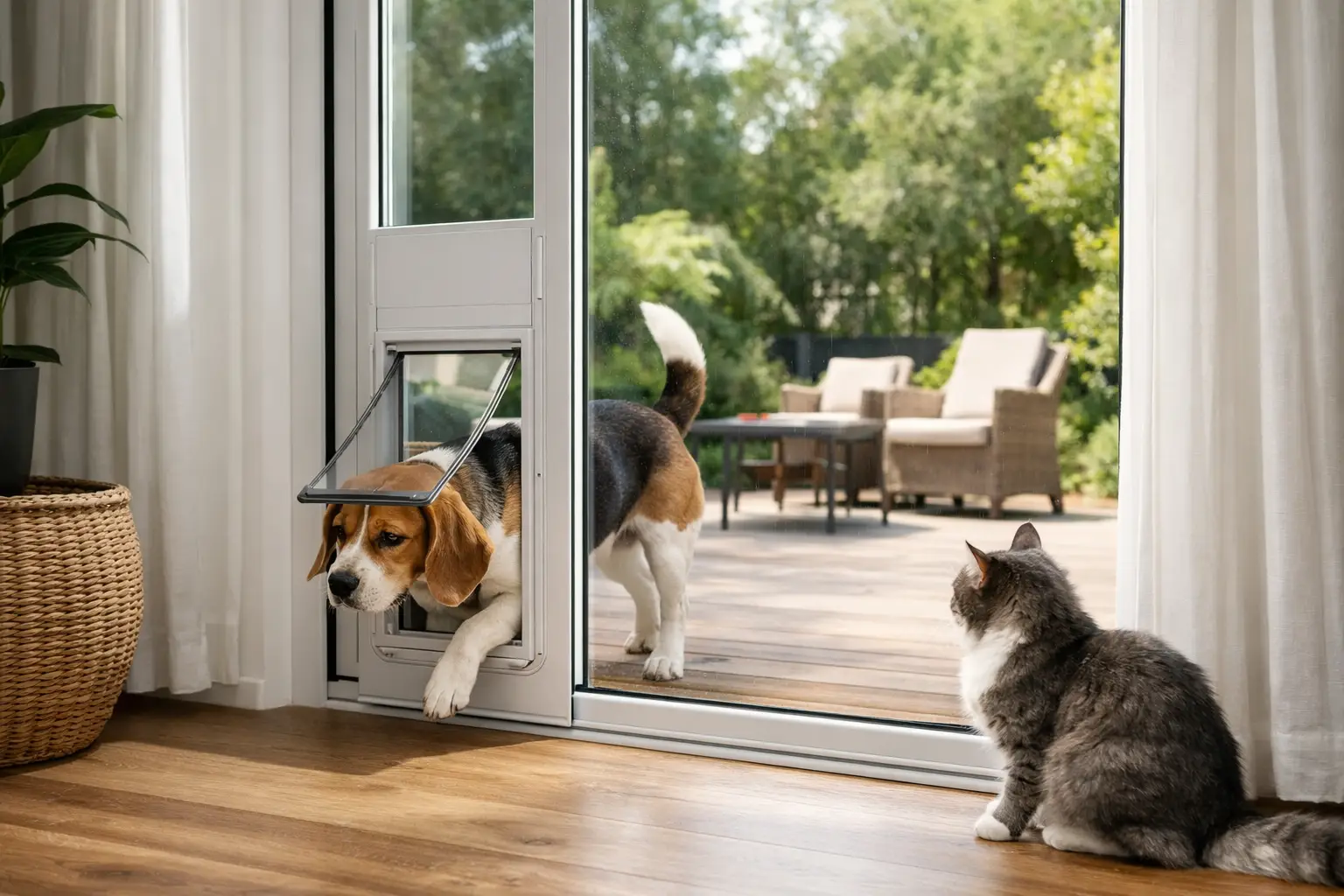
If you’ve got a security screen and a dog that’s ready to let itself in and out, the obvious question is: can you put a dog door in Crimsafe? The short answer is yes – in many cases, you can. But this is not a simple cut-and-fit job. The details matter if you want to protect both your screen’s strength and your home’s security.
Crimsafe is designed as a security product, not a standard flyscreen. That means the way your pet door is installed, the pet door used, and the screen’s frame and condition all need proper assessment. And this should all be done prior to installation.
Can you put a dog door in Crimsafe without ruining it?
Most of the time – yes. Sometimes, no. In our professional opinion it depends on the door, the frame, the pet door size. And how the installation is handled. That’s the difference between a professional installer and just an average handyman.
A genuine Crimsafe screen uses high-tensile stainless steel mesh fixed into a heavy-duty frame. That setup is built to resist impact and tampering. Once you cut into it, you’re changing the structure. That doesn’t automatically mean your screen becomes unusable. But it does mean any work needs to be done with care and with the right product.
The biggest mistake homeowners make is assuming any standard dog door from a hardware shop can simply be fitted into any security screen. In practice, security doors need a compatible pet door and a method that reinforces the opening properly. Without that, you can end up with a weak point in the mesh, a rough finish, or a flap that doesn’t sit securely. That’s where Pet Doors Ontime is valuable. As pet door installation professionals we can help smooth out the process.
What makes Crimsafe different from a normal screen?
With standard aluminium flyscreens, the mesh is light and the frame is relatively simple. Cutting an opening for a pet door is usually straightforward.
Crimsafe is different because the mesh is far stronger and held under tension within a screw-clamped system. The frame is also part of the security performance. So when people ask whether they can put a dog door in Crimsafe, what they’re really asking is whether the screen can be modified safely and cleanly without compromising the door more than necessary.
That is why professional assessment matters. Some installations are very workable. Others are not worth forcing.
When a dog door in Crimsafe is a good option
A Crimsafe security screen can be a suitable place for a pet door when the opening size matches the pet, the frame can support the modification, and the right pet door is selected.
Small to medium pet doors are often the most practical in security screens. They generally require less interruption to the mesh and frame than oversized units. If you have a small or medium dog breed with a slim build, you’re generally going to be able to find a solution that works. This can be trickier for larger dog breeds – but not impossible.
The location of the screen also matters. A rear security door is often the most common candidate, especially where the pet already uses that access point. If the door opens onto a secure backyard and the pet door can be positioned low and clear of frame corners, the job is usually more straightforward.
Good installations also rely on neat finishing. A well-fitted pet door should sit square, close properly, and look like it belongs there – not like an afterthought. We don’t recommend round pet doors for crimsafe doors.
When it may not be the best idea
There are cases where fitting a dog door into Crimsafe is possible in theory but not ideal in practice.
If the screen door is old, damaged, warped, or already under stress, cutting into it may create more problems than it solves. The same applies if the pet door required is very large. A bigger flap needs a bigger opening, and that can place more demand on the remaining frame and mesh area.
Another issue is clearance. Some security doors have design features, cross rails, locks, or frame sections that limit where a pet door can go. If the only available position creates a poor fit or affects how the screen functions, a different installation surface may be the better option.
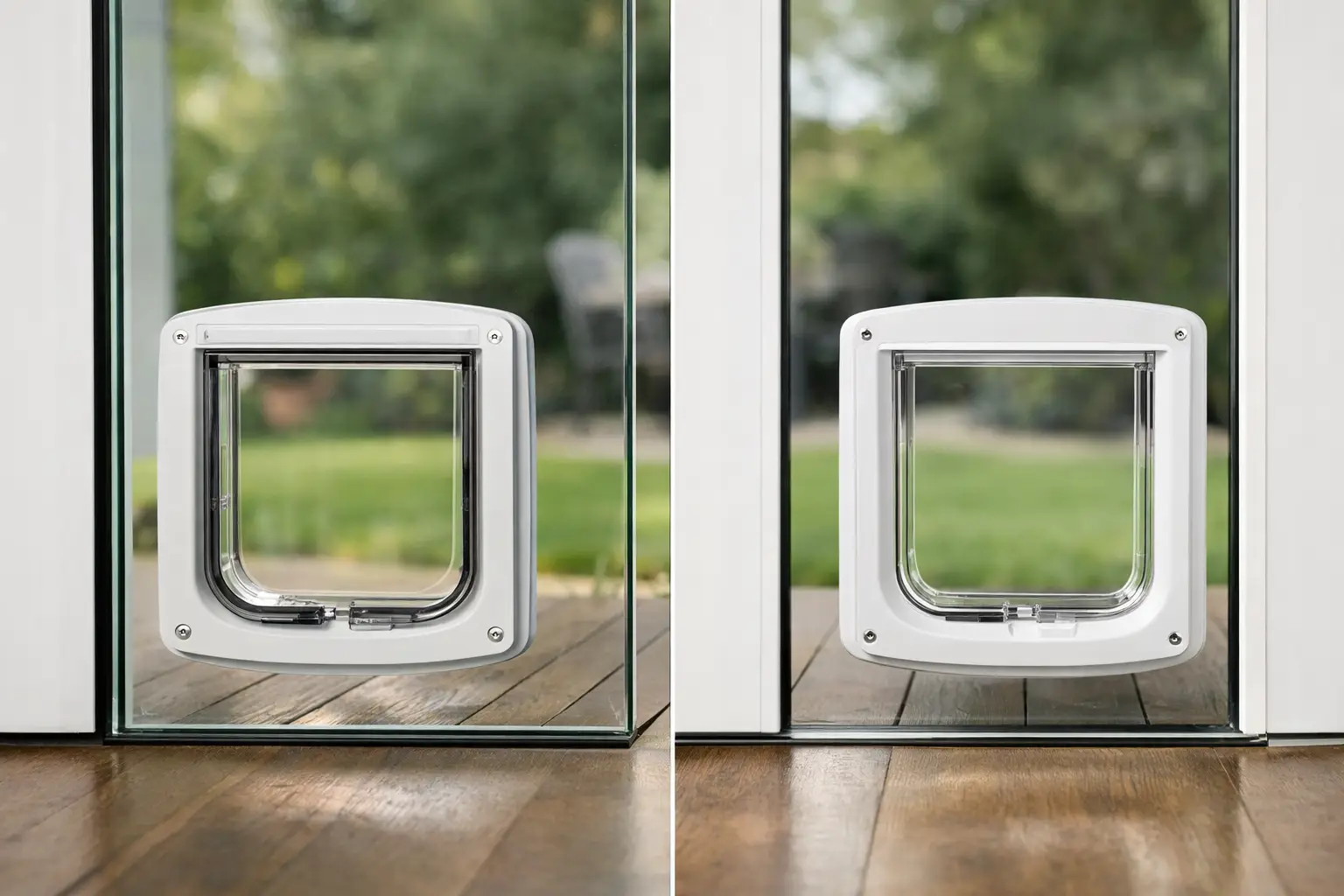
In some homes, timber, glass, or an adjacent panel can offer a cleaner and more secure result than modifying the security screen itself.
Security trade-offs you should know
This is the part many people skip, but it matters. Any time you add a dog door to a security barrier, you are introducing an opening that was not part of the original security design.
That doesn’t mean you should not do it. It means you should do it with realistic expectations. And if security is important then consider a pet door with a secure lock cover plate.
A professionally fitted pet door in a security screen can still be a practical, durable solution. But it is important to understand that your screen has been modified. The level of impact depends on the size and style of the pet door, as well as the way it is installed.
For most homeowners, the goal is balance: maintain as much security as possible while giving the pet convenient access. That is exactly why off-the-shelf guesses are risky. You want a solution that respects the original purpose of the screen rather than treating it like a basic mesh door.
Choosing the right pet door for a security screen
Not every flap suits every surface. In security screens, the best results usually come from pet doors designed for tougher materials and installed with proper reinforcement. Ask Pet Doors Ontime about what might work best.
Size is the first priority. Many people choose a flap based on breed alone, but actual measurements are better. Shoulder height, chest width, and body depth all matter. A dog that can technically squeeze through a smaller flap may avoid using it if the fit feels tight. We usually advise to allow a couple of extra cms for wriggle room.
At the same time, going too large is not ideal. An oversized opening can affect the look of the screen and create a bigger modification than necessary. The right fit is the smallest door your dog can use comfortably.
Locking features also matter. Some pet doors include sliding security panels or lockable settings. These are useful if you want to control access at night, during bad weather, or when you’re away.
Why DIY is risky with Crimsafe
Cutting a standard screen is one thing. Cutting a security screen is another.
DIY attempts often go wrong for three reasons: the wrong pet door is chosen, the opening is measured poorly, or the installer damages the mesh and frame during the cut. Once that happens, the repair options can be limited, and replacing the whole screen may become the more sensible path.
There is also the finish to consider. Security doors sit in prominent parts of the home. A rough install with bent mesh, uneven edges, or a flap that rattles every time it closes does not just look poor – it can affect day-to-day use.
Professional installers assess the screen first, confirm whether the job is suitable, and match the pet door to the structure. That removes a lot of the guesswork and reduces the chance of an expensive mistake.
🐾 Pet Doors Ontime Pro Tip:
Genuine Crimsafe doors cannot simply be cut like a standard flyscreen. Professional installers use specialised techniques and approved mounting methods designed for the specific screen system. Always confirm your installer has experience working with premium security screens.
Are there better alternatives to installing in Crimsafe?
Yes, sometimes there are. If your security screen is not the best candidate, another surface may give you a better long-term result.
Timber doors are often straightforward when there is enough thickness and clearance. Glass doors and fixed glass panels can also work very well, although they usually require replacement glazing rather than cutting the existing pane. In double-glazed units, the process is more specialised again, because a new panel has to be made to suit the pet door opening.
For some homes, putting the pet door beside the main access point rather than through the security screen preserves the screen while still giving the dog independence. It really comes down to layout, pet size, and how important the security door is in your overall setup. It’s often best to discuss this onsite with a pet door installation specialist.
What to expect from a professional assessment
A proper assessment should cover more than whether a hole can be cut. It should look at the type of security screen, the frame condition, the size of your dog, the right pet door model, and whether another installation surface would be smarter.
You should also expect clear advice. If the screen is unsuitable, a good installer will say so. That honesty saves time and avoids poor outcomes.
This is where specialist experience makes a real difference. A company such as Pet Doors On Time works specifically with pet door installations across difficult surfaces, including security screens and glass, so the advice is based on what performs well in real homes – not guesswork.
The practical answer
So, can you put a dog door in Crimsafe? In many cases, yes – provided the screen is suitable, the pet door is the right size and type, and the installation is done properly. But it is not a one-size-fits-all job, and there are situations where another surface will give you a cleaner, safer result.
If you want the convenience of a dog door without making a costly mistake, the smartest first step is to have the screen assessed by someone who installs pet doors into security products regularly. A good result starts with knowing what will work before anyone picks up a tool. That’s where Pet Doors Ontime comes in.
Your dog will not care how technical the job is. You will care if it looks right, works properly, and still gives you confidence every time you lock the door at night.
Need help choosing?
If you’re unsure whether installing a pet door into your Crimsafe door is right for you, send Pet Doors Ontime a pic of your door and your pet. We can help you work out:
- Which pet doors are suitable
- Whether your timber door would work best
- Or do you need 2 pet doors – one for timber door and one for Crimsafe door