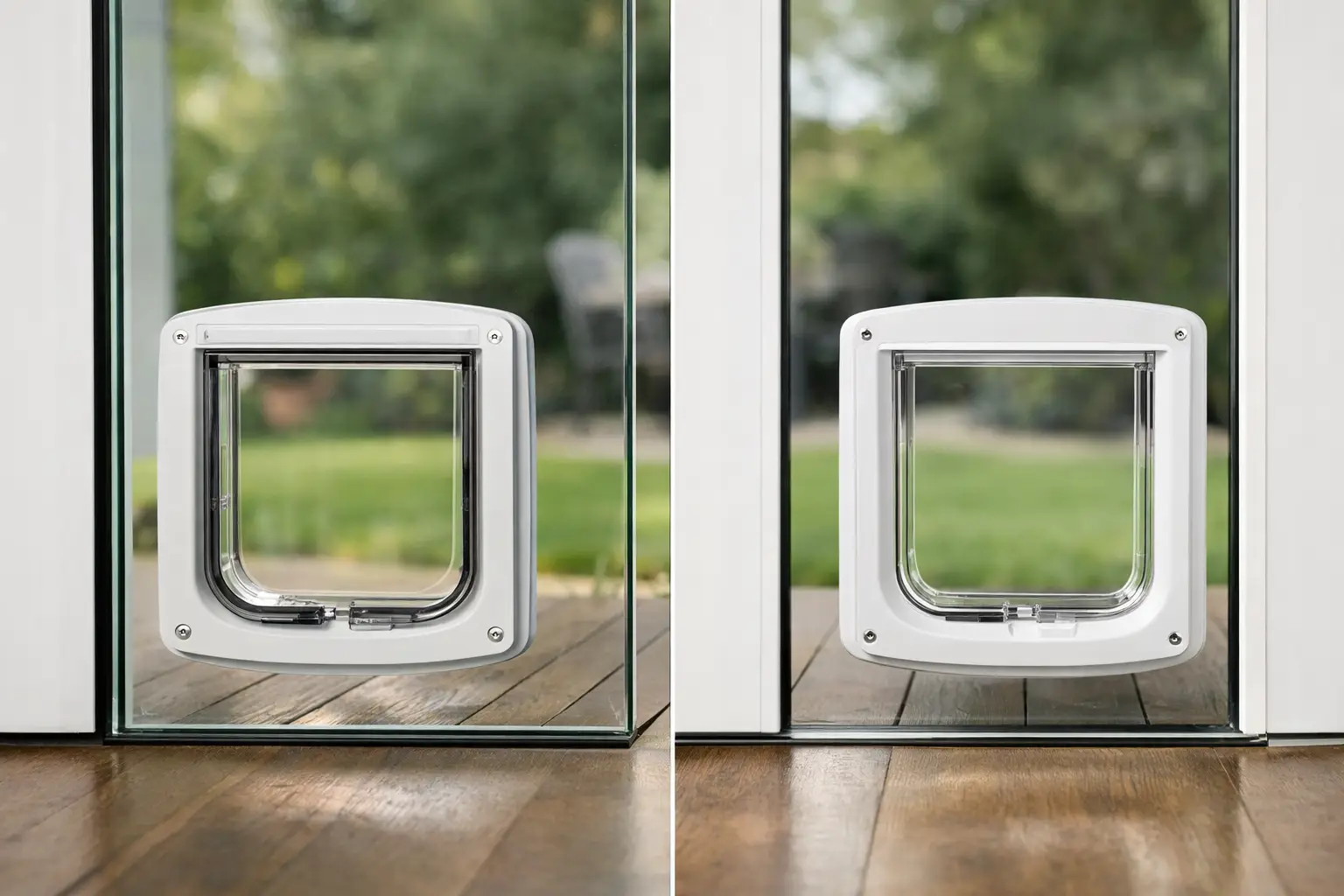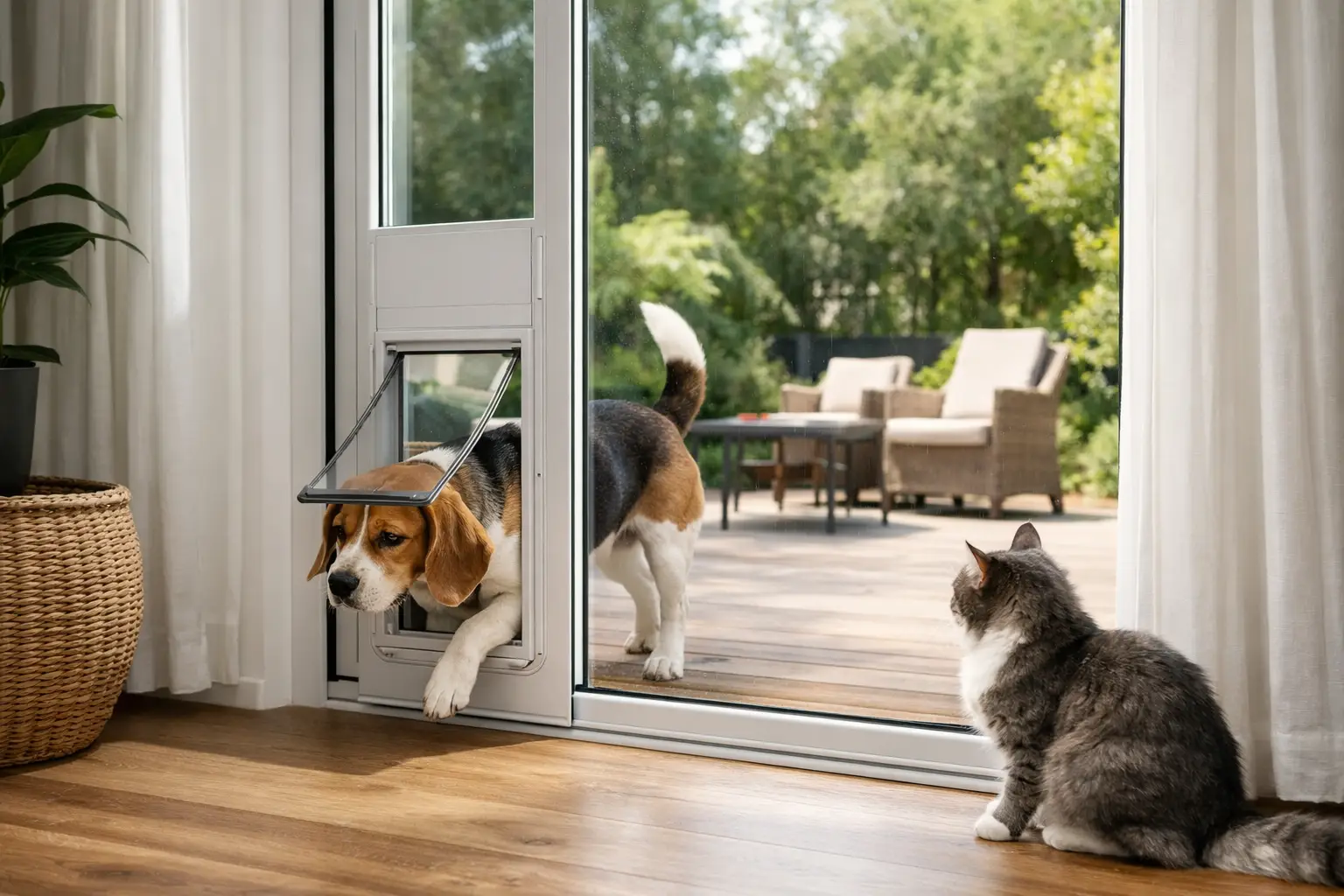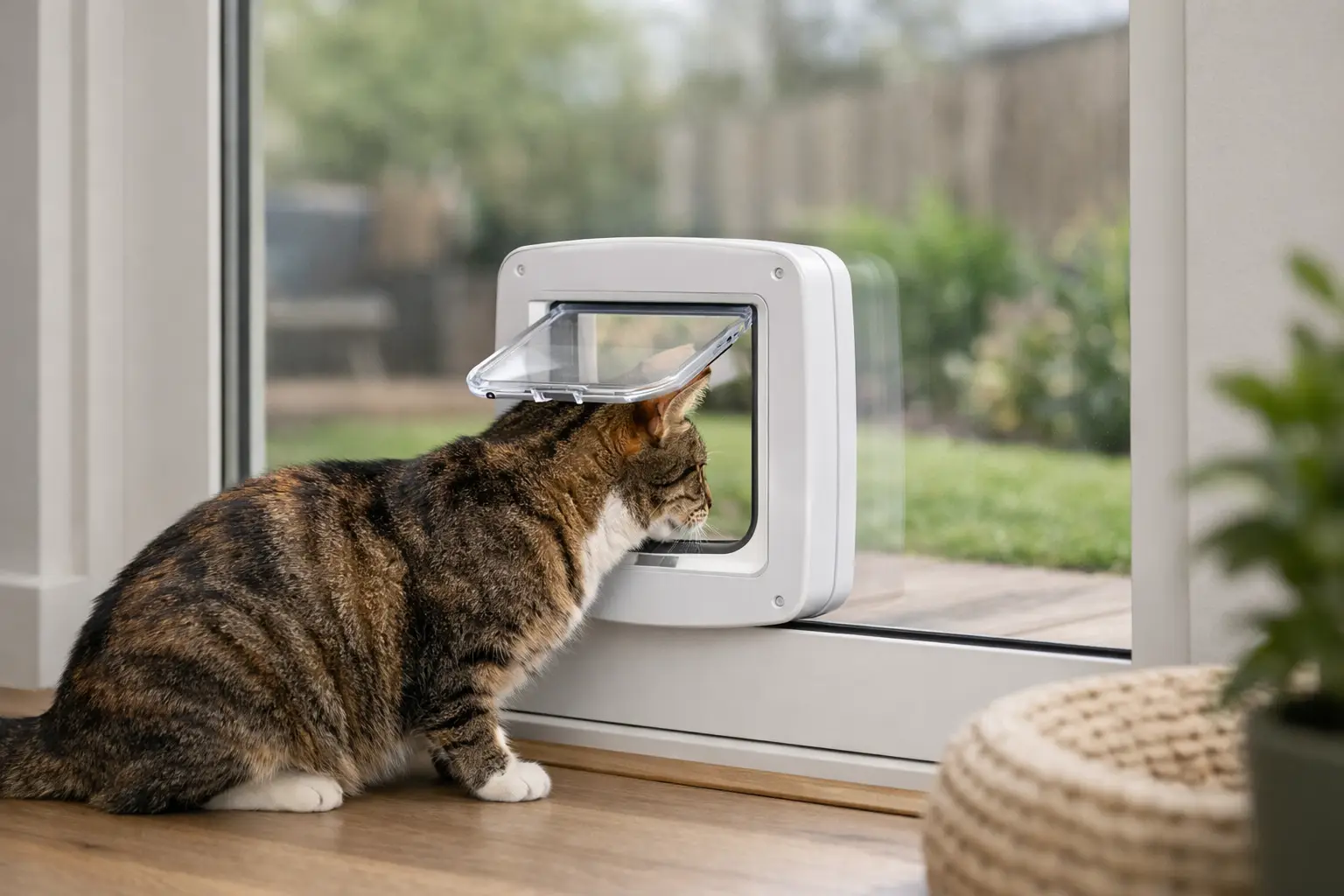
A standard flyscreen is not generally suitable for a pet door. A security screen however is a much better option. If you are considering dog doors in security screens, the big question is not just whether a flap will fit. It is whether it can be installed properly without weakening the screen, creating a poor finish, or causing problems with locking, strength, and daily use.
For many Australian homes, the security screen door is the most practical place for a dog door. It lets your dog move in and out without leaving the main timber or glass door open, and it helps keep airflow through the house while maintaining a barrier at the entrance. Done well, it is convenient, neat, and secure. Done badly, it can ruin an expensive screen.
Are dog doors in security screens a good option?
In many cases, yes. A security screen is often one of the best locations for a pet door because it gives your dog direct outdoor access while keeping insects out and preserving the function of the doorway. For families with busy routines, it can make a real difference. Your dog gets independence, and you are not getting up every ten minutes to open the door.
That said, not every security screen is suitable, and not every pet door is compatible with every screen type. The mesh type, frame construction, locking system, and available clearance all matter. This is where a lot of homeowners come unstuck. What looks simple from the outside can become a costly mistake if the wrong product is chosen or the screen is cut without understanding how it carries its strength.
What matters most with dog doors in security screens
Security screens are built differently from standard insect screens. They may use stainless steel mesh, aluminium perforated sheet, or other heavy-duty materials designed to resist impact and tampering. Installing a dog door into that structure requires the right tools, the right product, and a clear understanding of how to keep the finished door functional.
The first issue is size. The dog door has to suit your pet, but it also has to suit the screen panel. A flap that is too small will frustrate your dog and may go unused. One that is too large can interfere with the frame, reduce strength, or simply not fit in the available panel area. Measuring your dog correctly matters more than many people expect. Shoulder height, body width, and stepping clearance all come into it.
The second issue is placement. The pet door needs to sit low enough for comfortable use, but not so low that it clashes with kick panels, frame sections, or threshold details. On some doors, the best location is obvious. On others, there are structural limitations that narrow the options.
The third issue is product compatibility. Some pet doors are specifically designed for security screen applications, while others are better suited to timber or glass. The frame design, locking flap, and fixing method all need to match the screen material. Forcing a general-purpose pet door into a security screen usually leads to a poor result.
Not all screens can be treated the same
This is where professional advice really matters. Security doors are not a single category. Some are more straightforward to work with than others, and some need a very specific approach to avoid damage.
A diamond grill security door, for example, may allow for a simpler installation path depending on the panel layout. A stainless steel mesh security screen can be far more specialised. These products are designed to perform as a security barrier, and cutting into them without the right method can compromise both appearance and function.
There is also the question of age and condition. If the screen is already loose, damaged, corroded, or poorly fitted to the doorway, adding a dog door may not be the first step. Sometimes the smarter option is to assess whether the existing screen is suitable at all or whether another installation location would serve you better.
Why professional installation makes a difference
A dog door in a security screen should look like it belongs there. The flap should operate smoothly, the screen should remain neat and stable, and the door should still open, close, and lock as it should. That result usually comes down to proper measuring, product selection, and installation experience.
This is not the same as fitting a basic pet flap into a hollow internal door. Security screens involve tougher materials, tighter tolerances, and higher expectations around safety and finish. If the job is rushed or guessed, the problems show up quickly – rattling panels, rough edges, poor alignment, or a flap that your dog struggles to use.
Professional installers also help avoid the common trap of buying the wrong size before anyone has checked the door. Many customers understandably start with the pet door itself, but the better starting point is the opening, the screen type, and the pet. Once those three factors are clear, the right model becomes much easier to choose.
Safety, security, and everyday use
Homeowners often ask whether adding a pet door to a security screen reduces security. The honest answer is that it depends on the door, the product, and how it is installed.
A properly selected pet door installed into a suitable screen can provide daily convenience without turning the doorway into a weak point. But expectations need to be realistic. Any opening added to a barrier changes that barrier to some degree. The aim is to choose a pet door that is appropriate for the size of the animal, positioned correctly, and fitted neatly within the existing screen structure.
For many households, the practical benefit is worth it. You can keep the main door shut, maintain ventilation, and still give your dog access to the yard. That is especially useful in warmer months, in homes with active dogs, or where owners are juggling work, school runs, and everything else that fills the day.
There is also a comfort factor for the pet. Dogs tend to settle better when they can follow a consistent routine. If they know they can step outside to toilet, rest in the sun, or come back in when they are ready, life gets easier for everyone.
Getting the size right for your dog
Choosing by breed alone is risky. Two dogs of the same breed can vary a lot in width, height, and confidence using a flap. A slim kelpie and a stockier kelpie-cross may need different clearances. Puppies also grow quickly, so timing matters if you are installing for a young dog.
The most reliable approach is to measure the dog, then compare those measurements with the actual usable opening of the pet door. It is not just the outside frame size that counts. The flap opening is what your dog has to move through comfortably.
If your dog is older, arthritic, or hesitant, stepping height becomes even more important. A door that technically fits may still be awkward in practice if the bottom lip is too high. This is another reason security screen installations need a tailored approach rather than a one-size-fits-all answer.
When another location may be better
Sometimes the best advice is not to use the security screen at all. If the screen design is unsuitable, the dog is too large for the available panel space, or the door layout creates access problems, another installation point may be a better long-term result.
Timber doors can suit many homes well. Glass doors are also a strong option when handled correctly, although they require specialist work. In standard glass and double-glazed panels, a pet door cannot simply be cut into the existing pane after installation. The glass usually needs to be replaced with a new panel manufactured to suit, using Grade A Toughened Safety Glass where required. That is a technical process, but for the right home it can provide a very clean finish.
A good installer will tell you when the security screen is the right choice and when it is not. That kind of advice saves time, money, and avoidable repairs.
What to expect from the installation process
A proper service usually starts with confirming the door type, the pet size, and the best product for the job. From there, measurements are checked and the installation method is matched to the screen construction. If another surface is more suitable, that should be explained clearly before any work begins.
On the day, the goal should be a clean, efficient installation with minimal disruption. The finished pet door should sit neatly in the panel, operate smoothly, and feel solid in use. Just as importantly, you should know how to use any locking features and what to expect while your dog gets used to the flap.
Some dogs take to it immediately. Others need a bit of encouragement. That is normal. A well-sized flap in the right position gives them the best chance of adapting quickly.
For Australian households wanting convenience without guesswork, dog doors in security screens can be an excellent solution when the screen, the pet, and the product are all matched properly. If you are unsure, get the door assessed first. A careful installation is far easier than fixing the wrong one later.
Need help installing a pet door?
If you’re wanting a pet door professionally installed into your security screen then we’re here to help.
Go to petdoorsontime.com and send us a pic of your screen door.
We can help you work out:
- which pet door is best for your security screen
- whether you’d be better off installing a pet door into both your screen door and timber door
- how to measure your pet for the best sized pet door
Or give us a call on 1300 840 801.