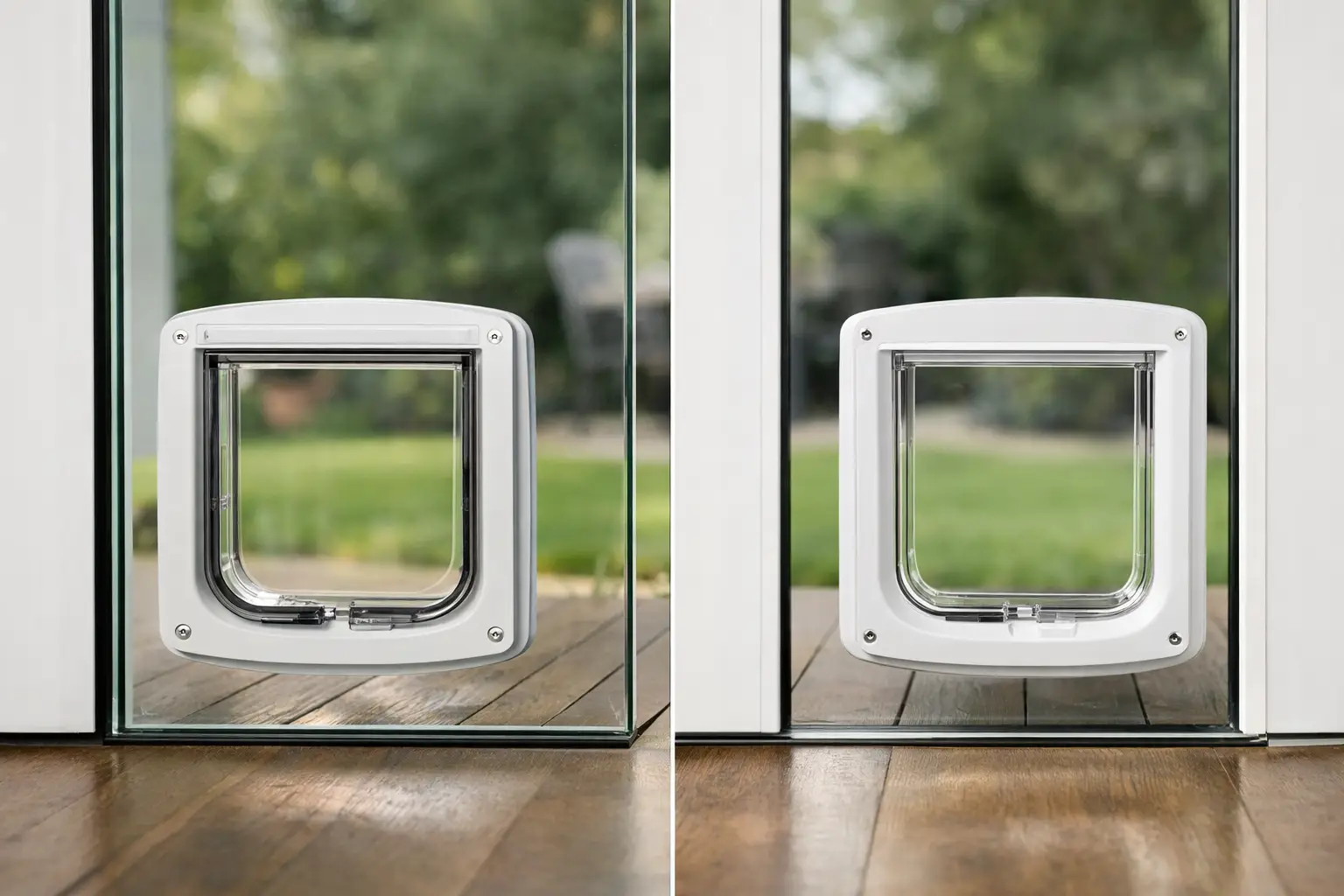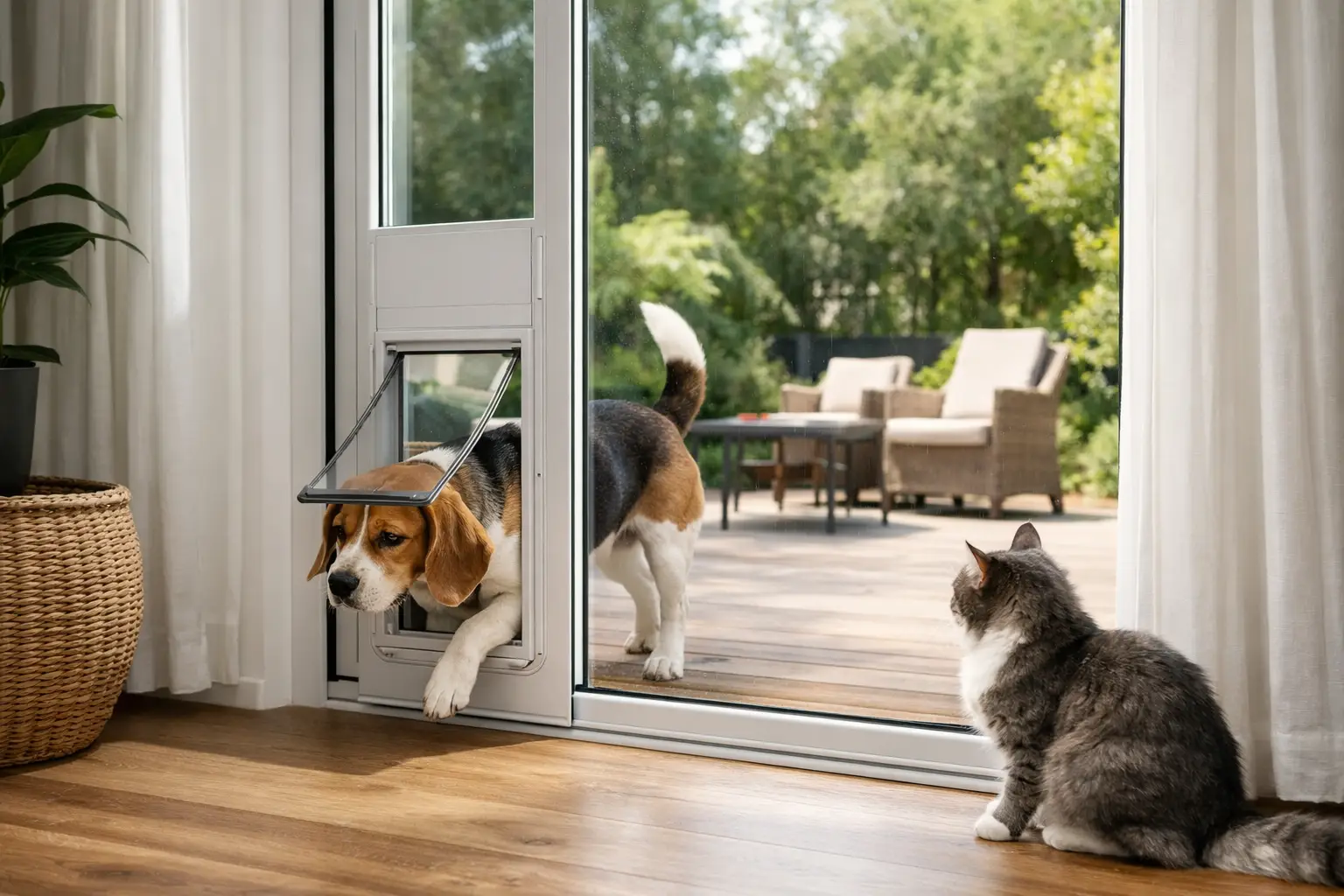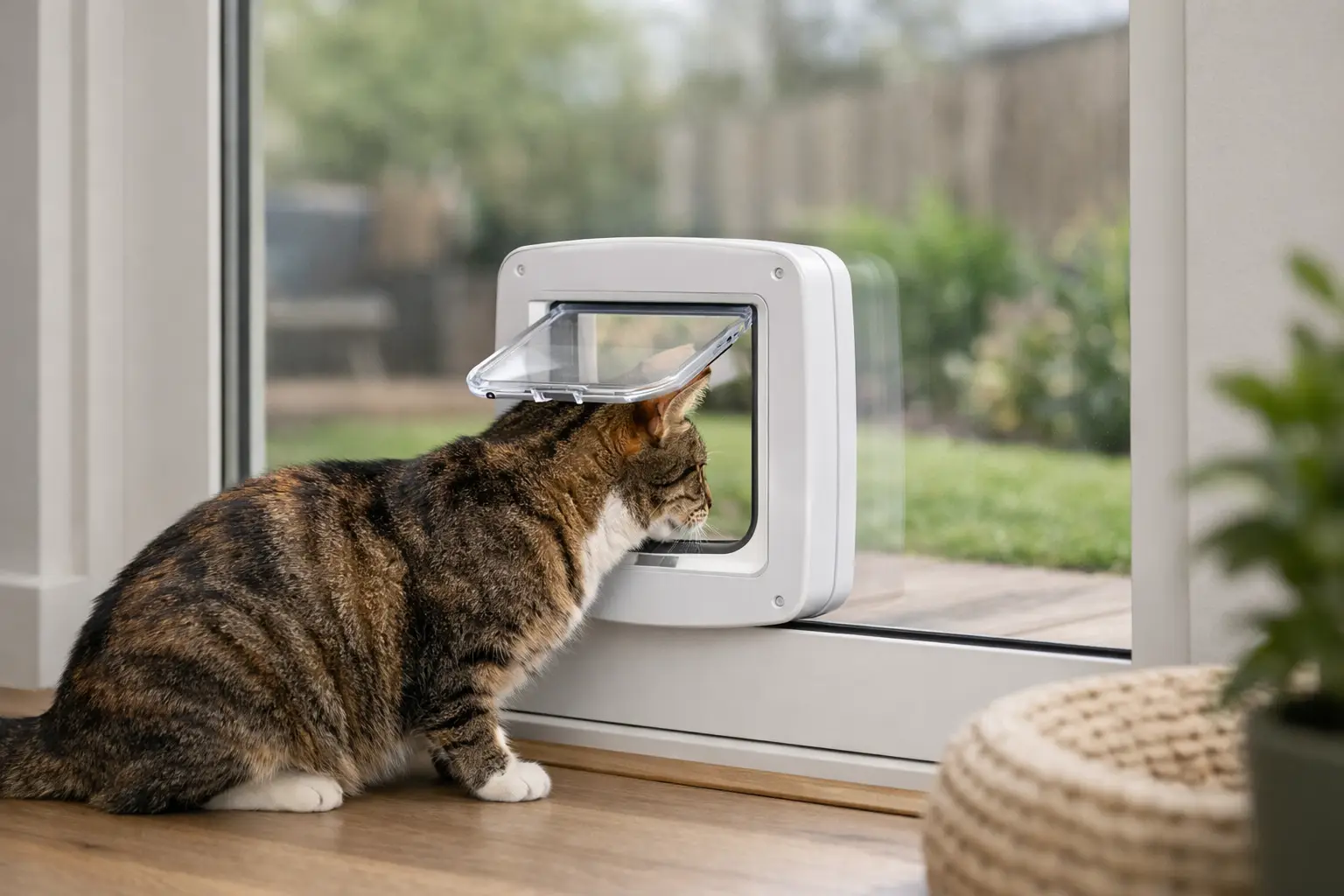
How Much to Install a Pet Door into Glass?
If you have ever looked at a sliding glass door and thought, surely a pet door can just be cut in, the pricing can come as a surprise. When people ask how much to install a pet door in glass, the short answer is that it usually costs more than fitting one into timber or a security screen, because glass installation is a specialist job and the panel normally needs to be fully replaced.
That replacement is the key detail. Standard household glass cannot simply be cut on site once it is toughened. In most cases, your installer will arrange for a new pane to be measured. Then have it manufactured with the pet door hole cut-out, toughened to Australian safety standards, which is then installed in place of the original. That process affects both cost and timing, but it also gives you a safe, clean result that is made to suit your home and your pet.
How much to install a pet door in glass really depends on the glass
Glass is not one product. The final cost depends heavily on whether your pet door is going into a standard single-glazed panel, a fixed window, a sliding door, or a double-glazed unit. Each setup involves different materials, handling requirements and labour.
For a basic single-glazed installation, the price is generally lower because the replacement process is simpler. Once double glazing is involved, the cost rises because the entire insulated glass unit needs to be remade to suit the pet door opening. That means more complex manufacturing, more expensive materials and more careful installation.
The size of the panel matters as well. A large sliding door pane will usually cost more than a smaller window panel, even if the pet door itself is the same size. Bigger panes are heavier, harder to transport and more expensive to handle and remake.
Typical price ranges in Australia
As a general guide, a professionally installed pet door in single-glazed glass often starts from several hundred dollars and can move into the low four figures depending on the glass size, pet door model and access conditions. For double-glazed glass, it is common for the total cost to be higher again because a completely new sealed unit has to be ordered and installed.
In practical terms, many Australian households find that a glass pet door installation sits well above the price of a timber-door installation. That is not because the pet door itself is dramatically different. It is because the glazing work, safety compliance and replacement glass drive most of the cost.
If you are comparing quotes, make sure you are comparing like for like. One quote may include the pet door supply, glass manufacture, removal of the old panel and full installation. Another may only cover part of the job. Fixed pricing is helpful here because it gives you a clearer picture upfront.
What is included in the price
A proper glass installation is more than cutting a hole and fitting a flap. The price usually reflects a full service process.
First, your glazier will assess the existing glass and opening size. This matters because the replacement pane must be made accurately, and the pet door size has to suit your animal. A flap that is too small creates daily frustration. Too large, and you may end up with a poor fit visually or functionally.
Next comes glass manufacturing. For in-glass pet door installations, the new pane is typically made from Grade A Toughened Safety Glass. This is the correct way to handle glass to meet safety requirements and provide a durable result.
Then there is the installation itself. Your glazier will remove the original panel and have the new glass is fitted. The pet door is installed into the prepared opening, and the area is checked for finish and operation. With experienced installers, this should be tidy and straightforward for the homeowner.
Why glass pet door installation costs more than other options
The biggest reason is you can’t improvise when it comes to glass. Once your glass panel is toughened, it cannot be recut. If someone suggests cutting your existing toughened glass in place, that’s a big red flag.
The second reason is safety. Glass around doors and low-level windows needs to meet strict standards. Professional installers understand what type of glass is required and how to replace it correctly. This protects the household, the property and anyone using the door every day.
There is also the issue of specialised labour. General handymen may be comfortable with timber or screen doors, but glass and double glazing are a different category. Accurate measuring, ordering and fitting are essential. Mistakes are expensive.
Factors that change the final quote
Pet door size
Larger dogs usually need larger pet doors, and that can increase the overall cost. A bigger flap means a bigger cut-out in the glass and sometimes a larger replacement panel specification. If you have a growing puppy, it is worth discussing adult size before ordering.
Type of glass door or window
A ground-floor sliding door is usually more straightforward than an upstairs window or a difficult-to-access panel. The more complicated the site, the more labour and handling may be involved.
Single glazing versus double glazing
This is one of the biggest pricing differences. Double-glazed units are more expensive to manufacture and replace, and lead times can be longer as well.
Pet door model
Not all pet doors are equal. Some are basic manual flaps, while others include stronger locking systems, better weather sealing or selective entry features. The pet door product itself can shift the total price noticeably.
Location and access
Metro service areas often have faster turnaround and more standardised pricing. Regional jobs, restricted access or difficult parking can sometimes affect quoting and scheduling.
How long does installation take?
The on-site installation is usually the quick part. The longer step is manufacturing the new glass panel. After measuring, there is typically a lead time of 2-3 weeks while the replacement glass is made and toughened.
For homeowners, this is often the trade-off. A timber pet door may be fitted much faster, but a glass pet door takes planning because the glass must be produced properly. The result is neater and safer, but it is not usually a same-day cut-and-fit job.
Is it worth paying for professional installation?
For glass, yes. This is not a good area for shortcuts. A professionally installed pet door protects the integrity of the glazing, gives you a cleaner finish and reduces the risk of costly mistakes.
It also helps with pet sizing and placement. The right height off the floor, the right flap dimensions and the right panel choice all affect how well your pet uses the door. Good advice upfront often saves money later.
For renters or owners of higher-value homes, professional installation can be even more important. A poor result in glass is hard to hide and expensive to correct.
How to keep costs sensible without cutting corners
If you are trying to manage budget, the best approach is to choose the right location before ordering. In some homes, installing into a smaller adjacent glass panel or a different door can reduce costs while still giving your pet easy access.
It is also worth being realistic about pet door size. Bigger is not always better. A door sized correctly to your pet is usually the safest and most practical option.
Most importantly, get advice before purchasing a pet door online. Homeowners sometimes buy a flap first, only to learn it is not suitable for their glass type or pet. Matching the product to the installation from the start is the better move.
Common question: can existing glass be modified?
Usually, no. If the glass is already toughened, it cannot be cut after manufacture. That is why a replacement pane is generally required.
This is one of the main reasons customers are caught off guard by price. They assume they are paying for a hole to be cut into the existing panel. In reality, they are paying for a new safety glass panel made specifically for the pet door opening, plus installation.
What to ask before you book
Before you proceed, ask whether the quote includes measuring, the new glass panel, the pet door itself, installation and removal of the old glass. Confirm whether the glass will be Grade A Toughened Safety Glass and whether the installer is insured.
You should also ask about lead times, warranty and whether the installer has experience with double-glazed units if that applies to your home. These are not small details. They tell you whether the job is being handled properly.
For Australian pet owners, the safest path is to treat glass pet door installation as a specialist trade service, not a quick hardware job. Businesses such as Pet Doors Ontime focus on exactly this kind of work, which is why the process is usually smoother from quote to installation.
The real value is not only the flap in the glass. It is the confidence that your door still looks right, works properly and meets the safety standard it should have had all along. Check out our online pricing calculator for an instant upfront price.